
Titanic – Behind the Scenes
How the Iconic Film Was Made

1. Jack and Rose on the Bow – “I’m Flying”
Scene: Jack and Rose stand at the ship’s bow, arms outstretched, feeling free and exhilarated.
Filming: This iconic moment was shot on a large deck set above the water tank. Hidden harnesses kept the actors safe while wind machines simulated ocean breezes. Cameras on cables moved around them for sweeping, cinematic shots.
Challenges: Kate Winslet had to maintain balance on a slightly moving set, while wind and water made the scene physically demanding.

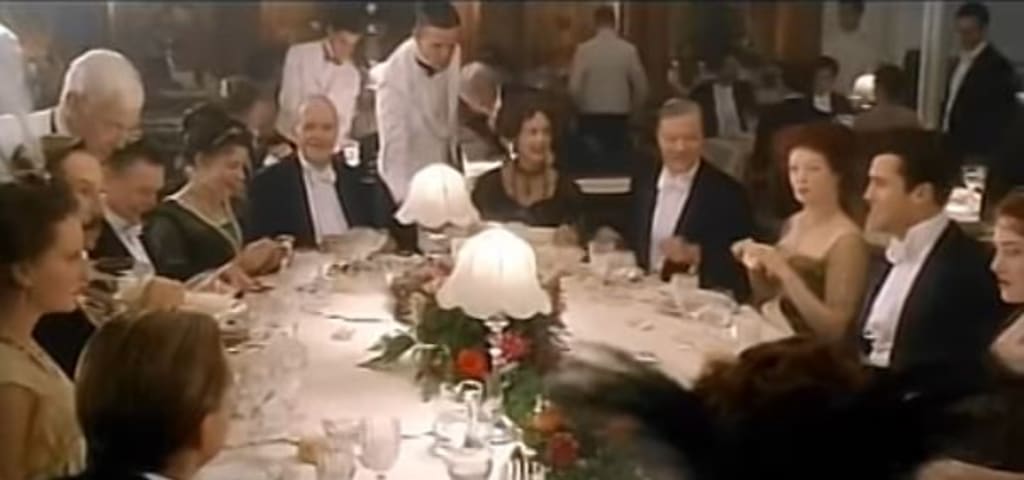
2. Dinner in the First-Class Dining Room
Scene: Passengers enjoy a luxurious meal, highlighting the Titanic’s opulence.
Filming: A full-scale dining room set was built, complete with crystal, silverware, and period furniture. Extras wore heavy, authentic costumes. Long, fluid camera takes captured the scale and elegance of the environment.
Challenges: Coordinating movement of extras, waiters, and cameras while keeping costumes and props intact was a major logistical task.

3. The Sinking of the Ship
Scene: The Titanic hits the iceberg and begins to sink, creating chaos among passengers.
Filming: A combination of full-scale sets, water tanks, miniatures, and CGI was used. Sections of the ship were built to tilt and flood, while miniatures captured wide shots. CGI enhanced waves and destruction.
Challenges: Actors performed in freezing water, and safety cables and flotation devices were necessary. Every shot required precise timing to blend practical and digital effects.

4. Flooded Cabins and Interior Chaos
Scene: Water invades the interior of the ship, creating panic among passengers.
Filming: Pumps and water tanks simulated flooding, and extras had to react naturally while coordinating with cameras and safety measures. Multiple angles were filmed to show realistic panic.

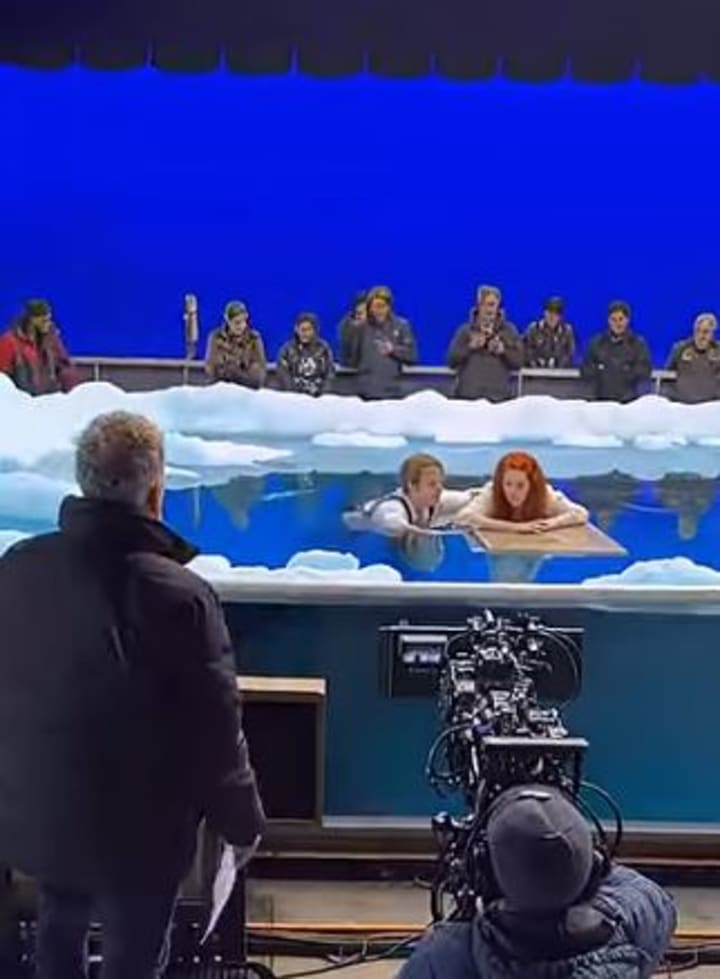
5. Jack’s Final Moments
Scene: Jack dies in the icy Atlantic while holding Rose above water.
Filming: Shot in a cold-water tank, with hidden flotation devices ensuring safety. Leonardo DiCaprio and Kate Winslet had to combine emotional performance with endurance in the freezing water.
Challenges: Balancing dramatic intensity with the physical strain of the scene required careful direction and safety supervision.
6. The Bowling Out of the Shipwreck
Scene: The film begins and ends with modern explorers discovering the Titanic wreck.
Filming: Underwater ROVs (robotic submarines) captured footage of the actual wreck, later enhanced with CGI for storytelling purposes. The eerie, mysterious mood was achieved through careful lighting and camera angles.
7. The Third-Class Party Scene
Scene: Jack brings Rose to a lively third-class party below deck where people are dancing, laughing, and playing music. This scene contrasts sharply with the formal first-class environment.
Filming: The set was built as a tight, low-ceiling interior to emphasize the crowded, energetic atmosphere. Real dancers were hired to keep movements natural. The camera was handheld for many shots to add realism and chaos.
Challenges: Extras had to dance for hours in heavy period costumes under hot studio lights. The fast camera movement required precise choreography to avoid collisions.
8. Rose Runs from Cal (Chase Through the Ship)
Scene: After feeling trapped in her engagement, Rose runs through the ship while Cal chases her through hallways and stairs.
Filming: This was shot on long corridor sets connected by staircase replicas. The crew used tracking shots to follow the actors continuously, giving the chase urgency and momentum.
Challenges: The actors had to repeat long running sequences multiple times while maintaining emotional intensity and precise timing with camera operators.
9. The Iceberg Collision
Scene: Lookouts spot the iceberg too late, and the Titanic strikes it along the side.
Filming: The iceberg itself was created using a mix of real ice, sculpted foam, and CGI. The ship’s side was a physical set that water was pumped against. Miniature models helped create wide external views.
Challenges: Lighting had to simulate moonlight, and water movement had to match the scale of the real ocean while staying safe for crew and actors.
10. The Rising Stern (Passengers Sliding)
Scene: As the ship tilts upward, passengers lose their balance and slide down the deck into the ocean.
Filming: The deck was built on a massive hydraulic rig that could lift upward at controlled angles. Actors wore safety harnesses painted out later with CGI.
Challenges: Timing was critical—actors had to fall in sync with the rising set while avoiding collisions.
11. The Grand Staircase Flooding
Scene: The famous Grand Staircase fills with water, destroying one of the most beautiful rooms of the ship.
Filming: A full-scale replica of the staircase was built specifically to be destroyed. Thousands of gallons of water were released at once for a single, powerful take.
Challenges: The staircase was completely ruined after the take and had to be rebuilt for earlier scenes. The massive water release was extremely dangerous and required precise safety coordination.
12. The Musicians Playing as the Ship Sinks
Scene: The ship’s band continues to play calm music as chaos unfolds around them.
Filming: Shot on a slightly tilted deck set surrounded by water effects and extras in panic.
Challenges: Actors had to remain calm and composed while cold water was being sprayed and passengers rushed past them, maintaining emotional stillness in a chaotic environment.
13. Mothers and Children at the Lifeboats
Scene: Emotional moments where mothers say goodbye to their husbands while boarding lifeboats with their children.
Filming: Shot in controlled lighting to emphasize shadow and emotion. Many extras were real families to create natural interactions.
Challenges: Cameron demanded multiple takes to capture authentic grief without exaggeration.
14. The Ship Splitting in Half
Scene: The Titanic breaks apart before sinking completely.
Filming: A combination of large-scale miniature models and CGI was used. Only small physical sections were built for close-up shots with actors.
Challenges: The physics of the split had to be scientifically accurate while visually dramatic. This required years of digital simulation work.
15. Rose’s Final Rescue
Scene: Rose floats among frozen bodies and is finally rescued by a returning lifeboat.
Filming: Shot in a gigantic water tank filled with floating body doubles and special effects makeup.
Challenges: Maintaining stillness in freezing water for long periods was extremely demanding for the actors and extras.
16. Rose Letting Go of Jack’s Hand
Scene: Rose gently releases Jack’s frozen hand into the ocean.
Filming: Shot in close-up using controlled breathing systems under the water so the actor could remain submerged safely.
Challenges: The emotional weight of the scene required complete silence on set to help the actor stay immersed in the moment.
17. The Final Dream Sequence on the Grand Staircase
Scene: Rose reunites with Jack at the restored Grand Staircase in a dreamlike afterlife sequence.
Filming: The staircase was rebuilt exactly as it appeared at the start of the film. Soft lighting and slow camera movement were used to create a heavenly atmosphere.
Challenges: All the background actors had to stand perfectly still and silent for long takes.
About the Creator
Sen Sab
Join me in exploring the extraordinary in the ordinary, and let's dive deep into the realms of imagination and understanding together
Keep reading
More stories from Sen Sab and writers in Motivation and other communities.
How to Heal from a Breakup
Breakups. We've all been through them—some of us more than once, others maybe just once—but no matter how many times it happens, it's always painful. We often think we’ll be ready when the time comes, but we're never truly prepared for the emotional rollercoaster that follows. A breakup is the end of something you've built, a connection filled with emotions, hopes, time, and dreams. And even though it may feel like the world is ending, I can tell you from personal experience that it’s not. The Beginning of My Journey Through a Breakup
By Sen Sab10 months ago in Motivation
You Did Nothing Wrong- And You Deserve Love, Not Blame
Did your partner break up with you? Did you lose your job? Or did you get some bad news? Then these words are for you. Before we begin, I open my arms and offer you a big, tender, comforting hug. It’s okay to cry. It’s okay to grieve a loss. Now, let me serve you a warm cup of tea and a generous slice of chocolate cake.
By Jeanne Jess 4 days ago in Motivation
The Power of Self-Improvement: Small Changes That Transform Your Life
It Is Important to Understand Yourself Self-improvement begins with understanding ourselves. We often ignore our weaknesses and habits. Unless we observe our thoughts and reactions, we cannot change them. Speaking the truth to ourselves is difficult, but real growth begins there. Every day we should take some time to think about where we are making mistakes and where we can improve.
By NadirAliWrites4 days ago in Motivation




Comments
There are no comments for this story
Be the first to respond and start the conversation.