
Three Books for Growth Mindset
Unlocking Personal and Professional Success through a Growth Mindset


Personal development and self-improvement are lifelong journeys that require consistent effort and dedication. Fortunately, there is no shortage of resources available for individuals looking to enhance their lives and achieve their goals. In this discussion, we will explore three books that offer unique insights and actionable strategies for personal growth and success. These books are "Atomic Habits" by James Clear, "I Will Teach You to Be Rich" by Ramit Sethi, and "How to Win Friends & Influence People" by Dale Carnegie. While each book approaches personal development from a different angle, they all share the common goal of empowering readers to make positive changes in their lives. Through exploring the key concepts and principles of these books, we hope to provide valuable insights and inspiration for individuals seeking to develop their own personal growth and success strategies.
- Atomic Habits

In the context of personal development and self-improvement, "Atomic Habits" by James Clear offers a powerful framework for creating positive change in one's life. The book focuses on the importance of developing good habits and breaking bad ones, and offers practical strategies for doing so. Clear draws on the most proven ideas from biology, psychology, and neuroscience to create an easy-to-understand guide for making good habits inevitable and bad habits impossible. Through true stories from Olympic gold medalists, award-winning artists, business leaders, life-saving physicians, and star comedians, readers are inspired and entertained while learning how to make time for new habits, overcome a lack of motivation and willpower, design their environment for success, and get back on track when they fall off course. Whether the reader is an individual looking to achieve a personal goal, or a team or organization hoping to redefine an industry, "Atomic Habits" offers a proven system for making positive changes and achieving remarkable results through tiny behaviors.
Atomic Habits: An Easy & Proven Way to Build Good Habits & Break Bad Ones
Our habits define us. They are the actions we take repeatedly, shaping our behavior and ultimately our destiny. However, creating and breaking habits is not easy. We often find ourselves slipping back into old habits, even when we know they are not good for us. That's where "Atomic Habits" comes in.
Written by James Clear, "Atomic Habits" offers a practical and actionable framework for building good habits and breaking bad ones. In this article, we will explore the key concepts and principles discussed in the book, and how they can be applied to our daily lives.
- The 1% Rule: Small Changes, Big Results Clear argues that the key to building better habits is not to focus on drastic changes but to make small, incremental improvements every day. He calls this the 1% rule, where you focus on improving just 1% every day. Over time, these small improvements compound and lead to significant results. For example, if you start walking for just 15 minutes a day, you will have walked for over 90 hours by the end of the year.
- The Four Laws of Behavior Change Clear outlines four laws of behavior change that can help you create good habits and break bad ones. The laws are:
- Make it obvious: This law emphasizes the importance of making your habits visible and apparent. For example, if you want to start reading more, leave a book on your nightstand so you see it every night before bed.
- Make it attractive: This law focuses on making your habits enjoyable and rewarding. For example, if you want to start working out, join a fitness class with friends so you look forward to it.
- Make it easy: This law stresses the importance of making your habits easy to do. For example, if you want to start meditating, start with just one minute a day and gradually increase the time.
- Make it satisfying: This law emphasizes the importance of making your habits rewarding and satisfying. For example, if you want to start eating healthier, reward yourself with a healthy snack after each meal.
3. The Importance of Environment Clear argues that our environment plays a significant role in shaping our habits. To create good habits, you need to design your environment to support your habits. For example, if you want to eat healthier, stock your kitchen with healthy food options and remove junk food. This will make it easier for you to make healthier choices.
4. Identity-Based Habits Clear suggests that we should focus on identity-based habits, where we align our habits with our identity. For example, if you want to become a writer, start identifying as a writer and make writing a part of your daily routine. This will make it easier for you to build the habit of writing and make it a part of your identity.
In conclusion, "Atomic Habits" offers a powerful and practical framework for building good habits and breaking bad ones. By making small, incremental improvements every day and focusing on the four laws of behavior change, you can create habits that will shape your life and lead to remarkable results. Whether you want to improve your health, productivity, or relationships, "Atomic Habits" offers a proven system that can help you achieve your goals.
What are the benefits of adopting a growth mindset according to James Clear?
James Clear, the author of "Atomic Habits", emphasizes the importance of adopting a growth mindset for personal and professional success. Here are some benefits that Clear outlines:
Increased Resilience: A growth mindset allows individuals to view failure as an opportunity to learn and grow, rather than a setback. This resilience helps them to persevere through challenges and setbacks and bounce back stronger.
Greater Creativity: A growth mindset encourages individuals to think outside the box and explore new ideas. This leads to greater creativity and innovation, as they are not limited by a fixed mindset that resists change.
Improved Performance: By adopting a growth mindset, individuals are more likely to take on new challenges and push themselves outside of their comfort zones. This leads to improved performance and greater success in their personal and professional lives.
Increased Self-Confidence: A growth mindset allows individuals to see their potential for growth and improvement, which increases their self-confidence and self-esteem. They are more likely to take on challenges and feel confident in their ability to overcome obstacles.
Stronger Relationships: Adopting a growth mindset can improve relationships with others by fostering a collaborative and supportive environment. Individuals with a growth mindset are more open to feedback and willing to learn from others, which strengthens relationships and fosters teamwork.
Overall, Clear emphasizes that a growth mindset is essential for achieving long-term success and personal fulfillment. By embracing the belief that one can improve and grow, individuals can develop the habits and mindset necessary to achieve their goals and become their best selves.
CLICK TO GET YOUR ATOMIC HABITS
- I Will Teach You to Be Rich
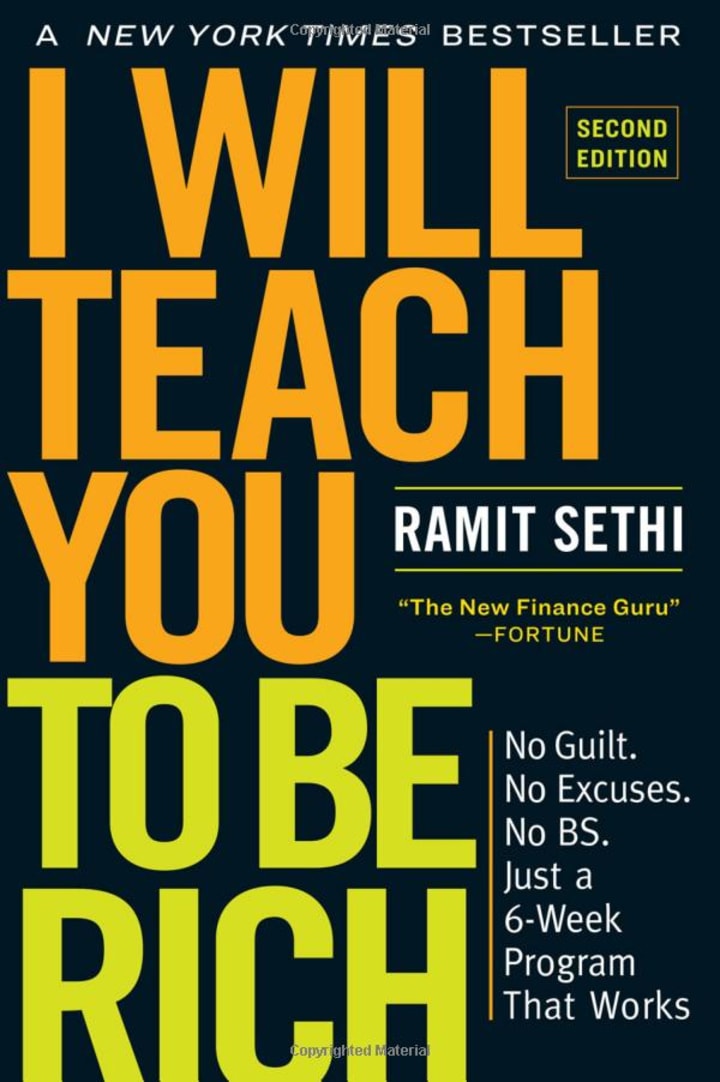
"I Will Teach You to Be Rich" is a personal finance book written by Ramit Sethi that provides a comprehensive, practical, and no-BS six-week program designed to help readers take control of their finances and achieve financial success. Sethi challenges traditional financial advice and encourages readers to buy as many lattes as they want while also showing them how to set up no-fee, high-interest bank accounts and investment strategies that work. The book covers a range of topics, from crushing debt and automating finances to saving hundreds or even thousands of dollars per month and negotiating a raise at work. Sethi's approach is straightforward, actionable, and designed to help readers achieve financial freedom without sacrificing the things they love. This updated 10th-anniversary edition includes new tools, insights, and inspiring stories of how previous readers have used the book to create their own rich lives.
One of the key concepts that Sethi emphasizes throughout the book is the importance of automating your finances. He recommends setting up automatic transfers to your savings and investment accounts, as well as automating your bill payments and other recurring expenses. By doing so, you can ensure that your money is going where it needs to go without having to constantly micromanage it.
Another important principle that Sethi discusses is the power of conscious spending. While many personal finance gurus advocate for extreme frugality, Sethi takes a more balanced approach. He encourages readers to spend money on the things they truly value, while cutting back on expenses that don't bring them joy. By being intentional about your spending, you can create a budget that allows you to live the life you want without overspending.
Sethi also emphasizes the importance of investing, and he provides a simple, set-it-and-forget-it strategy that can help anyone get started. He recommends investing in low-cost index funds, which offer broad exposure to the stock market at a low cost. By doing so, you can take advantage of the long-term growth potential of the stock market without having to constantly monitor your investments.
In addition to these key concepts, "I Will Teach You to Be Rich" covers a wide range of personal finance topics, including debt repayment strategies, negotiating a higher salary, and even how to handle major life events like buying a house or having a baby. Throughout the book, Sethi provides real-world examples and actionable advice that readers can use to improve their financial situation.
Overall, "I Will Teach You to Be Rich" is an essential read for anyone looking to take control of their finances. Whether you're just starting out or you're looking to take your financial game to the next level, the book provides a comprehensive guide to mastering your money and living the life you want. By following Sethi's advice and implementing his strategies, you can build a solid financial foundation that will serve you for years to come.
What are the benefits of adopting a growth mindset according to Ramit Sethi?
Ramit Sethi, the author of "I Will Teach You to Be Rich," does not explicitly discuss the concept of a growth mindset in his book. However, some of the principles he discusses in the book can be seen as promoting a growth mindset.
For example, Sethi emphasizes the importance of investing in oneself through learning and acquiring new skills. He advocates for seeking out mentors and investing in education and professional development. By doing so, individuals can increase their earning potential and advance their careers.
Additionally, Sethi encourages readers to take calculated risks and learn from failures. He promotes the idea of experimenting with new ideas and approaches to see what works and what doesn't, rather than simply sticking to what is safe and familiar.
Overall, while Sethi does not explicitly discuss the benefits of adopting a growth mindset, many of the principles he advocates for in "I Will Teach You to Be Rich" can be seen as promoting a mindset of continuous learning, growth, and improvement. By adopting these principles, individuals can develop the skills, knowledge, and mindset needed to achieve their financial goals and build a rich life.
CLICK TO GET YOUR I WILL TEACH YOU TO BE RICH
- How to Win Friends & Influence People

How to Win Friends and Influence People by Dale Carnegie is a self-help classic that has been helping people achieve success in their personal and professional lives for over 60 years. The book provides practical advice and techniques for building positive relationships, influencing others, and achieving your goals.
The book is divided into four parts, each of which covers a different aspect of interpersonal communication and human behavior. Part one focuses on fundamental techniques for making people like you, such as becoming genuinely interested in others, remembering people's names, and being a good listener. Part two discusses ways to influence others and win them over to your point of view, including the importance of empathy, avoiding arguments, and giving people a sense of importance. Part three provides tips for changing people's behavior without causing resentment, such as praising people's good qualities and avoiding criticism. Part four offers strategies for becoming a better leader, including inspiring people to excel and creating a positive work environment.
The book is filled with anecdotes and real-life examples that illustrate the principles Carnegie outlines. From business leaders to politicians to everyday people, many have found success by applying the techniques and strategies outlined in How to Win Friends and Influence People. The book's practical advice and timeless wisdom continue to be relevant today, making it a must-read for anyone who wants to improve their interpersonal skills and achieve greater success in their personal and professional lives.
Dale Carnegie's classic book, "How to Win Friends & Influence People," has been a bestseller for over 80 years. The book has stood the test of time and has helped countless people improve their relationships, both personal and professional. The key concepts and principles discussed in the book continue to be relevant today, and can help anyone become a better communicator and a more effective leader.
One of the key principles of the book is the importance of showing genuine interest in others. Carnegie emphasizes the need to listen to others and to try to see things from their perspective. By doing so, we can build rapport and establish trust with others, which is essential for effective communication and relationship-building. Carnegie also stresses the importance of giving sincere praise and appreciation to others. By recognizing and acknowledging the good qualities and achievements of others, we can build stronger relationships and motivate others to perform at their best.
Another key principle of the book is the importance of avoiding criticism and negative feedback. Carnegie advises readers to focus on the positive and to look for ways to encourage and support others, rather than criticizing or blaming them. He emphasizes the need to give constructive feedback in a way that is respectful and supportive, rather than critical or confrontational.
Carnegie also emphasizes the importance of being able to influence others without arousing resentment or offense. He advises readers to focus on the needs and interests of others, and to try to find common ground and areas of agreement. By doing so, we can build trust and rapport, and increase our influence with others.
Overall, "How to Win Friends & Influence People" provides practical advice and strategies for building strong relationships and becoming a more effective communicator and leader. The book's principles continue to be relevant today, and can help anyone improve their interpersonal skills and achieve greater success in both their personal and professional lives.
What are the benefits of adopting a growth mindset according to Dale Carnegie?
Dale Carnegie emphasizes the importance of adopting a growth mindset for personal and professional success. Here are some of the benefits that he highlights:
- Increased confidence: A growth mindset encourages individuals to focus on their abilities and strengths rather than their limitations. This mindset helps build confidence and self-assurance, which can be helpful in all areas of life.
- Improved problem-solving skills: A growth mindset promotes a willingness to learn and take on challenges, leading to the development of new skills and problem-solving techniques. This approach helps individuals see setbacks as opportunities for growth and learning, rather than insurmountable obstacles.
- Greater adaptability: A growth mindset helps individuals embrace change and view it as an opportunity to learn and grow. This mindset allows individuals to be more open to new ideas and perspectives, helping them adapt to changing circumstances more easily.
- Stronger relationships: The principles in Carnegie's book focus heavily on the importance of building positive relationships with others. Adopting a growth mindset can help individuals develop empathy and understanding towards others, improving communication and strengthening relationships.
- Professional success: A growth mindset encourages individuals to take risks, try new things, and persist through setbacks. These are essential traits for success in any professional field, as they help individuals develop resilience and perseverance.
Overall, adopting a growth mindset can lead to increased confidence, improved problem-solving skills, greater adaptability, stronger relationships, and professional success. It is a mindset that encourages individuals to embrace challenges and pursue personal growth, leading to a more fulfilling and successful life.
CLICK TO GET YOUR HOW TO WIN FRIENDS AND INFLUENCE PEOPLE

In conclusion, developing a growth mindset is crucial for personal growth and success in various aspects of life. It allows individuals to embrace challenges, learn from failures, and continuously improve themselves. By adopting a growth mindset, people can overcome obstacles and achieve their goals by focusing on the process and effort rather than just the outcome. The benefits of a growth mindset, such as increased resilience, creativity, and a positive outlook, can lead to a more fulfilling and successful life. It is never too late to develop a growth mindset, and with dedication and effort, anyone can cultivate this valuable mindset and achieve their full potential.
Congratulations on taking the first step towards developing a growth mindset! Remember, learning and growing is a lifelong journey and there's always room for improvement. Don't be afraid to explore more resources and continue to challenge yourself. Whether it's reading more books, taking courses, or seeking out mentors, the opportunities for personal growth are endless. So keep pushing yourself and embrace the challenges that come your way. With a growth mindset, anything is possible!
About the Creator
Keep reading
More stories from Joao Mateus Rezende and writers in Motivation and other communities.
Three Kitchen Gadgets That You Need
In today's fast-paced world, kitchen gadgets have become essential tools to simplify cooking and enhance our culinary experiences. From preparing healthy shakes to precisely measuring ingredients, the right gadgets can make a significant difference in the kitchen. In this article, we will explore three must-have kitchen gadgets: the BlenderBottle Classic V2 Shaker Bottle, the Etekcity Food Kitchen Scale, and the Amazon Basics Stainless Steel Digital Kitchen Scale. These gadgets offer convenience, accuracy, and versatility, empowering you to create delicious meals and beverages with ease. Let's delve into the features, benefits, and practical uses of these innovative kitchen tools, and discover how they can elevate your cooking and baking endeavors to new heights.
By Joao Mateus Rezende3 years ago in Potent
Why Your Growth Mindset Might Be Holding You Back From Real Progress
A growth mindset is often viewed as the foundation of lifelong learning, resilience, and personal achievement. It encourages people to believe that abilities can be developed through practice, effort, and the right strategies. While this mindset can be powerful, it does not automatically guarantee progress. In fact, many people who embrace a growth mindset still struggle to see meaningful results. The issue is not the mindset itself but how it is applied. Misunderstandings, unrealistic expectations, and ineffective habits can turn this helpful perspective into a frustrating roadblock. Understanding how this happens can help you break free from patterns that limit your growth and start making real progress.
By Jeb Kratzig7 days ago in Motivation
The Pop Star Who Survived Seven Years of Purgatory: The Brutal Reality of Katy Perry’s Success
Look at the summit of modern pop culture, and Katy Perry’s name is etched in stone. She has sold over 143 million records worldwide. She has tied Michael Jackson’s historic record for the most number-one singles from a single album. She has performed at the Super Bowl halftime show, flying across a stadium of screaming fans while riding a mechanical golden lion. To the casual observer, she is the ultimate embodiment of the Hollywood pop machine—a glittering, flawless, mathematically perfect success story.
By Frank Massey 5 days ago in Motivation



Comments
There are no comments for this story
Be the first to respond and start the conversation.