
The Tale of Transformative Learning:
Exploring the Latest Trends in Online Courses

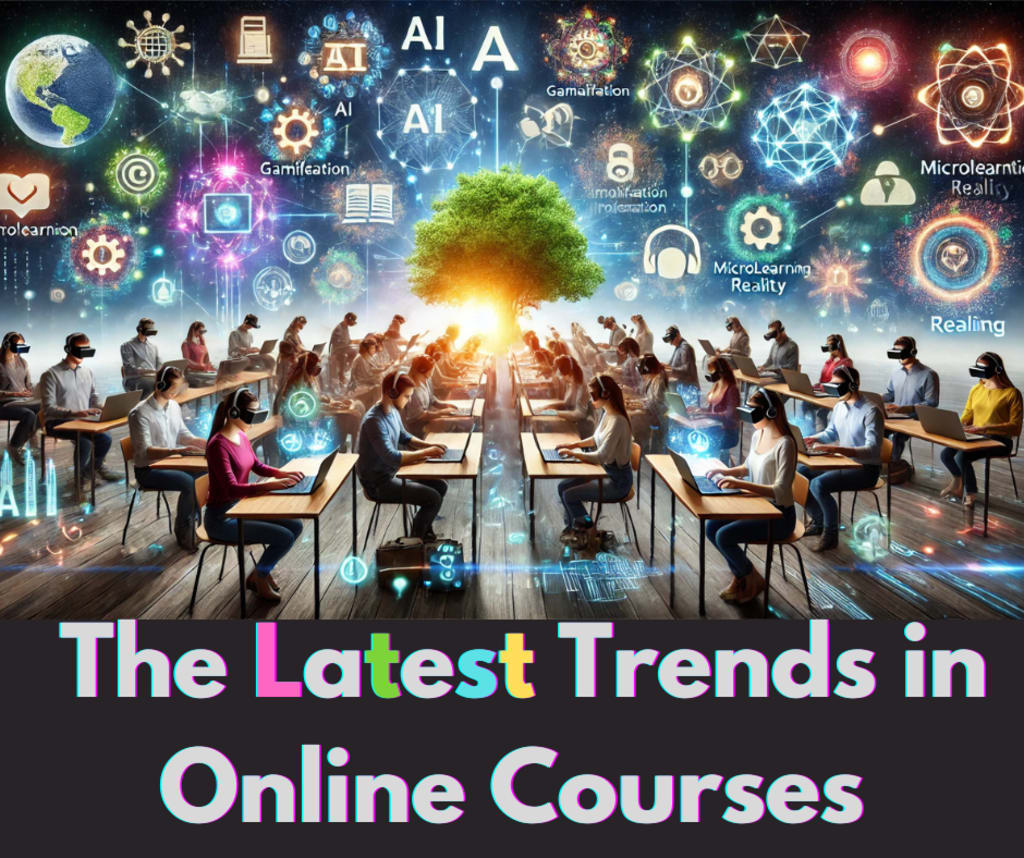
Once upon a time, in a world that was rapidly shifting from analog to digital, education was undergoing a silent revolution. The age-old tradition of classrooms and chalkboards was giving way to virtual spaces where learners could connect across continents, armed with nothing but a device and an internet connection. This is the tale of how online courses became a treasure trove of opportunities, evolving in remarkable ways to meet the changing demands of a fast-paced world.
Chapter 1: The Dawn of Personalization
Emma was an aspiring graphic designer who felt lost in traditional classrooms. She yearned for a way to learn at her own pace, where every lesson felt crafted just for her. One fateful evening, she stumbled upon an online platform promising "personalized learning paths."
Personalization in online courses wasn’t just a buzzword anymore; it had become a cornerstone of effective learning. Platforms began leveraging artificial intelligence (AI) to tailor course recommendations, quizzes, and even assignments based on individual learners’ strengths and weaknesses.
For Emma, this meant receiving a custom study plan that focused on typography and branding, two areas she wanted to master. The software adapted as she progressed, offering advanced modules once she nailed the basics. Emma wasn’t alone in this journey—millions of learners worldwide embraced this trend, finding joy in lessons that felt uniquely their own.
Key Trend: AI-Driven Learning
Online education providers like Coursera, Udemy, and edX have integrated AI algorithms to analyze user behavior and provide tailored learning experiences. By 2025, the global AI education market is expected to grow exponentially, shaping how we learn.
Chapter 2: The Rise of Microlearning Islands
Far away, in a bustling city, Liam, a young professional, was caught in the hustle of life. He didn’t have hours to spare for traditional courses. One day, as he waited for his train, he discovered a course titled “Design in 5 Minutes a Day.”
Welcome to the world of microlearning—a trend built for the busy bees like Liam. Microlearning breaks down topics into digestible chunks, often no longer than 10 minutes. These bite-sized lessons, often in the form of videos, quizzes, or infographics, cater to learners seeking knowledge without time-consuming commitments.
For Liam, the daily train rides turned into productive moments. Each micro-lesson brought him closer to becoming proficient in UX design. And as he joined forums and completed challenges, he realized that even short bursts of learning could lead to monumental change.
Key Trend: The Popularity of Microlearning
Microlearning is booming, especially for corporate training and skill enhancement. Platforms like Skillshare and LinkedIn Learning champion this trend, proving that even small steps can create big results.
Chapter 3: Immersive Realms of VR and AR
In a distant village, Maya, an aspiring surgeon, faced a daunting challenge: access to practical experience was scarce. That was until her professor introduced her to a virtual reality (VR) course.
Through a headset, Maya found herself inside a virtual operating room, surrounded by tools she could manipulate. It felt as real as any classroom, perhaps even better. VR and augmented reality (AR) have turned Maya’s world into a playground for practical skills.
Immersive technology was transforming fields like healthcare, engineering, and even art. It allowed learners to engage with realistic scenarios, making mistakes without real-world consequences. For Maya, it wasn’t just learning—it was an adventure.
The Development of VR and AR in Schooling
Companies like Oculus and platforms like Immerse are paving the way for virtual and augmented learning experiences. Experts predict that by 2030, AR and VR will become essential tools for skill-based training worldwide.
Chapter 4: The Power of Peer Learning
In another part of the world, Carlos, a software engineer, signed up for a boot camp that promised something extraordinary: a global community of learners.
The latest online courses weren’t just about consuming content—they were about interaction. Discussion boards, live sessions, and group projects allowed learners like Carlos to collaborate and exchange ideas with peers across the globe. It wasn’t just about learning code; it was about networking and building lasting connections.
Social learning, powered by platforms like Slack, Discord, and Zoom, created an ecosystem where learners thrived together. Carlos found himself sharing insights, debating theories, and even securing job opportunities through this vibrant community.
Key Trend: Social and Collaborative Learning
Research shows that people learn better when they engage with others. Collaborative tools in online courses are increasingly common, making education a shared experience rather than an isolated journey.
Chapter 5: The Freedom of Asynchronous Learning
Deep in the heart of the Amazon rainforest, Ana, a teacher, was determined to continue her education while preserving her unique lifestyle. Online courses that allowed asynchronous learning became her beacon of hope.
Unlike traditional classrooms, these courses provided pre-recorded lectures, downloadable resources, and flexible deadlines. Ana could log in anytime, watch videos, and submit assignments at her convenience—all while tending to her responsibilities in the rainforest.
The beauty of asynchronous learning wasn’t just convenience—it was inclusivity. People from different time zones, backgrounds, and schedules found a way to learn without sacrificing their daily lives.
Key Trend: Asynchronous Learning Models
Platforms like Khan Academy and Teachable embrace asynchronous learning, ensuring that anyone, anywhere, can access knowledge without boundaries.
Chapter 6: The Credential Revolution
One day, Priya, a marketing graduate, discovered a troubling truth—her degree wasn’t enough to stand out. She needed proof of her skills in a world that demanded more than paper qualifications.
Digital badges and micro-credentials emerged as a solution. Platforms like Credly and Coursera began offering certifications that validated specific skills. These were backed by verifiable blockchain technology, making them as credible as traditional diplomas.
For Priya, earning a Google Analytics certification opened doors to roles that valued her expertise. She realized that stacking micro-credentials could build a portfolio that spoke louder than a resume ever could.
Key Trend: Rise of Micro-Credentials
According to LinkedIn’s Workforce Learning Report, 76% of professionals believe that micro-credentials increase employability,, highlighting the growing demand for skill-specific certifications.
Chapter 7: The Age of Gamification
In a small coastal town, Ahmed, a high school student, dreaded studying history. That changed when he signed up for an online course gamified with leaderboards, rewards, and interactive storytelling.
Gamification turned mundane lessons into thrilling challenges. Each module felt like a quest, and achievements unlocked virtual badges and points. For Ahmed, this engagement was the key to staying motivated and excelling in his studies.
Game-based learning wasn’t just for kids. Corporate training modules and even higher education adopted this trend, making learning fun for everyone.
Key Trend: Gamification in Learning
With platforms like Duolingo and Kahoot leading the charge, gamification in online courses is driving learner engagement, retention, and enjoyment.
Chapter 8: The Eco-Conscious Movement
Finally, in a bustling city, Neha, an environmental activist, discovered a trend close to her heart. Online courses were becoming eco-friendly. By eliminating commutes, printing, and physical infrastructure, they drastically reduced carbon footprints.
Many platforms started incorporating sustainability themes, teaching learners about renewable energy, climate change, and eco-friendly practices. For Neha, this wasn’t just about personal growth—it was about creating a better world.
Key Trend: Sustainability in Education
Environmental awareness is influencing online education, as providers explore ways to minimize their impact while educating learners on crucial global issues.
Epilogue: The Future Beckons
The journey of online courses is far from over. From personalised AI tutors to immersive VR classrooms, the trends shaping education today are paving the way for a brighter, more inclusive future.
For Emma, Liam, Maya, Carlos, Ana, Priya, Ahmed, and Neha, these trends weren’t just innovations—they were lifelines, transforming their lives and helping them achieve dreams once thought impossible.
And so, as this tale unfolds, one thing remains certain: the story of online courses is a testament to human ingenuity and the boundless potential of learning in the digital age.
Disclaimer:
This article may contain affiliate links. If you click on these links and make a purchase, we may earn a small commission at no additional cost to you.
Thank you for your support!
About the Creator
TaleSpot
I enjoy exploring new ideas and sharing my thoughts with the world.
Keep reading
More stories from TaleSpot and writers in Motivation and other communities.
The Power of Knowledge: Why Educational Content Resonates
The Power of Knowledge: Why Educational Content Resonates In a world overflowing with information, the desire to learn and grow remains a universal human trait. Educational content, whether it focuses on academic subjects, personal development, or life skills, caters to this innate curiosity. It provides a pathway for individuals to expand their horizons, enhance their understanding of the world, and ultimately, improve their lives.
By TaleSpotabout a year ago in Motivation




Comments
There are no comments for this story
Be the first to respond and start the conversation.