
The Small Routines That Quietly Transform Your Mental Health
Gentle, human-style habits that build resilience, clarity, and emotional balance—one day at a time

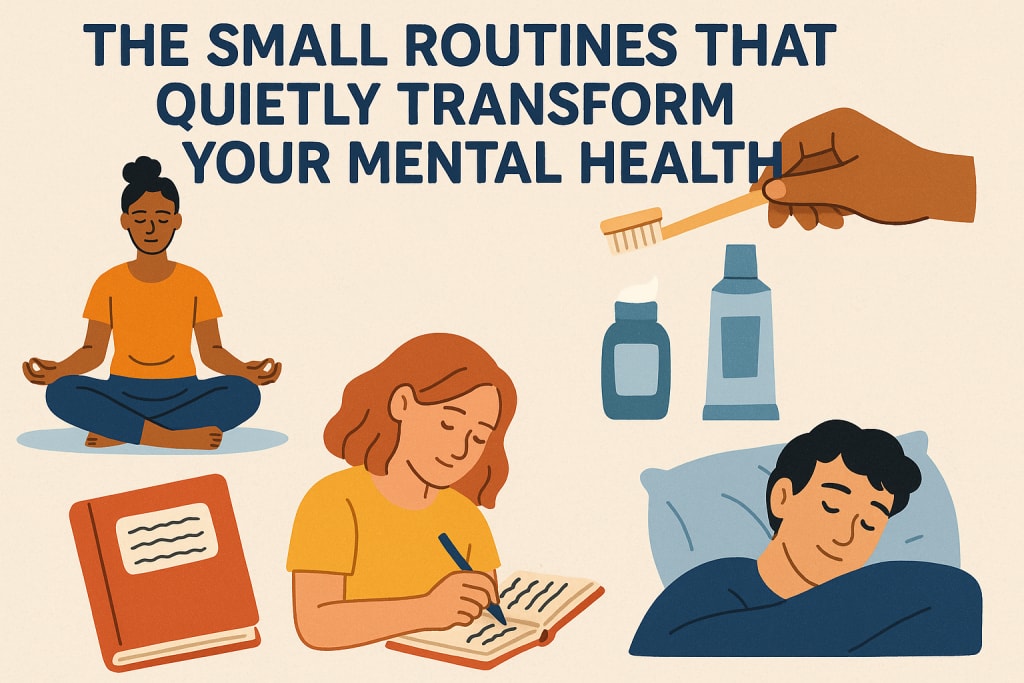
The Small Routines That Quietly Change Your Mental Health
Every day, our minds are bombarded by notifications, responsibilities, and invisible pressures. In the rush of modern life, it’s easy to underestimate the quiet power of small routines—gentle habits that seem insignificant but can meaningfully shift your emotional well-being.
But what actually makes these routines powerful? And why do simple, human-style practices make such a deep difference?
What Are Small Routines for Mental Health?
Small routines are simple, consistent habits woven into daily life — tiny actions that support emotional balance, reduce stress, and build resilience. Unlike dramatic lifestyle changes, these habits are gentle, accessible, and sustainable.
Many psychologists note that people who engage in small, mindful habits often report better emotional stability than those who rely solely on big, infrequent changes.
“Small, intentional habits can be more powerful than dramatic overhauls. Repetition breeds resilience.”
Clinical insight from modern psychology
The Science Behind Gentle Routines
How Small Habits Shape the Brain
Recent neuroscience research shows that habits such as mindful breathing, gratitude journaling, and short reflective pauses help:
strengthen the brain’s emotional regulation centers
reduce stress hormones
improve focus and clarity
build neural pathways associated with calm and resilience
Why Consistency Matters
Consistent habits activate the brain’s reward system.
Repetition reinforces patterns of calm and control.
Small routines reduce decision fatigue, preserving mental energy.
A Real Example: The 5-Minute Morning Reset
Many wellness programs have observed that individuals who start their day with just five minutes of mindful intention—breathing, stretching, gratitude—often notice:
reduced stress
better focus
improved sleep
more emotional balance
Takeaway: Even brief, gentle habits can create meaningful change.
5 Small Habits That Quietly Change Your Mental Health
1. Mindful Breathing
Mindful breathing resets the nervous system and anchors the mind.
Try This: 4–4–6 Breathing
Inhale for 4 seconds
Hold for 4 seconds
Exhale for 6 seconds
Repeat for 1–3 minutes
This simple routine signals safety to the brain and calms overwhelm.
2. Daily Gratitude Journaling
Writing down three things you’re grateful for each morning shifts your focus from stress to strength.
Benefits include:
more optimism
better mood
reduced anxiety
stronger emotional resilience
Even two minutes a day makes a difference.
3. Short Digital Detox Breaks
A “digital detox” doesn’t need to be dramatic.
A few intentional minutes away from screens can reset your entire mood.
Try These Micro-Breaks
a quick walk outside
calming music with your phone out of sight
gentle stretching or slow breathing
These tiny pauses reduce overstimulation and improve clarity.
4. Mindful Hydration
This habit is simple:
Every time you drink water, check in with your body.
How to Practice
Notice the temperature, flavor, and sensation
Take one deep breath after each sip
Pair hydration with a kind thought or affirmation
This small act creates mindfulness throughout your day.
5. Evening Reflection & Intention Setting
Before bed, take a minute or two to reflect on your day.
Try These Prompts
What went well today?
Where can I be gentler with myself?
What’s one intention for tomorrow?
Reflection helps you close the day with clarity and begin the next with purpose.
Why Small Routines Work Better Than Big Changes
Small routines:
Feature Gentle Routines Major Life Changes
Ease of Use Very easy, difficult
Stress Level: Low/High
Sustainability Long-term Often short-lived
Emotional Impact Stable, gradual growth Overwhelming at times
Gentle habits are easier to maintain and often lead to more lasting change because they work with your brain, not against it.
The Human Element: Compassion + Consistency
What makes small routines powerful is their humanity.
They don’t require perfection—only presence.
Self-compassion and gentle consistency reduce anxiety, boost motivation, and encourage healthier self-talk. When routines are aligned with your real life, not forced onto it, they create lasting transformation.
Frequently Asked Questions
How quickly do small routines help?
Most people notice positive shifts within a few weeks of gentle consistency.
Can I combine multiple routines?
Yes—but start small. Layer habits slowly.
What if I miss a day?
You’re human. Come back gently. No guilt.
Are small habits helpful for anxiety?
Yes. Many mental health practitioners recommend mindful breathing, journaling, and micro-breaks as effective ways to ease anxiety.
How to Start Your Own Routine
Pick one small habit that feels easy.
Set a gentle reminder.
Track your progress with kindness.
Adjust weekly based on what feels good.
Celebrate small wins — they matter.
Final Thoughts: Small Routines, Big Impact
In a world that idolizes hustle and dramatic transformation, small routines offer a gentler, more sustainable path to emotional well-being. Mindful breathing, gratitude, reflection, hydration, and digital breaks build resilience quietly—but powerfully.
Transformation doesn’t come from intensity.
It comes from consistency.
Start with one gentle habit today.
Your mind, body, and spirit will feel the difference.
About the Creator
abualyaanart
I write thoughtful, experience-driven stories about technology, digital life, and how modern tools quietly shape the way we think, work, and live.
I believe good technology should support life
Abualyaanart
Keep reading
More stories from abualyaanart and writers in Motivation and other communities.
10 Brutal Truths About Self-Worth I Learned in My 20s
10 Brutal Truths About Self-Worth I Learned in My 20s In our fast-paced, hyperconnected world, the quest for self-worth can feel like a never-ending pursuit. But what does self-worth really mean? Self-worth is the inner belief that you are valuable and deserving of respect—regardless of achievements, setbacks, or other people’s opinions.
By abualyaanart3 months ago in Motivation
My Body Is Not a Moral Failure
There are two labels that tend to arrive before people know anything else about me. Disabled. Obese. One is a neurological condition. The other is a number calculated from height and weight. Neither tells the full story of the body I live in.
By Millie Hardy-Sims2 days ago in Motivation
How To Turn Your Passion Into a Real Business
If you don’t love your job, chances are you’ll end up dissatisfied and drained. If that’s the case, it is worth the effort to find—or create—work that truly fulfills you. Too many people are unhappy at work, and that discontent has a nasty habit of spilling over into every other part of life.
By Eleanor Annayabout 16 hours ago in Motivation


Comments
There are no comments for this story
Be the first to respond and start the conversation.