
"The Rise of Ember & Co."
“Leading with Purpose, Building for Change”

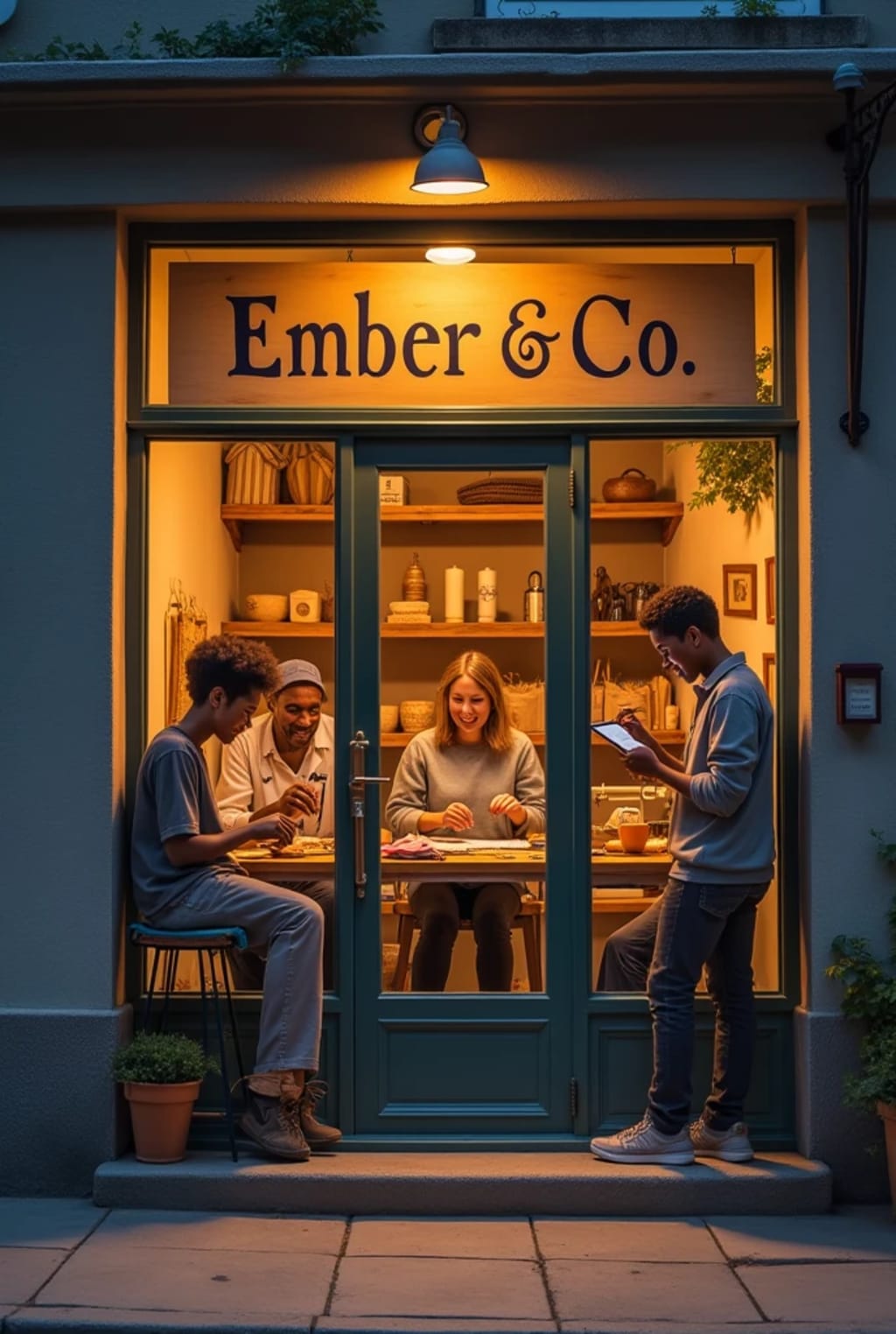
Ava Carter had always done what was expected of her—top of her class, Ivy League graduate, corporate ladder climber. By 30, she had a sleek apartment in the city and a high-paying job at one of the world’s leading marketing firms. On paper, it was the perfect life. But every morning, as she stared into her coffee cup in the office lounge, she felt it: the hollow echo of a life built for profit, not purpose.
It was after a visit to her hometown that everything changed.
The once-vibrant community of Easton Hollow was fading. The factory had closed, small shops were boarded up, and young people were moving away in search of jobs. Her favorite coffee shop, where she once wrote dreams in a notebook, was gone. The people she grew up with were tired, working hard for little return. Ava left with a quiet ache—and an idea.
What if business could be different? What if profit wasn’t the only bottom line?
Two months later, Ava quit her job and moved back to Easton Hollow. Friends called her crazy. Some warned she’d regret it. But Ava had a vision. She would build a business—Ember & Co.—a brand that would design sustainable lifestyle products made in small batches by local artisans, using local materials. She wanted the company to not just sell, but serve. Every product would tell a story, and every worker would have one worth sharing.
The beginning was tough. She used her savings to rent a tiny storefront and converted it into a workshop and office. She started knocking on doors, pitching her vision to neighbors, some of whom hadn’t held steady work in years. Slowly, she assembled a team—Marcos, a retired carpenter; Tasha, a single mom who used to sew her kids’ clothes; Darnell, a high school dropout who loved design but never had a shot.
They learned together. Ava taught branding and digital marketing. The team brought in their skills, culture, and creativity. Ember & Co.'s first product—a handmade canvas tote—was rough, but honest. Ava posted it online, told their story through short videos and blog posts, and within a week, they sold out.
Word spread. More orders came. They added new products—reclaimed wood shelves, hand-dyed textiles, candles made from local beeswax. Each one came with a tag: "Made by [Name], Rebuilding Easton Hollow." Customers loved the authenticity, the quality, the heart behind the brand.
As the business grew, Ava refused to compromise on values. All profits were reinvested into the community. She created mentorship programs for local teens, offered free workshops for aspiring entrepreneurs, and gave bonuses to employees when the company hit milestones. Ember & Co. became more than a store—it became a movement.
Investors approached her, eager to scale the brand nationally. Ava hesitated. Growth was tempting, but she feared losing the soul of what they’d built. So she took a different path. She helped other towns start their own Ember-inspired cooperatives, offering guidance and startup grants. Instead of building one empire, she sparked many small fires across the country.
Five years later, Easton Hollow was alive again. The coffee shop reopened. A community center was built. Young people stayed. And Ember & Co. wasn’t just a business anymore—it was a story of what’s possible when leadership puts people first.
Standing in the sunlit storefront, Ava watched her team laughing over coffee, brainstorming a new product. She smiled. She hadn’t just built a company.
She had built hope.
Ava Carter never imagined she’d leave the bustling world of corporate marketing. With a corner office at one of the top firms in New York, a six-figure salary, and a team under her command, she had everything she was supposed to want. But each day, as she watched campaigns promote products with little meaning or social value, she felt a growing disconnection from her work. Her life had become a series of deadlines, meetings, and numbers—none of which made her feel alive.
Then came a turning point.
After nearly ten years away, Ava visited her hometown of Easton Hollow, a once-thriving small town in the Midwest. It was a place filled with memories—weekend farmer’s markets, street musicians, and locally owned shops on every corner. But the town had changed. Factories had shut down, jobs had vanished, and many buildings were abandoned. The energy she remembered had been replaced with silence and boarded-up dreams. The local coffee shop, where she’d written her college essays and dreamed big, was now a vacant shell.
Something stirred in her. As she stood in front of that shuttered café, Ava thought, This isn’t just nostalgia. This is a calling.
Two months later, against the advice of nearly everyone in her professional circle, Ava resigned from her job, broke her lease, and moved back to Easton Hollow. Her mission was bold: to build a new kind of business—one rooted in people, purpose, and community. She named it Ember & Co., symbolizing the idea that even in ashes, there are embers waiting to be rekindled.
Her idea was to start a sustainable lifestyle brand that would source materials locally and provide jobs and training to people in the town. She envisioned handcrafted products—tote bags, candles, home décor—all made with intention and care, telling a story of revival through every item.
At first, the town was skeptical. Some saw her as just another outsider, despite having grown up there. But Ava didn’t back down. She walked the streets, knocked on doors, and invited people to be part of something new. She met Marcos, a retired carpenter with a knack for creating beauty from reclaimed wood. She hired Tasha, a single mom with amazing sewing skills who’d been working three part-time jobs just to survive. Then there was Darnell, a teenager who dropped out of high school but had an incredible eye for design and photography.
With her savings, Ava rented a small building and turned it into a hybrid studio and retail space. It wasn’t fancy, but it was theirs. They brainstormed, learned together, failed, and tried again. Their first line of products—simple canvas tote bags and beeswax candles—wasn’t perfect, but it was real. Ava used her marketing expertise to build a brand around the people behind the products. She shared their stories online, showed behind-the-scenes videos, and emphasized transparency and heart.
The response was overwhelming. Customers from around the country resonated with the brand. Orders started pouring in. Not just because the products were high quality, but because people believed in the mission. Ember & Co. didn’t just sell things—it sold hope, connection, and a new vision for what business could be.
As demand grew, Ava faced a decision. Investors approached her, eager to scale the business quickly. But Ava didn’t want to turn Ember & Co. into another faceless brand. Instead of expanding outward, she focused on deepening the impact locally. She opened training programs, helped her team learn financial literacy and leadership, and offered internships to local high schoolers. Eventually, Ava developed a model that other towns could replicate—a toolkit to launch their own community-based businesses under the Ember name.
Five years later, Ember & Co. wasn’t just a business. It was a movement. Easton Hollow had seen a quiet renaissance. New shops opened, the local school saw increased enrollment, and people no longer talked about leaving town—they talked about what they could build next.
One evening, as Ava closed the shop, she watched the warm lights reflecting in the windows, laughter echoing from the workshop inside. Her team—once overlooked, now empowered—was discussing ideas for the next product launch. In that moment, Ava felt something she’d never felt back in the city: true fulfillment.
She hadn’t just started a company.
She had sparked a community.
And in doing so, she proved that when business is led with heart, it can light the way for something far greater than profit.
About the Creator
Keep reading
More stories from M.Mustafai and writers in Motivation and other communities.
"Silver Years, Golden Truths"
In the quiet town of Willow Creek, two elderly figures stood as pillars of truth, their lives intertwined with the wisdom that only age and experience could bring. Margaret and Thomas had known each other for decades, their paths crossing and reconnecting throughout the years, sharing both moments of joy and sorrow. Now, in their silver years, their commitment to honesty had become their greatest treasure.
By M.Mustafai 11 months ago in Humans
One Hard Thing
Stop me if you’ve heard this one before: You have the number, you know your schedule- you’ve even picked out the perfect day and time to make this appointment. Shoot, you’ve even picked out alternative days and times just in case their schedules can’t accommodate you!
By Taylor Rigsby28 days ago in Motivation
Finding My Balance Through Winter Sports
Winter wasn’t always my favourite season. For a long time, it felt like something to get through, with short days, cold mornings, and that constant urge to stay indoors where it’s warm. But over time, winter has become the season I feel most like myself. It’s not because it’s easy or comfortable. It’s because winter strips things down and makes you show up honestly.
By Adam Mcmanus Toronto4 days ago in Motivation


Comments
There are no comments for this story
Be the first to respond and start the conversation.