
The Pressure of Social Interactions and the Need for Small Talk
The Hidden Anxiety in Trying to Be Sociable

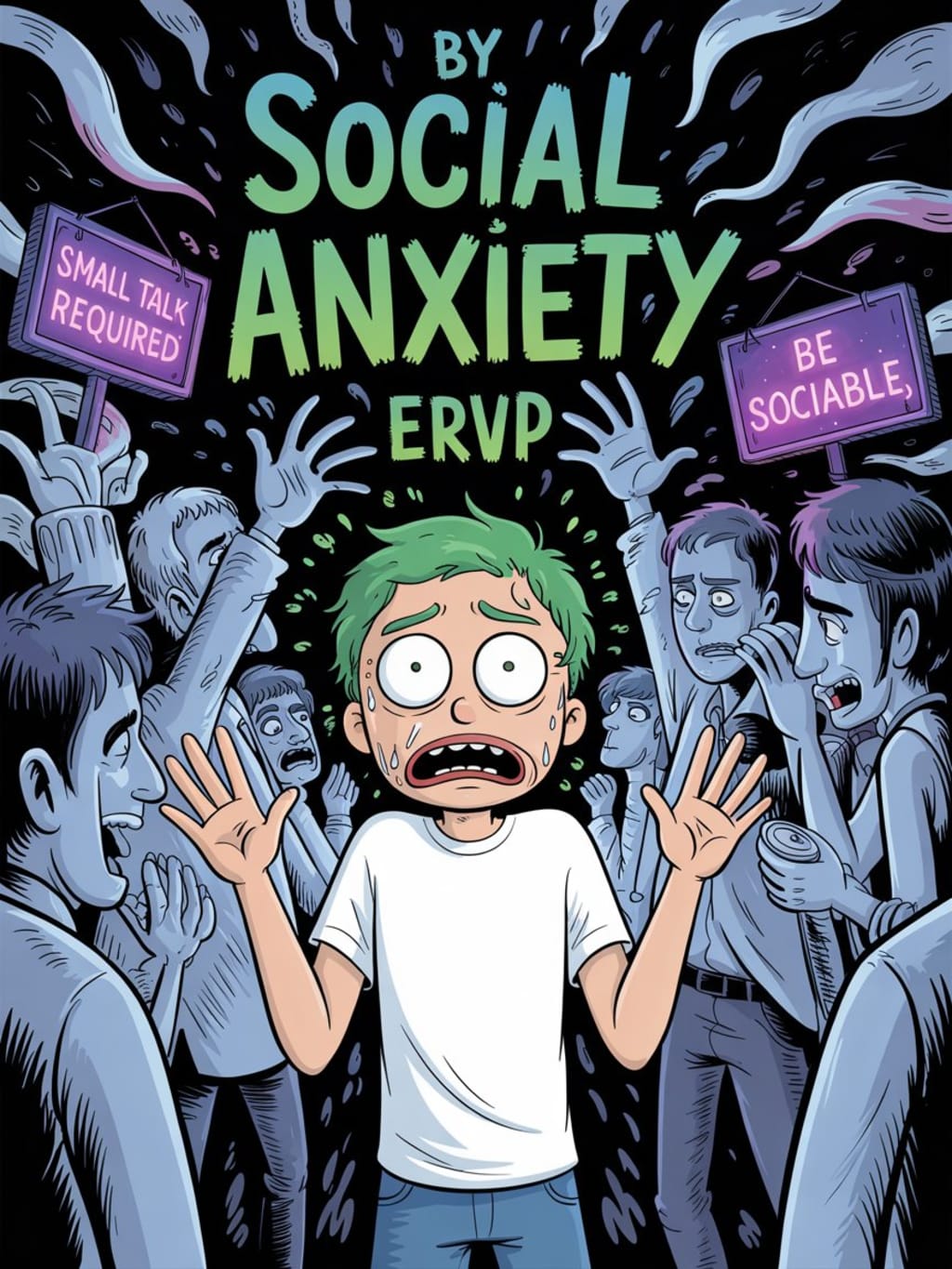
Have you ever felt this?
You step into a room buzzing with laughter, chatter, and clinking glasses. People greet each other with easy smiles. Conversations flow effortlessly around you. But inside, you feel a storm rising.
"What do I say? Should I compliment their outfit? Ask about their job? What if I say something stupid? What if they think I’m boring?"
The anxiety sits heavy on your chest, tightening your throat, making your mind race. You smile, nod, laugh when they laugh, but inside you are just surviving minute by minute.
Small Talk, Big Exhaustion
We think of small talk as harmless chatter — commenting on the weather, a recent show, or how busy work has been. But for many, it’s not harmless. It’s draining.
Every question feels like a test. Every silence feels like a failure. You carefully measure every word you say, hoping it lands well, hoping it keeps the flow going.
Behind the scenes, your brain is working overtime:
Are they interested?
Did I sound weird?
Why did I just say that?
Please, let this end soon...
The exhaustion of constantly performing, constantly managing impressions, leaves you emotionally wiped out by the end of even a short gathering.
You Are Not Alone
Here’s the truth no one says aloud: You are not the only one feeling this.
That smiling, confident person you admire across the room? Maybe they practiced that smile in the mirror. Maybe their heart is racing too. Maybe they’re silently rehearsing their next sentence, terrified of an awkward pause.
Social anxiety hides behind polished appearances. So many people walk into social situations feeling underprepared, underconfident, and overstimulated — but they mask it so well, you think you’re the only one struggling.
You’re not.
Do We Always Need to Fill the Silence?
Imagine a world where silence isn’t awkward.
Where you can sit with someone without feeling the pressure to talk.
Where a simple shared moment, a glance, or a quiet sip of coffee holds meaning on its own.
Why do we believe that connection only happens through words? Why is performance a requirement in every interaction? Maybe it’s time to let go of that old idea. Maybe true connection comes from being present, not just being talkative.
The Science Behind It
Studies show that people with social anxiety often experience heightened activity in the amygdala — the part of the brain responsible for fear and threat detection. This means even casual conversations can feel like a threat.
Psychologists explain that our brains are wired to seek social approval because, evolutionarily, being accepted by a group meant survival. But today, in a world overflowing with social interactions — online and offline — this wiring often backfires, leaving us anxious, drained, and isolated.
Personal Stories: A Glimpse Inside
Emma, 27, describes attending a friend’s birthday party:
"I stood there, clutching my drink, smiling when people passed by, but every time someone tried to chat, I panicked. I kept thinking, they’re going to figure out I’m boring. I left early, went home, and cried, wondering why it’s so hard for me."
Jamal, 34, shares:
"In work meetings, I rehearse sentences in my head over and over before speaking. By the time I get the courage, the topic has moved on. I feel invisible, but speaking up feels like jumping off a cliff."
These stories are not rare. They echo in countless hearts.
Breaking the Cycle: What Can We Do?
Here are some strategies to ease the pressure:
1. Reframe Your Thoughts
Instead of thinking, "They’ll judge me," try: "They’re human too, and probably worried about how they come across."
2. Shift Focus Outward
Instead of monitoring how you’re performing, focus on genuinely listening. People love to feel heard.
3. Practice Small Moments
Build your confidence by practicing brief interactions — a smile at the barista, a greeting to a neighbor. Small wins add up.
4. Allow Silence
Remind yourself: silence isn’t failure. It can be comfortable. Take the pressure off.
5. Be Kind to Yourself
After social events, don’t spiral into self-criticism. Celebrate the effort you made, even if it felt awkward.
A Beautiful Truth
Here’s the most beautiful part: you are worthy of connection, even without perfect words. You don’t need to be the funniest, the smoothest, or the most interesting person in the room.
You just need to be you.
Your quiet presence, your thoughtful gaze, your simple "hello" — they matter more than you realize.
Every human heart is looking for connection, and sometimes, the bravest thing you can do is just show up.
So next time you feel that pressure rising, breathe deep, soften your shoulders, and remind yourself:
You are enough, just as you are.
About the Creator
Keep reading
More stories from Sohail Abbas and writers in Motivation and other communities.
5 Life-Changing Habits: The Key to Success
Success is not a matter of luck. It’s not something only reserved for the rich, the talented, or the lucky few. Success is a result of consistent effort, shaped by powerful daily habits. In this article, we will explore five life-changing habits that, if practiced sincerely, can transform your life, elevate your mindset, and help you unlock the success you’ve been dreaming of.
By Sohail Abbas10 months ago in Motivation
Pandora’s Burden
“My brother warned me to not accept gifts from the one who commissioned you,” said Epimetheus to the woman clad in silvery raiments standing at the entrance to the temple. Her silver tiara and the silver rings on her fingers and toes glinted in the firelight cast by torches set on either side of the doorway. Lingering in the shadows, beyond the reach of the flames as she was, he could not tell what she held in her hands. At first what appeared to be a box was perhaps a funerary urn, or maybe merely an apple.
By J. Otis Haas2 days ago in Fiction




Comments
There are no comments for this story
Be the first to respond and start the conversation.