
The Power of Gratitude: Hamad’s Journey from Complaints to Contentment
A village boy learns that thankfulness turns little into enough—and enough into abundance.

The Power of Gratitude: Hamad’s Story
BY:Ubaid
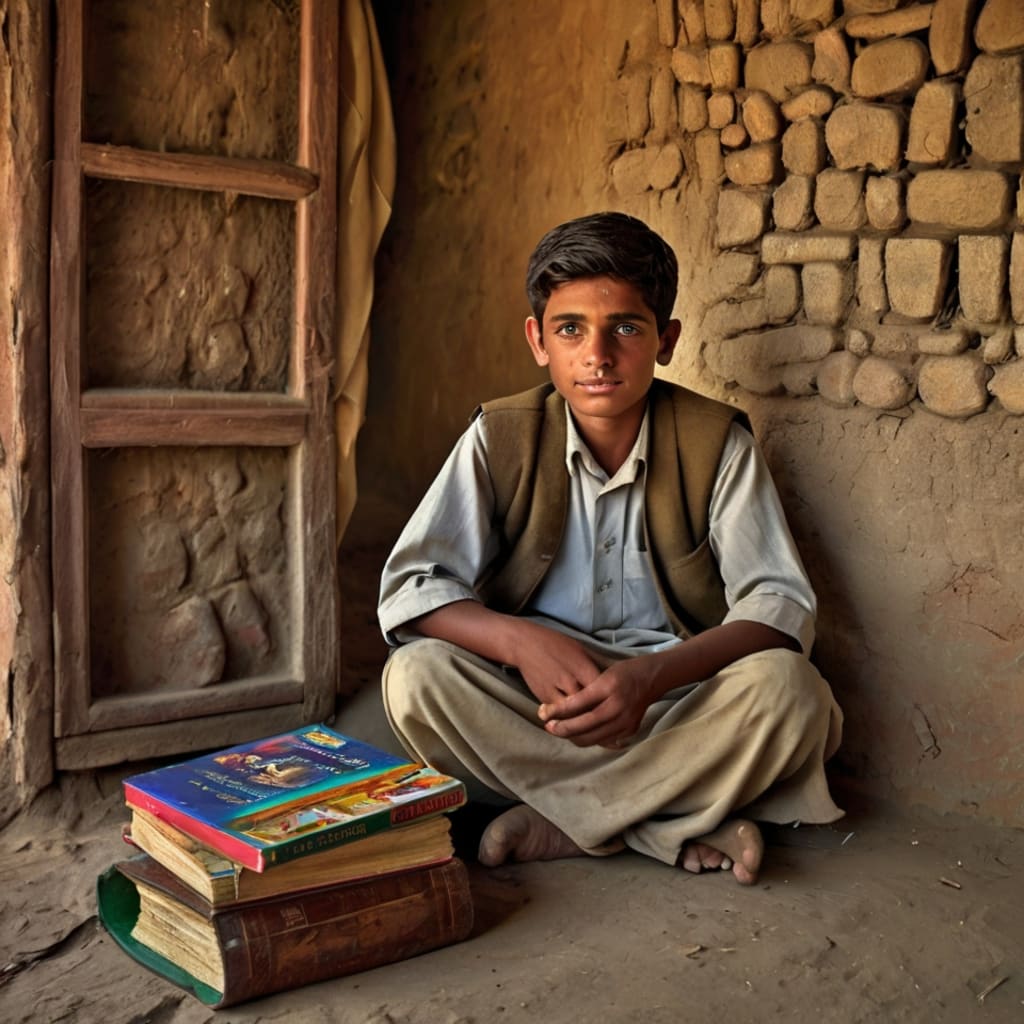
In a small village in Pakistan, surrounded by golden fields and dusty pathways, there lived a young boy named Hamad. He was in the eighth grade of the local village school. Hamad was a bright, hardworking, and respectful student who listened carefully to his teachers and obeyed his parents with love.
Although his family lived in poverty, they carried dreams far greater than their means. Hamad’s parents wished nothing more than to see their son become a successful man—someone who could rise above hardship through education and good character.
One afternoon, after returning home from school, Hamad sat quietly at the corner of the small mud-brick house they lived in. His books were old, his bag was torn, and his lunch was always simple—usually a piece of roti with some vegetables. As he reflected on his day, emotions swelled in his young heart.
“Ammi jaan,” he finally said, addressing his mother with a mixture of complaint and sadness, “all of my classmates bring fine school bags, new pens, neat notebooks, and all sorts of useful things. Every day they come with something new. Their lunch boxes are filled with delicious food—rich curries, sweets, even fruits. But look at me. I don’t have these things. My food is always so simple, and my bag looks old and weak compared to theirs.”
His mother paused in her work, a lump rising in her throat. Tears welled in her eyes as she looked at her son. She knew his words were not born of arrogance, but of an innocent longing to belong. She put aside the cloth she was folding, walked closer, and gently placed her hand on Hamad’s head.
“My son,” she said softly, though her voice trembled with emotion, “I know what you feel. I also wish you had all those things. But remember, every notebook and every fee is paid for by your father’s hard labor—earned by the sweat of his brow under the burning sun. He saves every coin just so you can go to school and have the chance to learn.”
She stopped for a moment, drank a sip of water, and then continued. “You must not think of what you lack. Think of what Allah has already given you. This food you call ordinary is still a blessing. There are children who go to bed with empty stomachs, dreaming only of a dry piece of bread. If you compare, you will always feel poor. But if you show gratitude, Allah will bless you with more.”
Hamad listened silently, his youthful heart absorbing each word. He asked earnestly, “Ammi, what is gratitude? How do I show it?”
His mother smiled gently and replied, “Gratitude is to value what you have and not to waste the blessings Allah gives you. The third Caliph, Hazrat Uthman (RA), once said, ‘To spend a blessing in the wrong place is a form of ingratitude.’ Gratitude means to use what you have wisely and to thank Allah with your words, your heart, and your actions.”
Hamad lowered his head, ashamed of his earlier complaints. Then, with sincerity, he said, “I promise, Ammi. From today onward, I will never complain about food, clothes, or school things again. I will be thankful for whatever we have.”
His mother’s eyes softened. She bent down, kissed his forehead with love, and returned to her household chores, her heart lighter than before.
Days turned into weeks, and weeks into months. Life was still difficult, but Hamad’s attitude changed. He no longer looked at the lunches of his classmates with envy. Instead, he would whisper a quiet Alhamdulillah before eating his simple meal. He studied hard, encouraged by the thought that gratitude itself was a form of worship.
And then, one day, life changed. Hamad’s father was offered a stable job in the nearby town—better wages, better conditions, and a chance to finally bring comfort to his family. The news spread joy throughout the house. For the first time, they were able to buy Hamad a new school bag, fresh notebooks, and even tastier meals for his lunchbox.
Hamad smiled, remembering his conversation with his mother. He understood now: when you show patience and gratitude, Allah opens doors you never imagined. His earlier complaints felt small and foolish compared to the strength gratitude had given him.
As the years passed, Hamad grew into a young man with a grateful heart. His education flourished, and so did his family’s circumstances. But most importantly, Hamad never forgot the lesson his mother had taught him in their humble home: blessings increase when you thank Allah for them.
---
A Lesson for Children
Dear children, Hamad’s story is not just about a school bag or food. It is about the power of gratitude. If you constantly compare yourself to others, you will always feel poor. But if you learn to say thank you for what you already have, your life will become peaceful and full of joy.
Always remember the words from the Holy Qur’an:
“If you are grateful, I will certainly give you more; but if you are ungrateful, surely My punishment is severe.” (Surah Ibrahim 14:7)
So, live like Hamad. Be thankful, work hard, and trust that Allah will reward you in ways you cannot yet see. Gratitude turns a little into enough—and enough into abundance.
About the Creator
Keep reading
More stories from Ubaid and writers in Motivation and other communities.
Am I a Failure?
I think almost every teenager has had a moment where they look at their life and think, “What am I even doing?” Sometimes it feels like everyone else is moving forward while you’re just standing in the same place. You see people getting good grades, being talented at sports, having a clear plan for their future, or just seeming confident about everything. And then you look at yourself and start wondering if you’re falling behind.
By frenzied 5 days ago in Motivation
The Man Who Became a Lightning Rod: The Unbelievable Life of Roy Sullivan
In the vast, unpredictable theater of the natural world, there are statistical anomalies, and then there is Roy Cleveland Sullivan. To the average person, the odds of being struck by lightning in a given year are roughly one in a million. The odds of being struck seven times? Those are calculated at approximately 1 in 100,000,000,000,000,000,000,000,000 (that’s a septillion).
By Frank Massey 5 days ago in Motivation



Comments
There are no comments for this story
Be the first to respond and start the conversation.