
"The Movie in My Mind: How One Visualization Technique Changed Everything"
A personal journey from fear to confidence through the power of mental rehearsal—when affirmations weren’t enough

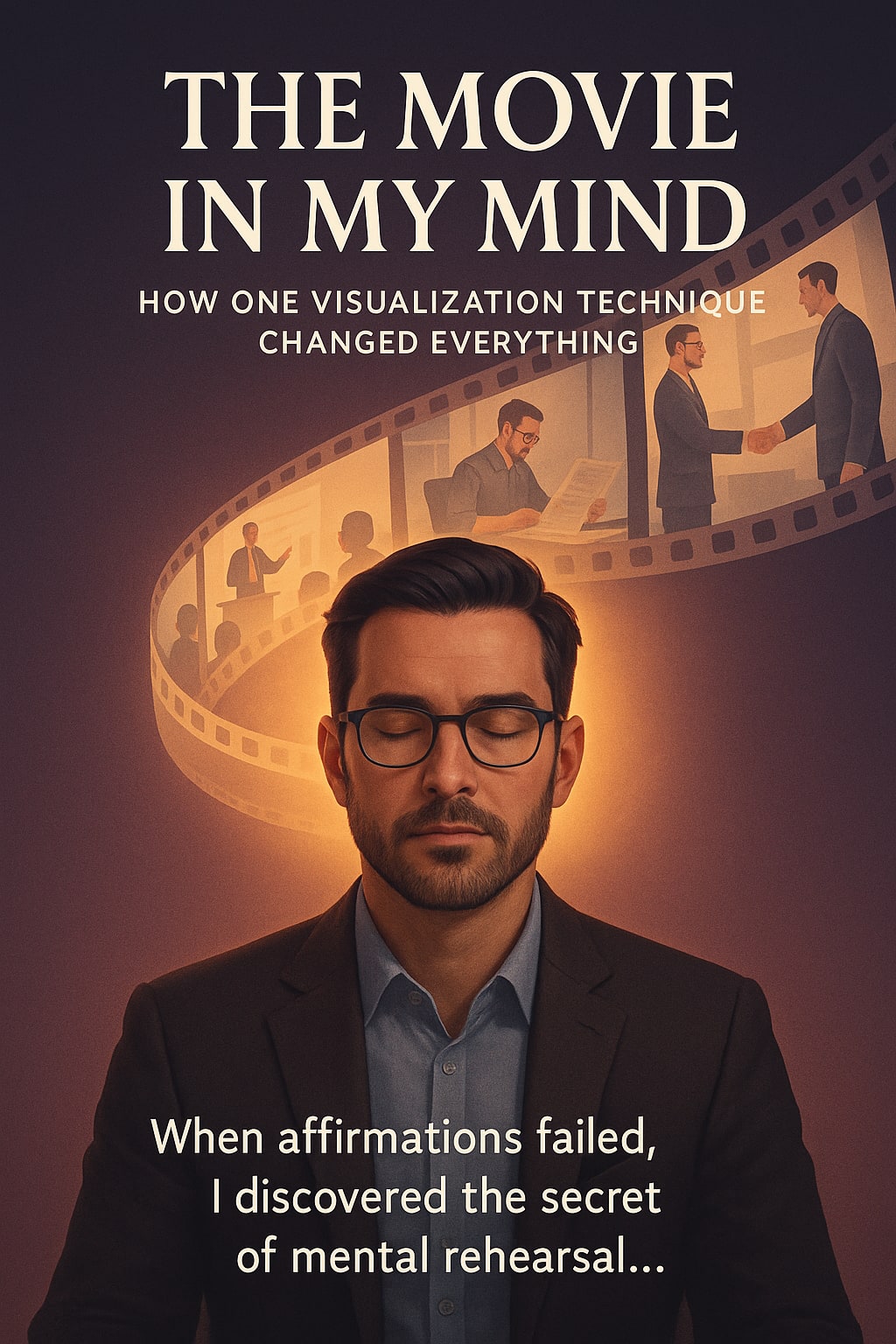
For as long as I can remember, my gut twisted at the thought of performing well. I struggled with everyday challenges — presentations, acing tests, even friendly conversations. I tried every pep talk and affirmation, telling myself “I am confident” or “I can do it,” but the words felt hollow. Affirmations barely scratched the surface of my fear. Then I discovered a different approach, and everything changed.
One day, a friend casually mentioned something called mental rehearsal. “Think of it as practice in your head,” they said. Skeptical, I decided to try it. I learned to sit quietly and imagine the exact scenario that scared me. In my mind I created a vivid scene: the conference room lights gleaming, faces of coworkers turned toward me, the rustle of my notes on the podium. I imagined the smell of coffee in my mug and the reassuring click of my presentation clicker between slides. I practiced steady breathing. Instead of hollow words, I was rehearsing details, training my brain to see this as if it were happening now. In fact, I later read that visualization *“involves using all five senses... and it trains your brain to respond as if that outcome were true”*. The idea that my mind could trick my nerves almost sounded like magic.
Over the weeks I turned this into a routine. Each night I would lie in bed and replay the hardest parts of my day, but this time with a successful outcome. I saw myself taking a deep breath before speaking, my voice steady, even smiling at the right moments. These sessions felt real — I could feel the weight of my coffee mug in my hand. In the mornings I noticed something: I wasn’t as jittery. My colleague even commented that I seemed calmer when discussing work. It turned out I really was. Researchers note that vividly imagining an action can literally fire the same signals to your muscles as doing it for real. In other words, mental rehearsal *“activates the same neural pathways in your brain as physical practice”*. Understanding that gave me confidence that I really was training my brain and body, even when I was just sitting quietly.
Eventually, a big client meeting loomed, and butterflies churned in my stomach. The night before, I went through my visualization routine, practicing how I’d answer tough questions calmly. By morning, I was surprisingly focused. As I opened my eyes, I recalled one coach’s words: the brain *“doesn’t always distinguish between what’s real and what’s imagined”*, so each rehearsal had effectively programmed me for success.
At the meeting, I pictured that confident version of me from my visualization. I spoke steadily, handled objections smoothly, and when it was over, my heart wasn’t pounding like before. It felt like a quiet victory. Research confirmed what I had felt: guided imagery can literally enhance attention and reduce stress — exactly what I needed. I found a study saying exactly that, and realized my own practice had paid off.
Now, months later, life hasn’t magically become perfect, but my inner critic is no longer in charge. Whenever doubt creeps in, I remind myself of the “film” I’ve already watched in my mind — complete with confident body language and positive feedback. That mental rehearsal feels more powerful than any affirmation I’d ever whispered. I even share the technique with friends; after all, *“athletes, performers and successful professionals often use visualization techniques to mentally prepare for big events”*. It’s not a magic cure, but it’s proof that each day I can choose hope over fear and script a braver future of my own making.
About the Creator
Mralex
"Empowering minds, one story at a time. Join me on a journey of self-discovery, growth, and inspiration."
Keep reading
More stories from Mralex and writers in Motivation and other communities.
Pearl
1980 something. we all hung out at Pearl and you and i were nothing special, or so i thought. i mean we all danced, drenched in our own sweat, our own saline solution of fear, too many beers, shots, laughter, tears, fucks in the bathroom and i don't know when we began to be afraid. do you?
By ROCK aka Andrea Polla (Simmons)6 days ago in Fiction



Comments
There are no comments for this story
Be the first to respond and start the conversation.