
The Mental Health Crisis Among Young People
"Understanding and Addressing the Growing Challenges Faced by Today's Youth"
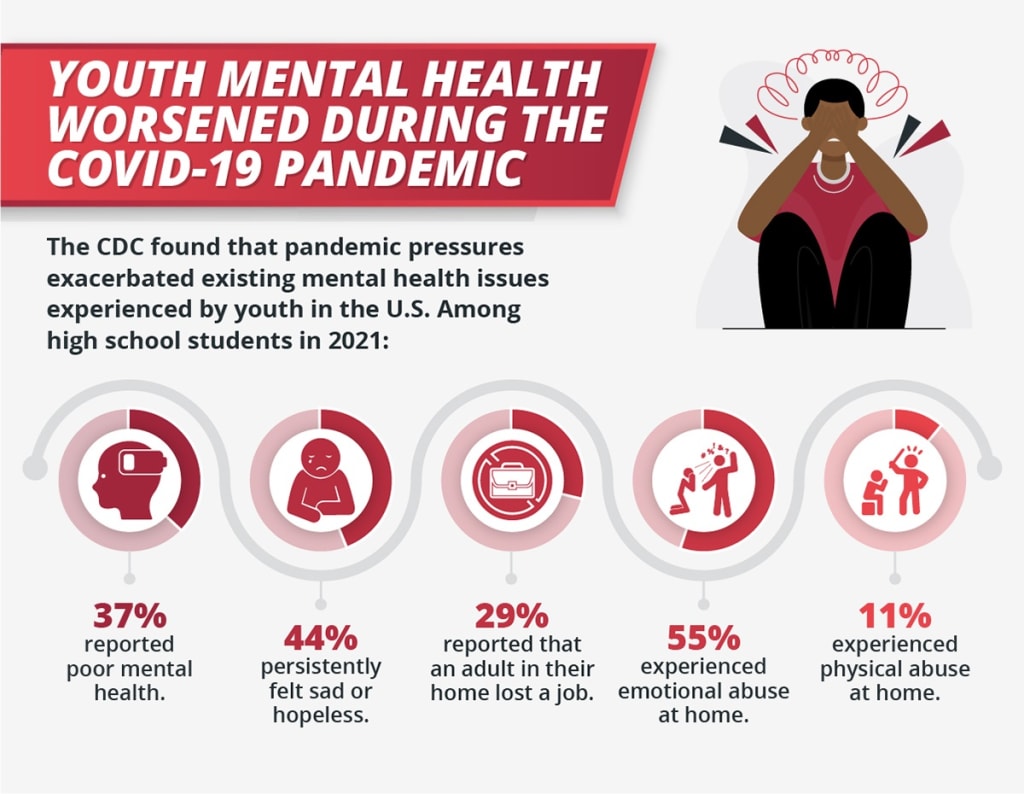
The mental health crisis affecting young individuals has emerged as one of the most pressing issues of
our era. In recent decades, there has been a notable rise in mental health problems among
adolescents and young adults, which includes anxiety, depression, eating disorders, self-harm, and,
sadly, suicide. Although mental health concerns have always existed, the magnitude and severity of
these challenges have intensified, posing a substantial risk to the well-being and future prospects of
numerous young people globally. The mental health crisis is intricate, closely linked to the personal,
societal, and environmental pressures that young people encounter today. This situation demands
prompt intervention, as it not only impacts the emotional and mental health of individuals but also
has extensive implications for society overall.
The incidence of mental health disorders among youth has surged in recent times. Recent research
indicates that almost 20% of young individuals in the United States face a mental health disorder,
with anxiety and depression being the most prevalent. Studies have demonstrated that suicide rates
have escalated significantly in particular age groups, especially among teenagers, making it one of the
primary causes of mortality in this demographic. Similar patterns are observed around the world, with
countries like the United Kingdom, Australia, and Canada experiencing equally concerning increases in
mental health challenges among their youth. This rise is not merely due to improved diagnosis or
heightened awareness; it represents a fundamental transformation in the mental health environment
for today’s young generation.
One of the key reasons behind the mental health crisis is the widespread influence of social media
among youth. The emergence of platforms like Instagram, Facebook, TikTok, and Snapchat has
dramatically altered how young people engage with their surroundings. Social media creates a false
sense of connection but can intensify feelings of loneliness, anxiety, and inadequacy. Young
individuals are continuously bombarded with curated depictions of perfect lives, ideal physiques, and
successful careers, leading to detrimental comparisons. The pressure to conform to these unrealistic
representations can ignite a wave of negative emotions, particularly for those who feel they fall short.
Additionally, the anonymity that the internet affords facilitates bullying and harassment, further
undermining young people's self-esteem and self-worth.
Cyberbullying has emerged as a major factor contributing to mental health issues among today's
youth, leaving emotional wounds that can be just as severe as physical injuries. The relentless influx
of notifications, likes, and comments can foster feelings of validation or rejection, adding another
dimension of stress to their already vulnerable mental conditions. Another significant factor
contributing to the mental health crisis is the enormous academic pressure faced by young individuals.
From a young age, children are conditioned to measure success through grades, test results, and
achievements in extracurricular activities.
While education is certainly essential, the unyielding pursuit of academic achievement has fostered a
culture filled with stress and burnout. The competitive dynamics of academic settings, combined with
societal pressures related to college admissions, career prospects, and financial security, create a
damaging environment for many youth. For some individuals, the weight of this pressure becomes
overwhelming, leading to experiences of anxiety, depression, and fatigue. Indeed, research indicates
that stress from school is a major factor contributing to mental health issues among teenagers and
young adults. The emphasis on academic success often leaves little space for emotional health,
creativity, or personal growth, resulting in a limited and one-dimensional view of life. Additionally,
this academic stress is frequently intensified by the expectation that young people will make
substantial decisions at an age when they are still shaping their identities and discovering what they
genuinely desire from life.
Family dynamics also have a considerable impact on the mental health of youth. For many teenagers,
family provides a foundation of stability, affection, and support. However, for others, home may serve
as a source of stress, anxiety, or trauma. Dysfunctional family situations, marked by conflict, neglect,
or abuse, can leave lasting emotional wounds that surface in later years. Factors such as divorce,
domestic violence, substance abuse, and financial challenges can all contribute to a young person’s
mental health difficulties. The absence of emotional support or open dialogue within families can lead
to feelings of isolation and misunderstanding among young people. This lack of support can also
impede their ability to manage the external pressures they encounter. Studies have demonstrated
that children raised in high-conflict or unstable homes are at a much greater risk for developing
mental health disorders like anxiety and depression. Moreover, the stigma associated with mental
health issues in numerous families can hinder young people from seeking help or discussing their
emotions. In many cultures, mental health challenges continue to be regarded as a source of shame,
resulting in silence and suffering.
In addition to family pressures, today’s youth are increasingly weighed down by economic instability.
Education, housing, and healthcare costs are consistently rising, while wages have remained flat in
many regions worldwide. This financial pressure has created a profound sense of insecurity regarding
the future. The aspiration of becoming financially independent, owning a home, or finding a stable job
feels more unattainable for numerous young people. The constant worry of managing student debt,
juggling part-time work, and fearing economic failure significantly contributes to mental health issues.
Economic instability is particularly pronounced among young individuals from marginalized
backgrounds, who encounter systemic obstacles to accessing education, healthcare, and job
opportunities. The expanding wealth gap between the affluent and the impoverished has only
worsened these difficulties, causing many young people to feel disillusioned about their future
prospects. The added burden of financial insecurity, alongside the pressure to fulfill societal
expectations, intensifies the already high stress levels among today’s youth.
Global occurrences such as climate change, political turmoil, and the COVID-19 pandemic have further
amplified the mental health crisis affecting young people. The persistent threat of environmental
decline and an uncertain future have left many feeling despondent and powerless. Eco-anxiety, or
climate change anxiety, is increasingly prevalent among adolescents who believe their futures are
jeopardized by ecological destruction. Additionally, political turmoil, the ascent of extremism, and the
weakening of democratic institutions have generated a sense of uncertainty regarding the future of
the world. The COVID-19 pandemic, in particular, has profoundly impacted young people's mental
health. Measures like lockdowns, social isolation, and interruptions to education have resulted in
heightened feelings of loneliness, anxiety, and depression. The uncertainty surrounding the pandemic,
combined with its social and economic ramifications, has intensified these struggles. As young
individuals work to understand a world that seems more unstable than ever, their mental health
continues to decline
In addition to receiving professional care, cultivating supportive relationships within families and
communities is essential for tackling mental health challenges. Parents and guardians are crucial in
identifying the early indications of mental health disorders and providing emotional support.
Promoting open dialogue, offering emotional validation, and pursuing professional assistance when
needed can curb the escalation of mental health issues. Schools, community organizations, and peer
support networks can also create a sense of belonging and assistance, helping young individuals feel
less alone in their struggles. It is vital to diminish the stigma surrounding mental health to encourage
young people to seek help without the fear of being judged.
Ultimately, a comprehensive strategy that includes prevention, early intervention, and awareness
initiatives is essential to confront the mental health crisis. Educating young individuals about mental
health, coping mechanisms, and emotional regulation can empower them to deal with the challenges
they encounter. Prevention programs centered on fostering resilience, self-esteem, and stress
management skills can also diminish the chances of mental health issues arising at all. Moreover,
addressing the underlying causes of the mental health crisis, such as pressures from social media,
academic demands, economic insecurity, and global uncertainty, will call for extensive societal change.
To summarize, the mental health crisis faced by young individuals represents a complex and pressing
issue that requires immediate action. The contributing factors are varied and include social media
influences, academic stress, family dynamics, economic challenges, and global issues. The
repercussions of untreated mental health problems are significant and can lead to lasting effects on
the lives of young people. Nevertheless, there is optimism. By enhancing access to mental health
services, establishing supportive environments, lowering stigma, and addressing the root causes of
mental health difficulties, we can strive towards a future where the mental well-being of young
people is prioritized.
As we continue to face the mental health crisis affecting young people, it's vital to recognize that this
is not merely an individual issue; it is one that impacts society as a whole. The dynamics influencing
the mental well-being of today's youth are intricately woven into the contemporary lifestyle. These
pressures originate from various areas, including advancements in technology, evolving social norms,
and unmatched economic hardships. A unified response from families, educational institutions,
healthcare providers, and government authorities is necessary to tackle these challenges. It’s not
solely about providing treatment after problems arise but also about fostering prevention, early
intervention, and cultivating an atmosphere that promotes mental well-being.
While understanding the contributing factors to the mental health crisis is essential, it is also crucial to
recognize the possibility for positive changes. One of the initial steps in addressing this crisis is to
dismantle the barriers that hinder young individuals from seeking assistance. A major hurdle they
encounter is stigma. Mental health conditions continue to carry a considerable stigma, particularly in
certain cultures where asking for help may be perceived as a weakness. For many young individuals,
the anxiety of being judged or misunderstood hinders them from approaching professionals or even
opening up to friends and family. Society must strive to normalize discussions around mental health,
similar to how we have done for physical health. Young people need reassurance that it's acceptable
to feel unwell and that seeking help is a courageous and essential move toward recovery.
In certain communities, the stigma associated with mental health is even more pronounced,
particularly among marginalized populations like racial minorities, LGBTQ+ youth, and those from
low-income backgrounds. For these groups, additional layers of discrimination and bias complicate
the process of seeking help. Mental health resources in these communities are often insufficient, and
cultural misunderstandings about mental illness can worsen the situation. In such cases, it is crucial to
not only challenge the stigma around mental health but also to ensure that services are culturally
aware and responsive to these groups' specific needs. Ensuring that young people from diverse
backgrounds can access mental health care that aligns with their experiences is a pivotal step in
addressing this crisis.
While often criticized for their negative effects on mental health, technology and social media also
provide distinctive opportunities to engage young people in their environments. Digital mental health
resources, such as therapy applications, online counseling services, and virtual support groups, can
give young individuals access to treatment they might not otherwise receive. For instance, mental
health applications like Headspace and BetterHelp have facilitated connections between individuals
and therapists, as well as promoted mindfulness, particularly during times of crisis or anxiety. These
applications can help individuals in rural locations or those lacking the financial means to pursue
traditional in-person therapy. Thus, technology, despite its challenges, holds the potential to be a
valuable partner in the quest for improved mental health resources.
Conversely, schools have a significant chance to serve as the first line of mental health support.
Educational institutions are among the few environments where young people consistently
congregate, making them a prime location for intervention. Schools ought to integrate mental health
education into their programs, not merely as an academic subject but as an integral part of their
overall mission to enhance students’ well-being. By instructing students on mental health topics,
coping mechanisms, and the significance of emotional regulation from a young age, we can cultivate a
generation better prepared to face the trials of adolescence and adulthood.
Alongside education, schools should provide extensive mental health services, including counseling
and support groups. School counselors, who are frequently the first to detect signs of mental distress
among students, should be educated to identify a wide variety of mental health challenges, ranging
from stress and anxiety to more severe conditions like depression and eating disorders. Moreover,
schools should nurture a culture of openness and acceptance, where students feel comfortable
discussing their mental health issues. This supportive atmosphere could be established through
regular workshops, mental health awareness days, or simply by encouraging teachers and staff to
engage more frequently in discussions about well-being.
Another essential aspect of addressing the mental health crisis is early intervention. When mental
health problems are identified promptly, they can often be treated more effectively, and young
individuals are more likely to recover and lead fulfilling lives. Early intervention can manifest in
various ways, including programs in schools, community outreach initiatives, and regular screenings.
It is crucial for educators and healthcare providers to be trained to recognize early indicators of
mental health concerns, such as abrupt behavioral changes, social withdrawal, or a drop in academic
performance. If these signs are detected early, young people can be referred to the appropriate
mental health resources before their issues worsen.
The economic difficulties confronted by young individuals today represent another significant factor
in the mental health crisis. With the costs of education, healthcare, and housing continually rising
while job opportunities remain scarce, many young people experience a heavy burden of financial
uncertainty and find it hard to secure their futures. The pressure to excel academically amid economic
challenges can intensify feelings of stress, anxiety, and depression. Some may resort to unhealthy
coping strategies, such as substance use, in an effort to escape their financial troubles. Breaking this
cycle of economic pressure and mental health issues often requires systemic reform.
To effectively address the mental health crisis affecting young people, it is also necessary to confront
the economic disparities that particularly impact specific demographics. For instance, youth from lowincome
backgrounds frequently encounter significant obstacles in accessing quality mental health
support. They may not have the means to pursue professional help or may simply be unaware of the
available resources. Furthermore, they may experience additional stressors like food insecurity or
unstable living conditions, which further complicate mental health challenges. These young
individuals require enhanced support, including financial aid for mental health services and
educational programs that teach stress and anxiety management techniques.
Climate change anxiety, often referred to as eco-anxiety, is an increasing concern among today's
youth. Many young individuals harbor significant worries about the planet's future, and the rising
environmental disasters—such as wildfires, floods, and droughts—serve to amplify this anxiety. The
imminent danger of environmental failure, coupled with a lack of decisive global action on climate
change, has left many feeling helpless and fearful about what lies ahead. This type of anxiety is
especially common among adolescents who are just starting to realize their influence in the world. As
they contemplate their futures, the thought of navigating an increasingly unpredictable world can be
daunting. Tackling eco-anxiety will require not only immediate psychological support but also
structural changes to mitigate climate change risks, alongside fostering a sense of hope and
empowerment in young people as they confront this global challenge.
Moreover, the COVID-19 pandemic has intensified the mental health crisis, leading to higher
instances of anxiety, depression, and loneliness among youth. The disruption of everyday life—
including school closures, halted extracurricular activities, and social isolation—has caused many
young people to feel disconnected and alienated. The pandemic has interfered with vital
developmental milestones such as graduation ceremonies, social gatherings, and career opportunities,
resulting in a deep sense of loss and uncertainty. This global health emergency has further highlighted
additional stressors such as financial insecurity and worries about the health of loved ones. For young
individuals, the pandemic signifies not only a public health emergency but also a crisis of identity and
future aspirations.
Looking forward, it’s essential to acknowledge that the mental health crisis facing young people is not
an unmanageable problem. While the circumstances are serious, there are definitive actions that can
be taken to ease the strain. Mental health services need to be more accessible and affordable, and
the stigma surrounding mental health must be addressed through education and open dialogues.
Technology can be leveraged to deliver care to those most in need, and schools should prioritize
mental health by integrating counseling services and fostering environments that support emotional
health. At the same time, it’s crucial for society to tackle the fundamental pressures contributing to
mental health challenges, including academic burdens, economic uncertainty, and the adverse
impacts of social media.
By adopting a comprehensive approach to mental health that addresses both personal and systemic
factors, we have the opportunity to begin reversing this trend and ensuring that young people receive
the necessary support to flourish. Mental health is a critical component of overall well-being and
should be treated with the importance and attention it warrants. The future of young people hinges
on it.
The growing issue of mental health among youth is becoming increasingly alarming. Over the last ten
years, there has been a notable rise in mental health challenges faced by adolescents and young
adults, leading to serious repercussions for their overall health, relationships, and future
opportunities.
Young individuals are experiencing a range of mental health disorders, including anxiety, depression,
eating disorders, substance abuse, and suicidal ideation. The World Health Organization (WHO) has
reported that around one in five young people deal with mental health issues, with most not receiving
the necessary treatment.
The increase in social media usage has been recognized as a significant factor contributing to this
mental health crisis. Studies have associated heavy social media engagement with a rise in symptoms
related to depression, anxiety, and feelings of isolation. Experiences such as Cyberbullying, the fear of
missing out, and the demand to maintain a flawless online persona can adversely affect young
people's mental well-being.
Academic expectations pose another considerable pressure affecting mental health. The focus on
excelling academically can result in heightened stress, anxiety, and burnout. The expectation to
perform admirably in tests, access scholarships, and gain entry to prestigious colleges can be too
much to bear.
Interpersonal and familial issues can also play a crucial role in a young person's mental health.
Conflicts within families, parental separations, and relationship difficulties can all lead to mental
health challenges. Concerns regarding bullying and social isolation are prominent as well. Both online
and offline bullying can have devastating, long-lasting effects on a youth's mental health. Social
isolation, whether stemming from bullying or other reasons, can worsen mental health conditions.
Economic factors, including poverty and unemployment, can heighten the risk of mental health
challenges for young people. The repercussions of this crisis are serious. Suicide ranks as the second
leading cause of death among youth globally. There’s also a significant risk of substance abuse, as
mental health issues frequently pave the way for this behavior.
Academic struggles are another serious outcome of this crisis. Mental health challenges can diminish
academic performance, resulting in poor grades, increased absenteeism, and potential dropouts.
Social withdrawal is also an issue, as mental health problems can lead to isolation and disengagement
from social activities.
The long-term implications of this crisis are equally concerning. If left untreated, mental health issues
can lead to enduring consequences, including a greater likelihood of mental health challenges in
adulthood, poorer physical health, and shorter life spans.
To tackle this crisis, a comprehensive strategy is essential. Raising awareness about mental health
issues, their origins, symptoms, and treatment options is critical. Educating young individuals,
guardians, educators, and healthcare professionals about mental health can help diminish stigma and
encourage early interventions.
Enhancing mental health services is also imperative. Guaranteeing that young people have access to
affordable, quality mental health services can aid in resolving this crisis. Cultivating an environment
that supports mental wellness is equally vital. Establishing a nurturing atmosphere that encourages
positive relationships, physical activity, and healthy sleep patterns can contribute to the mental wellbeing
of young individuals.
Reducing the stigma that surrounds mental health issues is another key aspect. Motivating young
people to discuss their challenges openly and seek assistance without fear of criticism can foster
better mental health. Incorporating mental health into the educational framework is also necessary.
Including mental health education in school programs can equip young people with crucial life skills,
such as effective stress management, emotional regulation, and building healthy relationships.
Supporting parents and caregivers is essential as well. Offering resources, guidance, and assistance to
parents and guardians can empower them to foster mental well-being in their children. To effectively
tackle the mental health crisis faced by young people, it is crucial to create and enact allencompassing
strategies that foster mental wellness, avert mental health problems, and offer
accessible and nurturing services.
Educational institutions play a vital role in enhancing mental wellness among youth. Integrating
mental health education into school programs can assist in imparting important life skills, such as
managing stress, regulating emotions, and building healthy relationships. Additionally, training
teachers and school personnel to identify early signs of mental health struggles and provide
assistance to students in difficulty can be beneficial.
In conjunction with initiatives in schools, community-based programs can also equip young individuals
with access to mental health services, support groups, and leisure activities that encourage mental
wellness. Parents and guardians are equally important in fostering mental wellness among young
people. Offering resources, guidance, and assistance to parents and caregivers can empower them to
support their children's mental health.
Healthcare professionals also have a significant part to play in addressing the mental health crisis
among youth. Ensuring that young people have access to affordable, high-quality mental health
services can help confront this issue. Moreover, technology can be utilized to connect young people
with mental health resources, support networks, and online therapy options. Ultimately, resolving the
mental health crisis among young individuals demands a collaborative approach involving individuals,
families, communities, organizations, and governmental bodies.
By joining forces, we can enhance mental wellness, prevent mental health challenges, and assist
young people in reaching their full potential. The mental health crisis affecting young individuals is an
urgent issue that needs prompt action. However, by understanding the magnitude of this challenge
and collaborating, we can pave the way for a better future for youth globally.
It is important to acknowledge that mental health is as critical as physical health, and seeking support
is a demonstration of strength rather than weakness. By advocating for mental wellness, preventing
mental health challenges, and offering accessible support services, we can guide young individuals
through the difficulties of growing up and enable them to excel in all areas of life.
Now is the time to take action. Let us unite efforts to foster mental wellness, stave off mental health
challenges, and enable young people to realize their full potential. Addressing the mental health crisis
among young people is an urgent priority that demands prompt action. By acknowledging the extent
of this crisis and collaborating effectively, we can advance mental well-being, avert mental health
issues, and assist young individuals in reaching their full abilities.
About the Creator
Keep reading
More stories from Rabia Rizwan and writers in Motivation and other communities.
Do Dog Lovers Understand The Language of Barking?
Listening to Ammara and Jasset talking while they were enjoying lunch. “I am not sleeping at your house anymore,” Jasset said, biting into her chicken breast sandwich after taking a long sip of her strawberry iced tea.
By Annelise Lords 3 days ago in Motivation




Comments
There are no comments for this story
Be the first to respond and start the conversation.