
The Many Benefits of Meditation: A Comprehensive Guide
Learn Meditation


What is Meditation?
Meditation is a practice that involves focusing or clearing your mind using a combination of mental and physical techniques. It has been around for thousands of years and has its roots in various ancient philosophies and religions. While meditation is often associated with spirituality, it is important to note that it can be practiced by individuals of all religious and non-religious backgrounds.
There are several different types of meditation, each with its own unique approach and benefits. Some forms of meditation focus on relaxation and stress reduction, while others aim to improve mental clarity and overall well-being. Let's explore some of the most popular forms of meditation:
Buddhist Meditation
Buddhism, a philosophy and religion originating in Southeast Asia, has given rise to several forms of meditation. Theravadan meditation, prevalent in India and Thailand, emphasizes mindfulness and concentration. Zen Buddhist meditation, originating in China, focuses on seated meditation and the use of koans (paradoxical questions) to stimulate insight. Tibetan Buddhist tantric meditation incorporates visualization and mantra recitation.
Christian Meditation
Christian meditation, often referred to as contemplation, is a common practice in Christianity. It involves focusing intently on a question, idea, religious concept, or deity. Prayer is also considered a form of meditation in Christianity, especially when it involves deep reflection and connection with a higher power.
Guided Meditation
Guided meditation is a non-religious form of meditation that can be done individually or in a group setting. It is commonly used in counseling, therapy, and support group settings. In guided meditation, an instructor or a recorded voice guides the participants through a series of visualizations and relaxation techniques.
Osho Meditation
Osho meditation, also known as "dynamic meditation," originated in India and is rooted in Hinduism. It involves deliberate and forceful breathing exercises combined with physical movements. Osho meditation aims to release pent-up emotions and bring about a sense of freedom and self-awareness.
Sufi Meditation
Sufism is a branch of Islam, and meditation is a common practice among its followers. Sufi meditation focuses on spiritual purification, self-reflection, and attaining a deeper connection with the divine.
Taoist Meditation
Taoism, a religion and philosophy originating in China, also incorporates meditation practices. Taoist meditation aims to cultivate inner harmony and balance by aligning oneself with the natural flow of energy, known as "Qi." This form of meditation often involves breathing exercises, movement, and visualization techniques.
Transcendental Meditation
Transcendental Meditation (TM) is a non-religious form of meditation that originated in India. It involves the use of mantras, which are repeated silently or aloud to help focus the mind and induce a state of deep relaxation. TM is often taught by certified instructors and requires personalized mantras for each practitioner.
Yoga Meditation
Yoga, a physical and spiritual practice originating in India, incorporates meditation as one of its key components. Yoga meditation combines physical postures (asanas) with breath control (pranayama) and concentration techniques. It aims to cultivate mindfulness, physical strength, and emotional well-being.
How to Meditate: Techniques and Practices
Now that we have explored the different forms of meditation, let's delve into the various techniques and practices that can help you establish a successful meditation routine. It is important to note that there is no one correct way to meditate, and it may take some experimentation to find the techniques that resonate with you. Here are some commonly practiced meditation techniques:
Body-Centered Meditation
Body-centered meditation, also known as self-scanning, involves focusing on the physical sensations throughout your body. Start by finding a comfortable sitting or lying position and bring your attention to different parts of your body, scanning for any tension or discomfort. As you become aware of these sensations, consciously release the tension and allow your body to relax.
Contemplation
Contemplation meditation involves concentrating on a question, idea, or contradiction without letting your mind wander. Choose a topic or question that resonates with you and bring your full attention to it. Reflect deeply on the chosen topic, exploring different perspectives and allowing insights to arise naturally.
About the Creator
Sanaullah Babul
Stay Close
Keep reading
More stories from writers in Motivation and other communities.
One Hard Thing
Stop me if you’ve heard this one before: You have the number, you know your schedule- you’ve even picked out the perfect day and time to make this appointment. Shoot, you’ve even picked out alternative days and times just in case their schedules can’t accommodate you!
By Taylor Rigsby7 days ago in Motivation
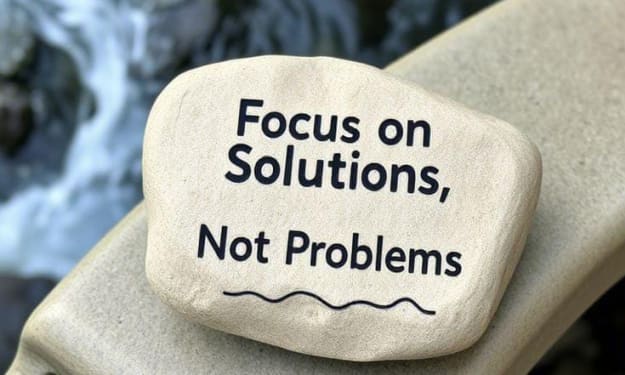
Focus on Solutions, Not Problems
Everyone has problems. Some are loud, some are silent, and some slowly eat you from the inside. But what separates people who move forward from those who stay stuck is not the size of their problems—it’s where they place their focus.
By USA daily update about 17 hours ago in Motivation



Comments
There are no comments for this story
Be the first to respond and start the conversation.