
The Little Magician: The Lionel Messi Legend
From Rosario’s Streets to World Champion Glory

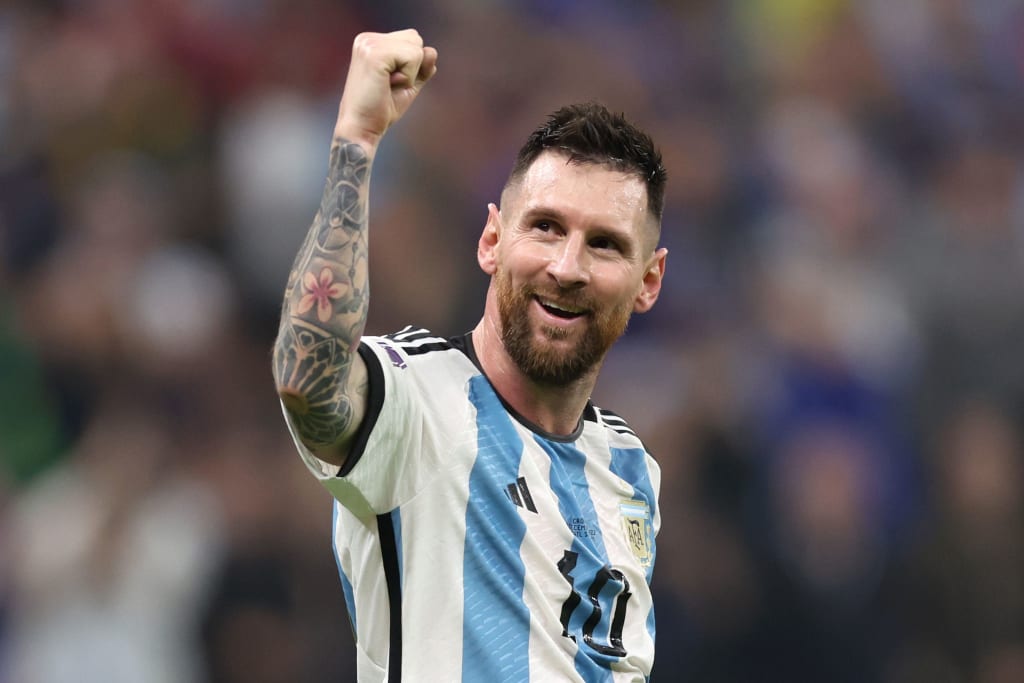
In the dusty neighborhoods of Rosario, Argentina, a boy barely taller than the goalposts danced with a ball at his feet. He was small, almost fragile, but there was something about the way he moved—a balance of elegance, instinct, and imagination—that made even older boys stop and watch. That boy was Lionel Andrés Messi, and though the world didn’t know it yet, football had just found its next legend.
Born on June 24, 1987, Messi’s journey began with humble roots. The youngest of four children, he grew up in a tight-knit, working-class family. His grandmother, Celia, played a pivotal role in his early footballing life, often taking him to matches and cheering louder than anyone else. To this day, when Messi points to the sky after scoring, it’s her he’s thanking.
At age 10, Messi faced a serious obstacle: a growth hormone deficiency that stunted his development. Treatment was expensive, and though his local club Newell’s Old Boys supported him, the financial burden became overwhelming. It was a cruel twist for a child so clearly touched by genius. But fate, as it often does in football fairytales, intervened.
At just 13 years old, Messi was offered a trial at FC Barcelona. The story goes that the club’s technical director was so impressed that he signed Messi on a paper napkin—urgency trumped formality. Barcelona not only took a chance on Messi's talent but also paid for his medical treatment. It was the beginning of a lifelong relationship between boy and club.
In Barcelona's famed La Masia academy, Messi's talent exploded. He was small, silent, and shy off the pitch—but once the whistle blew, he transformed. Coaches and teammates watched in awe as he glided through defenders with a ball seemingly glued to his foot. Former coach Frank Rijkaard gave Messi his first-team debut in 2004. He was just 17.
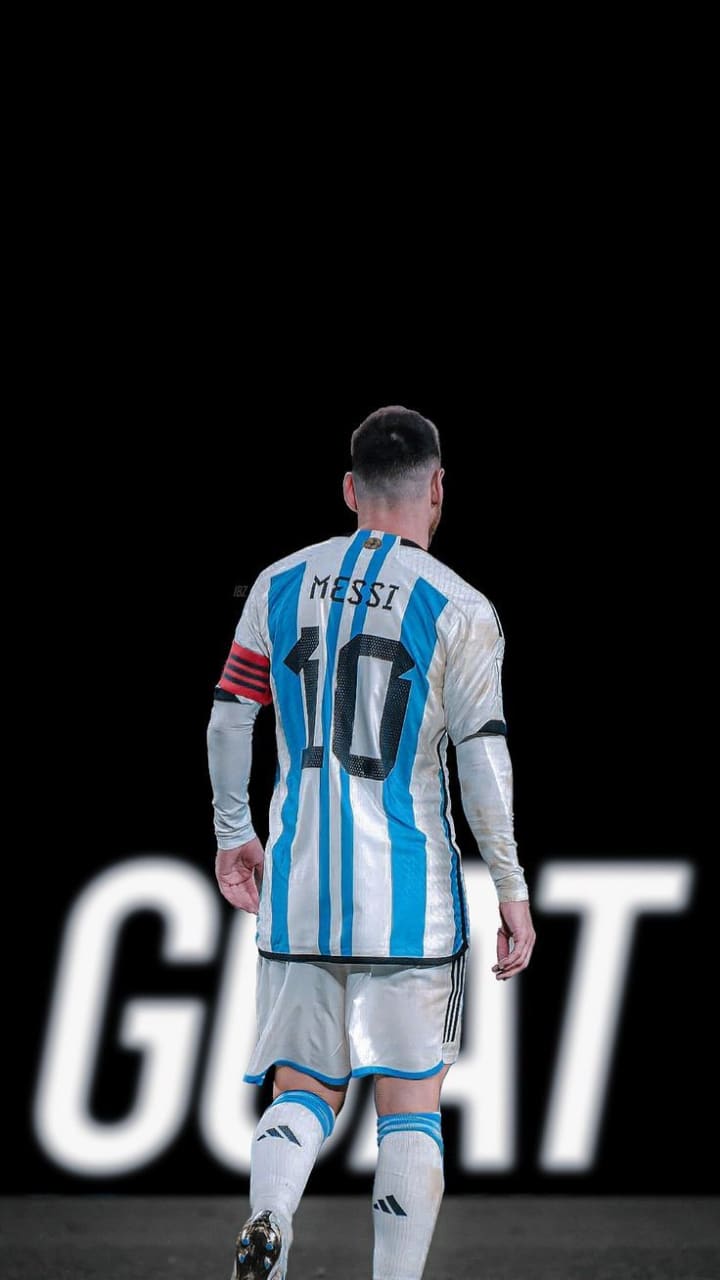
What followed was a career that redefined greatness. Under managers like Pep Guardiola, Messi thrived in Barcelona’s tiki-taka system. Alongside Andrés Iniesta and Xavi, he helped forge one of the most dominant teams in football history. Trophies flowed: La Liga titles, Copa del Rey wins, and, perhaps most memorably, four UEFA Champions League crowns.
Messi’s stats defied belief. He became Barcelona’s all-time top scorer, amassing over 600 goals in official competitions. He broke Gerd Müller’s record for most goals in a calendar year with 91 in 2012. He won Ballon d’Or after Ballon d’Or, totaling eight by 2023—more than any player in history.
But for all the glory in club football, there remained one gaping void in Messi’s journey: international success with Argentina. Critics often pointed to his lack of a World Cup trophy as the missing piece. Messi came close in 2014, reaching the final in Brazil, only to suffer heartbreak against Germany.
Doubts lingered, but Messi never turned his back on the national team. He led them to Copa América finals in 2015 and 2016, losing both in agonizing fashion. After the 2016 final, an emotional Messi briefly announced his retirement from international football. But the fire hadn’t gone out—only dimmed.
Redemption came in 2021. Messi captained Argentina to Copa América glory in Brazil, defeating their archrivals in the final at the Maracanã. It was his first major trophy with the Albiceleste—and the dam finally broke. Tears flowed, chants rang out, and Messi, now a national hero in full, lifted a trophy in Argentine blue and white.
Yet the true crescendo came in December 2022.
At the FIFA World Cup in Qatar, Messi delivered a tournament for the ages. With seven goals and countless moments of brilliance, he led Argentina to the final against France. The match became an instant classic—3-3 after extra time, and then penalties. Messi scored twice and netted his penalty in the shootout. When Gonzalo Montiel struck the winning kick, Messi collapsed to his knees, overcome.
He had done it. The little boy from Rosario was now a world champion.
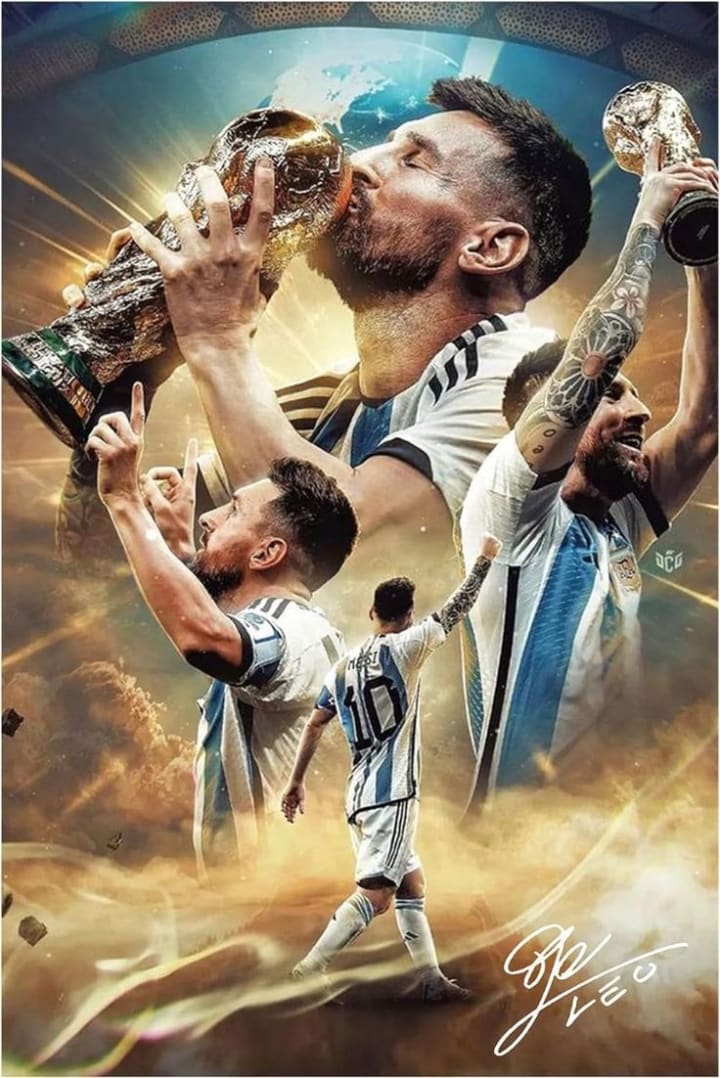
Today, Messi’s name sits atop football’s pantheon. A legend not just for his records, but for his humility, resilience, and the magic he brought to every field he graced. He wasn’t the loudest. He wasn’t the tallest. But in a sport defined by giants, Messi proved that greatness isn’t measured in size—it’s measured in heart, in vision, and in the unshakable belief that a dream, no matter how small you are, is worth chasing.
From Rosario’s narrow streets to the grandest stadiums on Earth, Lionel Messi’s legend is not just a story of goals and glory—it’s a story of inspiration.
The little magician became the greatest the world has ever seen.
About the Creator
Abdullah khan
My name
Abdullah khan
instagram ; @abdullah_khan15549
Keep reading
More stories from Abdullah khan and writers in Motivation and other communities.
A Businessman’s Journey
Arjun stood at the edge of a bustling street in Mumbai, holding a single worn leather bag and a heart beating with anticipation. The city felt like a giant machine, every person a cog working toward a dream. At twenty-two, Arjun was no different. He had left the quiet village where he was born to find a path, a purpose. All he had was a degree, a faint hope, and a relentless drive.
By Abdullah khan9 months ago in Motivation
The Man Who Became a Lightning Rod: The Unbelievable Life of Roy Sullivan
In the vast, unpredictable theater of the natural world, there are statistical anomalies, and then there is Roy Cleveland Sullivan. To the average person, the odds of being struck by lightning in a given year are roughly one in a million. The odds of being struck seven times? Those are calculated at approximately 1 in 100,000,000,000,000,000,000,000,000 (that’s a septillion).
By Frank Massey 5 days ago in Motivation




Comments (1)
I like this