
The Learning Within Us
A Journey Into the Mind’s Hidden Classroom

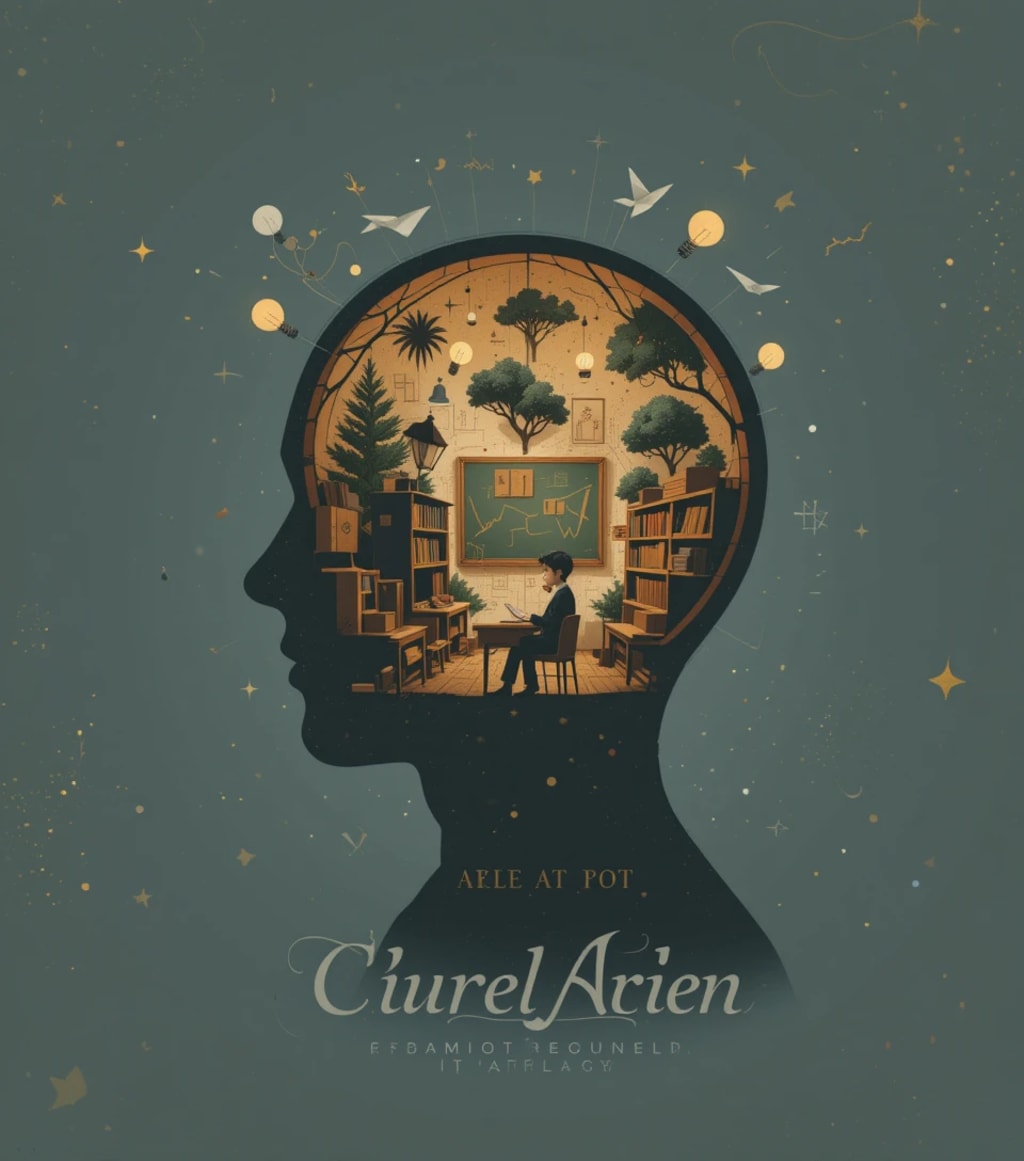
We often think of classrooms as physical places—four walls, a chalkboard, maybe a screen or a projector. We imagine teachers in front, students in rows, books opened and pens poised. But the most profound classroom we will ever know exists within us, invisible to the eye yet endlessly expansive. It is not bound by time or place, and its lessons are not always easy to grasp. It is the mind’s hidden classroom.
For Amir, this classroom had always existed, but he only truly discovered it at twenty-nine.
On the surface, Amir's life was a series of carefully executed plans. He had studied hard, earned a degree in finance, and landed a secure job at a consulting firm. His days were filled with meetings, spreadsheets, and subtle corporate diplomacy. People respected him. His parents were proud. He had, by many standards, made it.
But beneath the polished exterior, Amir felt a quiet restlessness. It wasn’t dissatisfaction with his job or life. It was something deeper, subtler—a whisper in his mind that there was more to understand, more to see, more to become. He couldn’t name it, but it pulsed steadily beneath the surface of his routines.
One evening, after a long and thankless day at work, Amir took a detour home. He walked past the city’s usual streets and found himself near an old used bookstore, one he had never noticed before. The sign read "Thought & Ink", and curiosity tugged him inside.
The air inside smelled of aged pages and quiet contemplation. Books towered like ancient trees, their spines faded but proud. Amir wandered without a plan until a slim volume caught his eye—“Learning to See: Inner Growth Through Self-Reflection.” He picked it up and flipped through it. One sentence stood out:
“The greatest teacher you will ever know resides in your own mind, but only if you learn to listen.”
That night, Amir began a journey—not by boarding a plane or moving to another city, but by entering his own thoughts with curiosity instead of judgment. He started journaling, reflecting, asking questions without expecting answers right away.
He wrote things like:
Why do I seek approval so strongly?
What have I learned from my failures—not the kind I tell others, but the ones I hide?
Who am I when no one’s watching?
And slowly, something shifted.
Amir discovered that his mind wasn’t just a processor of information; it was a living ecosystem. Emotions weren’t just responses; they were signals. His fears weren’t just hindrances; they were teachers in disguise, showing him where he hadn’t yet healed or understood himself.
In his hidden classroom, he met parts of himself he’d long ignored—his inner critic, always telling him to do more; his inner child, still wounded from careless words spoken years ago; his creative side, long buried beneath formulas and deadlines.
This classroom didn’t hand him grades. It offered questions and silence—and in that silence, understanding.
He began reading more—not just about self-help, but philosophy, psychology, spirituality. He studied Stoic wisdom and Buddhist mindfulness, not as beliefs to adopt, but as mirrors to reflect on his own mental habits.
He realized he often mistook motion for progress. Just because he was busy didn’t mean he was growing. True learning, he found, often came in moments of stillness.
One weekend, Amir took a solo trip to the countryside with no agenda. Just his journal, a few books, and quiet. On the third morning, as mist rolled over the hills and the world felt untouched, he had a moment of clarity. Not the kind that shouts, but the kind that settles into your bones:
“I don’t need to change the world to matter. I need to understand myself to live fully in it.”
It was then he realized something profound: The mind’s classroom isn’t about accumulating knowledge—it’s about transforming awareness.
This shift didn’t make Amir perfect. He still struggled. There were days when anxiety crept in, when doubts clouded his clarity. But now, instead of running from those feelings, he invited them in like teachers. What are you here to show me? he would ask.
Over time, Amir noticed how this inward journey began affecting his outer life. He became more present in conversations, more patient with colleagues, more empathetic with his parents. He no longer sought validation in the same way. His confidence came from a deeper source—self-awareness.
Eventually, Amir left his high-paying job—not in rebellion, but in alignment. He didn’t have a five-year plan. He just knew that he wanted to help others discover their own inner classrooms. He trained as a mindfulness coach and began guiding people not toward goals, but toward questions. Not toward answers, but toward attention.
His sessions were quiet, often beginning with the question: “When was the last time you truly listened to your own thoughts—not to judge, but to understand?”
Some laughed. Some cried. Most had never been asked such a thing.
And so, Amir became both student and teacher in the mind’s hidden classroom. Not in the way universities grant degrees, but in the way life grants wisdom: slowly, quietly, beautifully.
Years later, he would reflect on his journey and write in his journal:
“The most important class I ever took had no syllabus, no grades, and no end. It was the class within—the one that taught me how to live awake.”
About the Creator
Keep reading
More stories from Taslim Ullah and writers in Motivation and other communities.
The Power of Writing
In the corner of a small, sunlit room, an old desk sat by the window. The wood had softened with time, its corners dulled by years of hands resting on them, and the drawers creaked like they carried secrets. Upon it lay scattered papers, a chipped ceramic mug of pens, and a single worn-out journal. It wasn’t just a desk—it was a birthplace of worlds.
By Taslim Ullah10 months ago in Motivation



Comments
There are no comments for this story
Be the first to respond and start the conversation.