
The Last Mile
When You Think You're Done, You're Just Getting Started
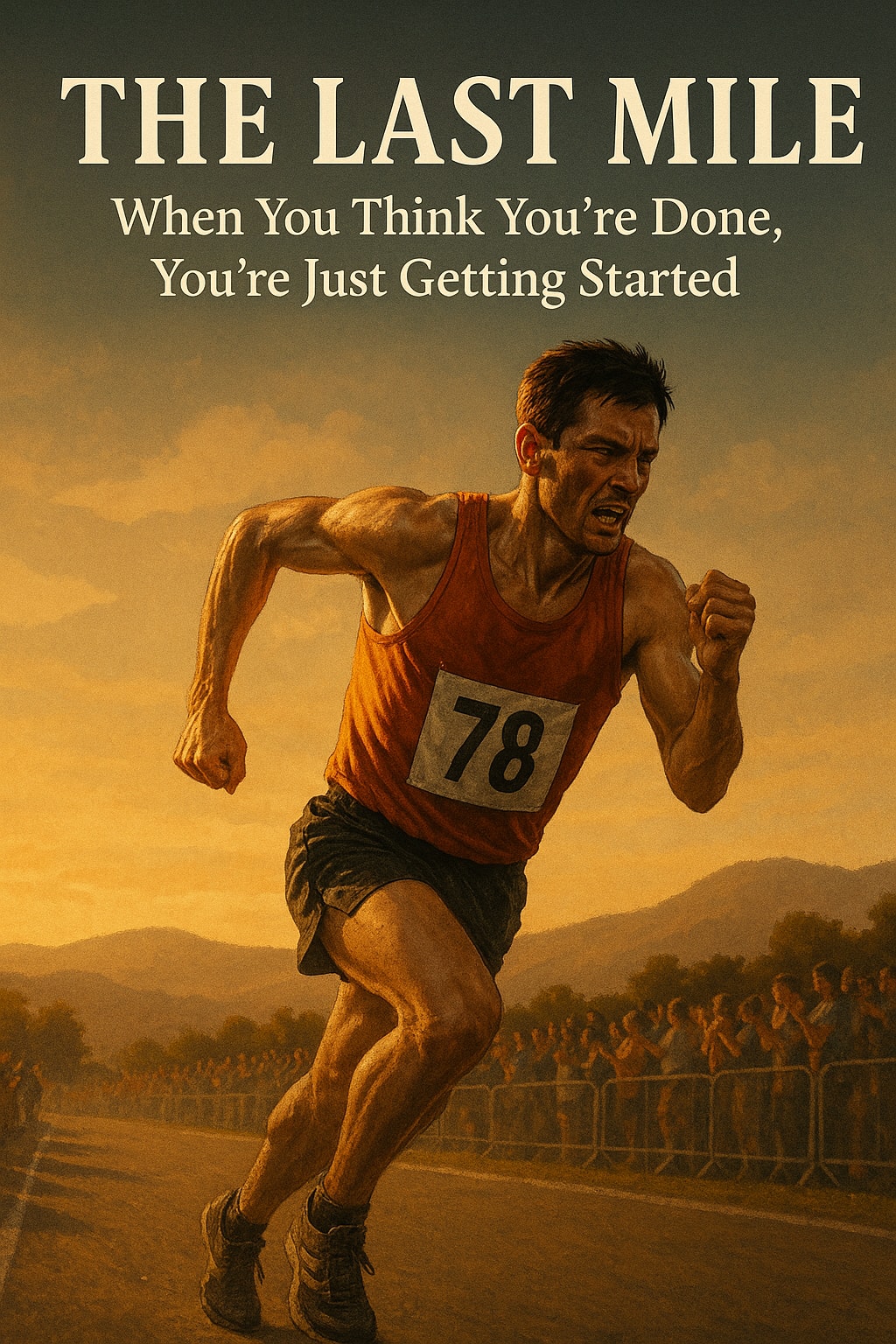
On the outskirts of a small village nestled between rugged hills and sprawling farmland, lived a young man named Kian. He was a quiet soul with a loud dream: to become a long-distance runner known across the nation. While others laughed or dismissed his ambition, Kian never wavered. Every morning before the sun rose and every evening after the fields were tended, he ran—mile after mile—on rocky roads and uneven trails.
His father, a farmer worn down by years of labor, would often shake his head and say, “Dreams are for those who can afford to rest, Kian. You’ve got a family to feed.”
But Kian would reply with quiet determination, “One day, I’ll make these miles count for more than just running.”
For years, he trained in solitude. No coach. No equipment. No crowd. Just a pair of worn-out shoes and a heart that beat with resilience. When he was finally old enough, he used his savings to enter a regional marathon—a 42-kilometer race that would draw runners from across the province.
He trained harder than ever. Rain or shine, sore or exhausted, Kian pushed through. Some days he doubted himself, especially when his shoes tore or when his muscles screamed for rest. But his dream carried him. He’d whisper, “Just one more mile.”
Race day came, and the starting line buzzed with anticipation. Kian stood among athletes with sleek gear and confident expressions. A few glanced at his worn clothes and torn sneakers and smirked. He heard one whisper, “He won’t last five kilometers.”
The gunshot fired. They ran.
Kian focused on his breath, his rhythm, the beat of his heart in sync with his steps. He didn’t try to lead; he simply kept going, letting his years of discipline guide him.
Kilometer after kilometer, runners began to fade. Blisters, exhaustion, dehydration—many dropped out. But Kian kept whispering to himself, “One more mile.”
By the 30th kilometer, Kian had moved into the top ten. Every muscle ached. His lungs burned. His legs felt like lead. But he pushed forward.
At the 35th kilometer, disaster struck.
A cramp seized his leg, sending him tumbling to the dirt. Pain exploded through his calf. The crowd gasped. Medics rushed toward him.
“Do you need to stop?” one asked.
Kian closed his eyes. He remembered the early mornings, his father’s doubt, his mother's silent prayers, the children in the village who watched him run and dared to dream.
“No,” he whispered. “I just need... a moment.”
He forced himself to his feet. Limping at first, then jogging, then running again. Slower, but determined. The crowd, once silent, began to cheer. People stood, clapping, shouting his name.
At the 40th kilometer, Kian passed another runner. Then another.
With the finish line in sight, only one runner remained ahead of him—a man who had led the race from the start. Kian’s lungs begged him to stop. His vision blurred. But he remembered the mantra that had carried him through every setback: “Just one more mile.”
He sprinted.
The final stretch was a blur of noise, pain, and willpower. In the last 200 meters, Kian overtook the leader, crossing the finish line just seconds ahead.
The crowd erupted. Kian collapsed, tears mixing with sweat and dirt.
Later, a reporter asked, “What kept you going when your body wanted to quit?”
Kian smiled, weak but proud. “Every step I’ve taken, every fall, every morning run—it wasn’t for today. It was for every time someone told me I couldn’t. It was for the belief that the last mile, the hardest one, is where you find who you really are.”
The story of Kian’s victory spread across the country. But more than the win, people were inspired by the spirit he represented—the quiet persistence, the humble strength, the refusal to quit when it mattered most.
He became more than a runner; he became a symbol. Schools invited him to speak. Brands offered him sponsorships. But Kian remained grounded. He returned to his village and used his earnings to build a training center for young athletes.
“I didn’t run to escape this place,” he said. “I ran to show what was possible from here.”
Years later, the training center produced its first national champion. And another. And then a world qualifier. Each one carried a part of Kian’s story within them.
But perhaps the most touching moment came when his father, older and slower now, stood beside him at the village track and said, “You were right. Dreams aren't just for those who can afford to rest. They’re for those who refuse to stop.”
Kian smiled. “Just one more mile, right?”
---
Moral:
Success isn’t born in comfort. It’s forged in quiet moments when no one’s watching, in persistence when there’s no applause, and in choosing not to quit even when every part of you wants to. The last mile—the hardest one—is where dreams become real.
---
About the Creator
Waleed Khan
Nature lover, student, story creator, Mimi poet etc.
Keep reading
More stories from Waleed Khan and writers in Motivation and other communities.
Beyond the Factory Walls: The Story of Farida Khan
Start writing...In the heart of Manchester, down a quiet residential street lined with aging brick flats, halal butchers, and corner shops selling Pakistani spices and fresh naan, lived Farida Khan—a woman whose strength was rarely spoken about, yet deeply felt by everyone who crossed her path. Her story wasn’t one of viral headlines or public speeches. It was woven into the fabric of everyday life, stitched silently into school uniforms, prayer mats, and the dreams of three young children who called her Ammi.
By Waleed Khan 7 months ago in Motivation
The Night I Finally Heard My Own Voice
There are moments in life that don’t announce themselves. They don’t arrive with fireworks or dramatic music or some cinematic revelation. They slip in quietly, almost unnoticed, like a soft knock on a door you didn’t realize was closed.
By Nyra Orrin6 days ago in Motivation
Guard Your Battery
Why are some people so attractive just by standing there? It’s not because they are "likable," but because they don’t need everyone to like them. I realized later that truly charismatic people allow themselves to be criticized, but they never criticize themselves. They never try to please the world; instead, the world stops to watch them.
By Emily Chan - Life and love sharing7 days ago in Poets




Comments
There are no comments for this story
Be the first to respond and start the conversation.