
The Inspiring Journey of a Pakistani Soldier"
A Childhood Carved in Struggle How poverty shaped the dreams of a young boy in Swat Valley

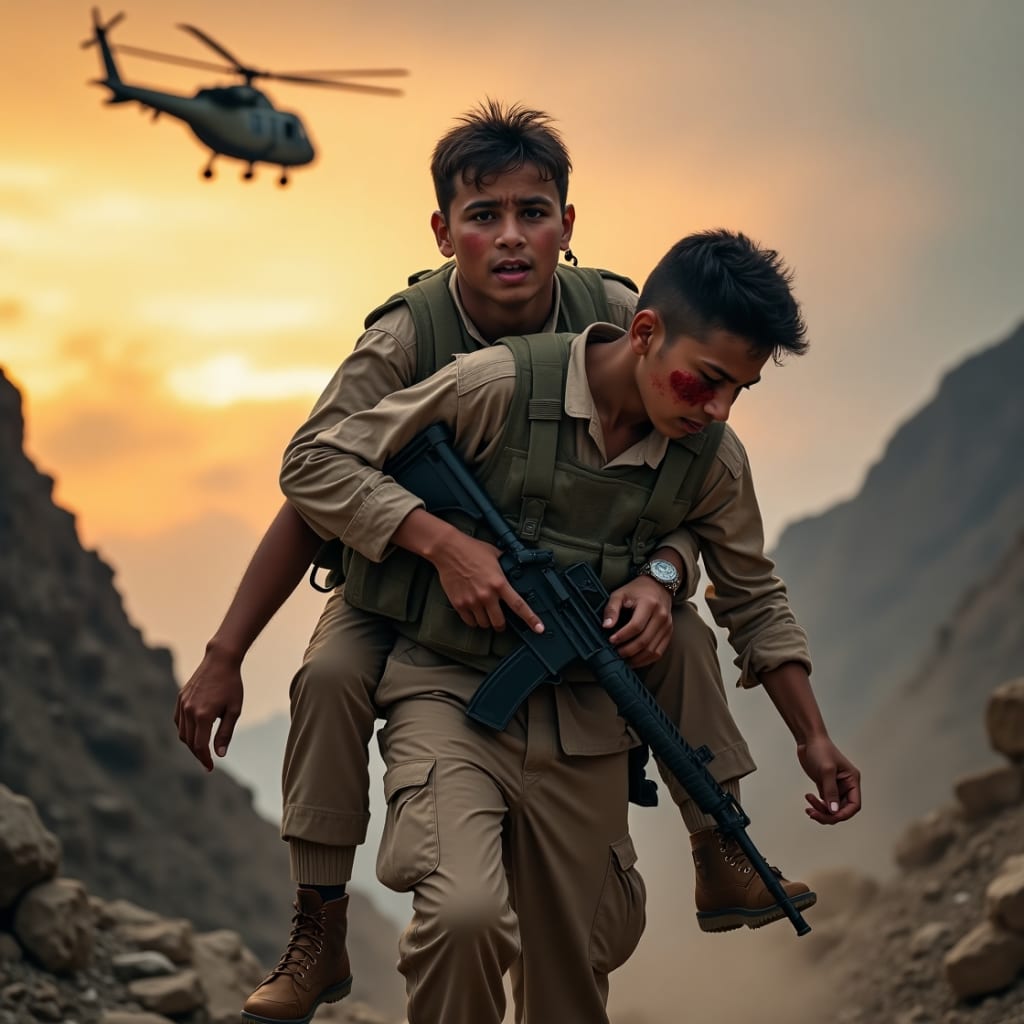
A Childhood Carved in Struggle
Ali Raza was born in a small, rugged village deep in the Swat Valley of Pakistan — a place surrounded by breathtaking mountains, but shadowed by poverty. His family was among the many struggling to make ends meet. His father, a humble carpenter, often returned home empty-handed. His mother tried to support the family by stitching clothes for the neighbors, earning a few hundred rupees each week. Even basic meals were a daily challenge.
Ali was the eldest of five siblings. At the age of just 10, he started collecting firewood after school to help heat their small, leaky home. He often studied under a dim kerosene lamp, wearing clothes that had been patched over and over again.
But inside that fragile body burned a strong spirit.
> “One day,” he used to whisper to his mother, “I’ll build you a house where you can sleep peacefully — without worrying about rain, cold, or hunger.”
---
A Uniform of Hope
At 18, Ali saw an army recruitment poster at his school. It promised more than just a job — it offered respect, honor, and a way out of poverty.
Despite having no professional training, no fancy running shoes, or preparation material, Ali decided to give it everything he had. He practiced his runs barefoot, trained by lifting stones, and studied whatever old books he could find about the army selection process.
The day of recruitment, thousands of young men showed up, but Ali stood out — not because of his appearance, but because of his determination. He passed the physical test, cleared the medical check, and finally made it through the interview.
Ali Raza officially became a soldier in the Pakistan Army.
---
Into the Fire: Swat Operation
Soon after his basic training, Ali was promoted to Lance Naik and stationed in the same region he once called home. By 2009, Swat was in turmoil. Terrorist groups had gained control of various areas, and the government launched a full-scale military operation to regain control.
Ali Raza was part of the frontlines.
During one critical mission, his unit received intel that militants had taken over a school building in the mountains. Ali and his team of four soldiers were deployed to approach the area. As they climbed toward the location, they were ambushed.
Gunfire erupted from multiple directions. The team was caught in the open.
Ali’s comrade, Sepoy Bilal, was hit in the leg and collapsed. Without thinking twice, Ali crawled through flying bullets, grabbed Bilal under heavy fire, and dragged him behind a rock for cover.
Suddenly, a sharp pain shot through Ali’s left arm — a bullet had grazed him. But he didn’t stop.
With one arm bleeding and another gripping the radio, he called for air support and backup. For over two hours, Ali kept his injured friend conscious, shielding him with his own body.
Finally, a rescue helicopter arrived. Ali and Bilal were evacuated safely. Both survived. And both would never forget that day.
---
A Nation’s Salute
Ali Raza's story soon made headlines. He was awarded the Tamgha-e-Shujaat (Medal of Bravery) for his exceptional courage and presence of mind.
The boy who once walked barefoot to school was now being saluted by generals.
Interviews, ceremonies, and medals followed. But Ali remained humble. He said in one of his first speeches:
> “I didn’t save Bilal for a medal. I saved him because he was my brother. That’s what soldiers do — we fight for each other.”
He became an inspiration to thousands of young Pakistanis who now saw in him a symbol of courage, patriotism, and selflessness.
---
Homecoming: A Dream Fulfilled
Years later, Ali returned to his village — not as the poor boy he once was, but as a respected hero.
The first thing he did was fulfill his childhood promise.
He built a proper brick home for his parents — with a roof that didn’t leak, a warm kitchen, a study room for his siblings, and even a small garden for his mother. The entire village came to witness the moment his mother stepped into her new home, tears of joy rolling down her cheeks.
> “He was always our hero,” she said, “now the world knows it too.”
---
Giving Back: A New Mission
Instead of settling into a quiet life, Ali began a new mission: to uplift his community. He used part of his military pension and medal bonuses to establish a free learning center for underprivileged children in his village.
He hired local educated youth to teach math, science, and English to children who had never even held a book before. He also launched an awareness campaign to promote peace and discourage extremism.
Ali often said:
> “The real war isn’t just fought with guns. It’s fought in the hearts and minds of our children.”
He visited schools, gave motivational talks, and mentored dozens of young men preparing to join the military. His story began to circulate on YouTube, in magazines, and social media pages — spreading his message of hope across the nation.
---
The Legacy of a Warrior
Today, Lance Naik Ali Raza is more than a soldier. He is a living legend.
He’s proof that you don’t need money or privilege to be great. You need courage, purpose, and faith. From collecting firewood in the cold Swat winters to dragging a wounded comrade through bullets — his story is a testament to human resilience.
His school now teaches over 200 children. His siblings are studying in colleges. And his village, once forgotten, has become a place people now visit for inspiration.
---
Conclusion: Real Heroism
Ali’s journey teaches us that real heroism isn’t about being fearless — it’s about taking action despite fear. His life proves that with determination and heart, one person truly can change the world — even if that world begins in a small, broken house in a forgotten valley.
> “Medals fade. Uniforms wear out. But the lives we touch — they live forever.”
— Lance Naik Ali Raza
About the Creator
jalalkhan
Motivational and emotional storyteller | Health & wellness explorer | I write to heal, inspire, and lift spirits. Every story I share is rooted in real-life challenges,
Keep reading
More stories from jalalkhan and writers in Motivation and other communities.
Malala Yousafzai: The Girl Who Defied Bullets with Books
Chapter 1: A Voice is Born in the Valley of Silence Malala Yousafzai was born on July 12, 1997, in the lush green valley of Swat, Pakistan—a region once famous for its beauty, now remembered for its brutal history of militancy. Her father, Ziauddin Yousafzai, was a teacher, school owner, and fierce advocate for education, especially for girls—a radical stance in the conservative society of Swat.
By jalalkhan8 months ago in Motivation
One Hard Thing
Stop me if you’ve heard this one before: You have the number, you know your schedule- you’ve even picked out the perfect day and time to make this appointment. Shoot, you’ve even picked out alternative days and times just in case their schedules can’t accommodate you!
By Taylor Rigsby7 days ago in Motivation
Friendship Day Gifts
Friendship Day Gifts: Celebrate Meaningful Bonds with Presentail Friendship is one of life’s greatest treasures. It’s the laughter shared during joyful moments, the support offered during difficult times, and the memories built over years of trust and connection. Friendship Day is the perfect occasion to pause and celebrate those bonds with a thoughtful gesture. With Friendship Day gifts from Presentail, showing appreciation to your friends—near or far—becomes simple, meaningful, and memorable.
By Presentail6 days ago in Motivation



Comments
There are no comments for this story
Be the first to respond and start the conversation.