
Malala Yousafzai: The Girl Who Defied Bullets with Books
How a Village Girl Became the Youngest Nobel Laureate in the World

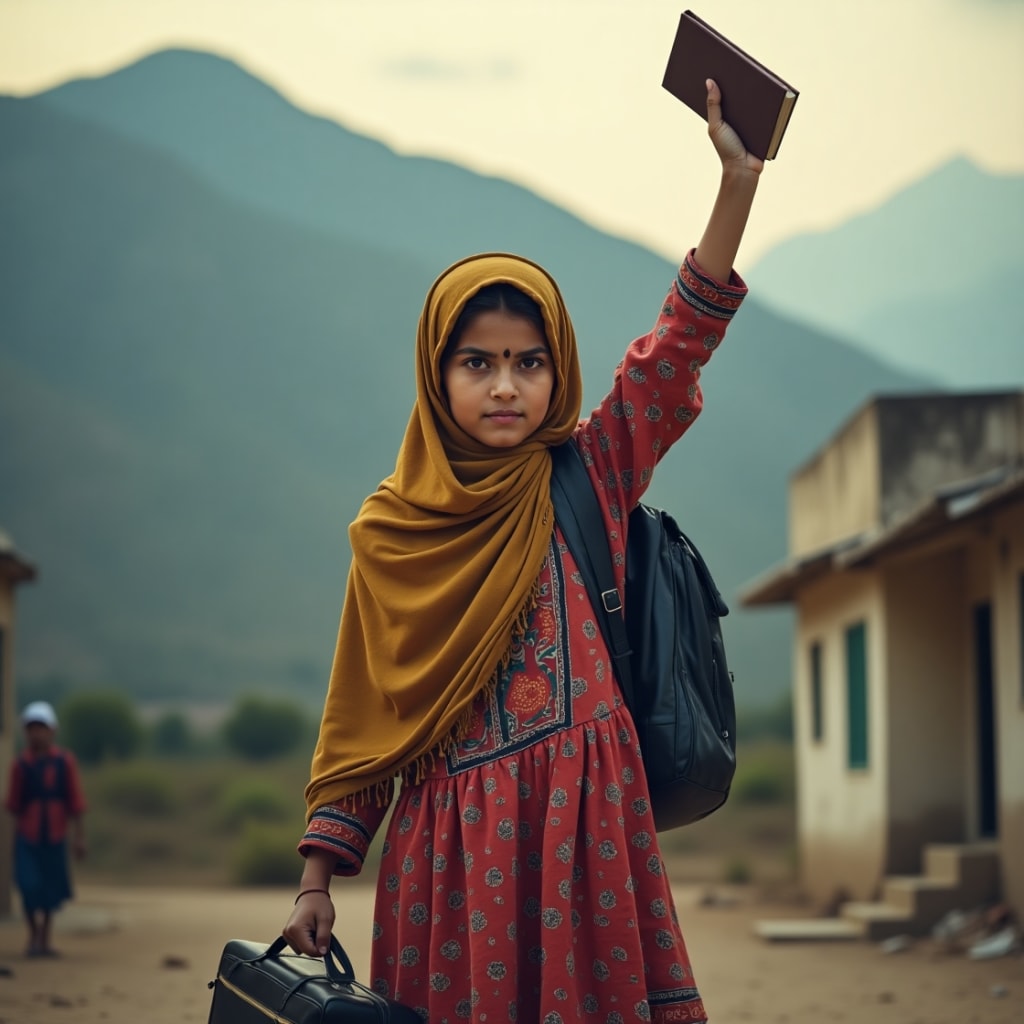
Chapter 1: A Voice is Born in the Valley of Silence
Malala Yousafzai was born on July 12, 1997, in the lush green valley of Swat, Pakistan—a region once famous for its beauty, now remembered for its brutal history of militancy. Her father, Ziauddin Yousafzai, was a teacher, school owner, and fierce advocate for education, especially for girls—a radical stance in the conservative society of Swat.
Malala’s love for books was cultivated early. As a child, she would often sit in her father’s classroom, scribbling on the blackboard, pretending to teach. At night, she devoured textbooks and dreamt of being a doctor. Her parents encouraged her every step, treating her education as sacred.
At the time, Swat was still peaceful. Girls went to school. Families attended cultural festivals. Education was a dream within reach.
But that peace was short-lived.
Chapter 2: The Darkness Descends
In 2007, the Taliban began infiltrating Swat. Led by Mullah Fazlullah, they preached extremism through illegal FM radio broadcasts. Slowly, society began to change. Music was banned. TV was declared sinful. And then came the harshest blow:
Girls were ordered to stop attending school.
At first, people thought it was temporary. Then girls’ schools started being bombed. Between 2008 and 2009, more than 400 schools were destroyed. Threats were pasted on school doors. Armed patrols punished families who dared send their daughters to class.
Malala was just 11, but her world had collapsed. One evening, her father found her crying in bed. When he asked why, she replied:
“Why can’t they take away pens and books from boys too? Why only us?”
But what started as a tear soon turned into fire.
Chapter 3: The Girl Behind the Curtain
In January 2009, the BBC launched a project to document life under the Taliban. They needed a student who could secretly share daily experiences. Malala volunteered. With her father’s help, she began writing an anonymous diary in Urdu under the pseudonym Gul Makai.
Her entries were raw, emotional, and brave:
“I had a terrible dream yesterday with military helicopters and the Taliban. I was afraid to go to school.”
“Our house has been searched. I am worried they will find my books.”
The blog attracted global attention. Malala’s voice pierced through the walls of censorship and fear. She gave interviews, appeared on national TV, and even met politicians. Slowly, her identity became known.
She was now a symbol of resistance—and a target.
Chapter 4: The Bullet That Tried to Silence a Nation
On the morning of October 9, 2012, 15-year-old Malala sat in a school van with her friends, returning home from exams. They laughed, shared notes, and teased each other about questions missed.
At a traffic stop, two masked men boarded the bus. One of them asked:
“Who is Malala?”
Before anyone could answer, he fired three shots.
One bullet struck Malala in the head, passing through her face and neck, and lodged in her shoulder. Two other girls were injured. The gunmen fled.
The valley, the nation, and the world fell silent.
Malala was airlifted to a military hospital in Peshawar. Doctors fought to save her. Within days, her condition worsened, and she was flown to Queen Elizabeth Hospital in Birmingham, UK. She remained in a coma for over a week.
People prayed. Protests erupted. Media channels broadcast her story 24/7.
And then… she opened her eyes.
Chapter 5: She Rises, Stronger Than Before
Malala’s road to recovery was long and painful. Half her face was paralyzed. She couldn’t speak clearly. She underwent multiple surgeries to repair her skull and restore facial nerves.
But the moment she could speak, she didn’t ask, “Why me?”
She asked:
“When can I go back to school?”
In 2013, less than a year after the attack, Malala stood before the United Nations in New York, wearing a white scarf once worn by Benazir Bhutto, and delivered a speech that shook the world.
She said:
“One child, one teacher, one book, and one pen can change the world. Education is the only solution.”
She didn’t ask for revenge.
She asked for books for every child in the world.
Chapter 6: A Nobel Purpose
In 2014, Malala was awarded the Nobel Peace Prize, becoming the youngest-ever recipient at just 17 years old. She shared the award with Kailash Satyarthi, an Indian child rights activist.
She dedicated the prize to “all the forgotten children who want education.”
But Malala didn’t stop at speeches and awards. She co-founded the Malala Fund, an international nonprofit that supports girls' education in more than 20 countries.
She continued to challenge world leaders, from Barack Obama to the UN Security Council, urging them to invest in schools, not soldiers.
Chapter 7: A Global Student and Activist
In 2017, Malala began studying Philosophy, Politics, and Economics at Oxford University, the same institution where many world leaders have studied. While attending lectures, writing essays, and living a student’s life, she continued to speak at global forums, visit refugee camps, and advocate for girls’ rights.
She said:
“I want every girl to go to school, not just for 5 years or 8, but 12 full years of quality education.”
She visited war zones, met displaced girls in Nigeria, Iraq, and Syria, and kept reminding the world that one out of five girls globally is still out of school.
Chapter 8: Beyond the Bullet – A Living Movement
Malala has become more than an individual—she’s now a movement. Schools have been named after her. Documentaries and books share her story. Young girls in remote parts of Africa and Asia carry her photo in their notebooks.
Her memoir, “I Am Malala”, became a bestseller, and was translated into over 40 languages. A film adaptation has inspired students and educators globally.
And yet, she remains grounded. In interviews, she laughs at jokes, talks about exams, fangirls over cricket matches, and worries about student loans.
Because Malala is still a girl—with the heart of a fighter.
Conclusion: A Bullet Failed, A Book Survived
Malala Yousafzai’s story is not about pain, but about power.
Not about tragedy, but transformation.
The Taliban fired a bullet to silence her voice.
But that bullet became the loudest echo in modern history.
She showed the world that bravery doesn’t always wear armor. Sometimes, it wears a school uniform. That revolution doesn’t always start with guns. Sometimes, it starts with a girl, a book, and an unbreakable will.
Malala reminds us that:
About the Creator
jalalkhan
Motivational and emotional storyteller | Health & wellness explorer | I write to heal, inspire, and lift spirits. Every story I share is rooted in real-life challenges,
Keep reading
More stories from jalalkhan and writers in Motivation and other communities.
One Hard Thing
Stop me if you’ve heard this one before: You have the number, you know your schedule- you’ve even picked out the perfect day and time to make this appointment. Shoot, you’ve even picked out alternative days and times just in case their schedules can’t accommodate you!
By Taylor Rigsby7 days ago in Motivation
5 Things I Wish I Knew Before Starting University
Starting university felt like stepping into a completely new world. New people, new routines, new expectations… I thought I was ready. I imagined myself thriving effortlessly, making friends instantly, and acing every assignment without breaking a sweat. Spoiler alert: none of that happened. What I didn’t realize was how much I would struggle, learn, and grow in ways no one could have prepared me for. Looking back, there are five things I wish I had known before starting this journey.
By Valerie O4 days ago in Motivation


Comments
There are no comments for this story
Be the first to respond and start the conversation.