
The Honest Benefit
The Reality of Leading in Peacetime
The Honest Benefit
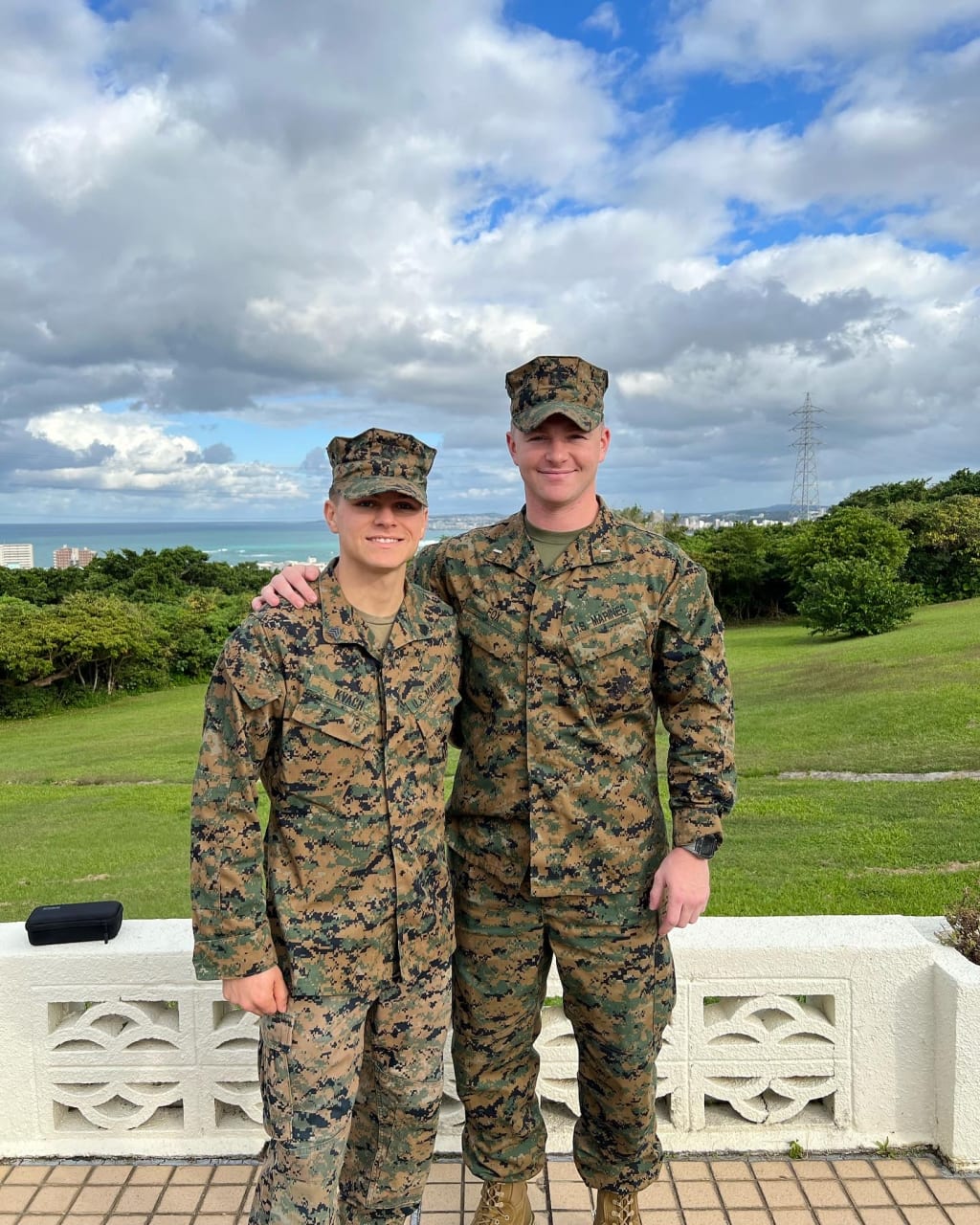
I have been in the military lifestyle since 2013. What I mean by that is I showed up at the Naval Academy Prep School in the summer of that year, and since then it’s been military life. I’ve never been able to just go home for the weekend without taking leave; I’ve been wearing a uniform every day of the week that gets scrutinized by peers, superiors, and subordinates; I’ve stood a duty post on rotation throughout; and I’ve been at the beck and call of various chains-of-command who have taken the opportunity to use me and my colleagues as the expensive laborers we are on many a weekend and holiday. I deployed to Japan two weeks before Thanksgiving, so that means I didn’t get to wake up to Mom gently placing my Christmas stocking at my feet that year (*winky face emoji*).
All that to say, it’s been an inconvenient time. Not overly challenging, just inconvenient. That might be disappointing to hear, but it’s been the experience for many of my friends who have served as well. It’s nice to be generally at peace, but we did sign up expecting to “get a little action,” as we like to say ignorantly in bars with our buddies.
Pivoting and transitioning now like the Memphis Grizzlies on a fast-break, I’ll say just as plainly that the leadership opportunity has been the real value for me. The challenge of inheriting a group of young men and women who bring a lifetime of their own personal biases into the equation is daunting. If you plan to get out after your first five years as I have, you can mail it in when you get that opportunity. As mentioned previously, we are in a time of relative peace. A platoon of Marines can run itself. Junior Marines who are fresh from boot camp or their initial Marine Corps job schooling arrive at a unit and it’s already functioning. We don’t sit every new group in a conference room and go step-by-step through their new life in a platoon or section. They’re welcomed by a group that has already been conducting business as usual, and they learn the routine rather quickly.
So, I’ll say again, you can choose to mail it in as an officer or a senior enlisted member. Many do unfortunately because there aren’t that many chances to screw things up in a major way. Even less fortunate is the reality I’ve seen of a platoon commander not being fired after screwing up one of the big three: don’t lose any Marines; don’t lose any gear; don’t give away classified information.
You can mail it in and do the bare minimum and be fine in many cases. The real impact we make in leadership positions isn’t during the operation when the exercise is raging- it’s all in the preparation time leading up to the execution. There is plenty of impact to be made on others and even more impactful moments to experience yourself. Marines are amazing teachers without realizing it themselves. They have quickly and efficiently exposed my bad ideas by either offering a different solution because they’ve seen that idea fail before, or they execute that idea faithfully and the plan quickly breaks down before your eyes. There aren’t many feelings worse than planning an operation for your group that turns into a lame duck. Often, you are not the one executing with them as the officer, which makes it all the more painful when they return been through a hellacious time on your behalf.
THAT is the challenge that makes it worth the inconvenience. There aren’t many other jobs I’m aware of that imbue people my age with that amount of responsibility. The accountability for human lives, to be dramatic but truthful. To use that idea differently, it is our responsibility to not make our humans’ lives suck. That’s where you put the hard work in because there is plenty involved in reducing the suck. It’s the business of “suck reduction,” if you will. That means getting to know them and how they work on their own and in a group. It means being a parent in the morning, a mentor and marriage counselor during lunch, and disciplinarian in the afternoon. It means finding the line between having fun and being professional. It means being involved in their lives without playing favorites or getting so close that you can’t command them stoically. It means training them as hard as you can, without overtraining, so that you can confidently look at your boss and tell him that they are ready to kill other humans competently.
It’s pretty simple – do your best – and pretty complex – your Sergeant just confessed that his new wife was arrested over the weekend for doing METH, and she is now in a rehab facility.
It’s so simple - do the right thing, at the right time, for the right reason - and so complex – your platoon sergeant just shot himself in the front seat of his wife’s car on a Saturday night.
It is so simple – be accountable to yourself, to your Marines, and to the institution – and so complex – there are no aircraft flying during the exercise that starts in twelve hours and your platoon’s sole purpose on earth is to shoot down aircraft.
It’s really very simple – be as good as you can be – and extremely complex – your platoon sergeant with nearly twenty years of experience, including literal combat, isn’t setting the example you want for your group, but he doesn’t take constructive criticism very well, but you need him to be better, but your Marines look up to him because of his combat experience so much, but you’re honestly tired of hearing about it. It’s pleasantly simple and shockingly complex all at the same time.
And that’s what makes it worth it. We do a disservice to our young leaders through our inability to quantify the intangibles. Because if you really invest in your leadership opportunities, you can gain an understanding of humans that others cannot. If you really pay attention to the lessons that you learn organically through the constant refinement process of leading these impressionable young folks, you can learn to communicate effectively in every type of environment, whether it be outrageously chaotic, or merely an administrative safety briefing.
Those opportunities, those chances to screw up or to get it just right are what has made the inconvenience worth it. In the past, I felt guilty when people would thank me for my service because I hadn’t felt that I earned it prior to being a platoon commander. Now, I interrupt people before they even get out the “s” in “service,” with “YOU DON’T KNOW THE MEANING OF THANKS.” It’s awkward but immensely satisfying to see the shock on their face Every. Single. Time. That, of course, is not true. Honestly, I do still feel a twinge of guilt, as do all my brothers and sisters who have not felt the horrifying truths of live combat.
That merely adds to the inconvenience. But it’s been worth it, and I have a feeling it will be the honor of my lifetime.
About the Creator
Keep reading
More stories from writers in Motivation and other communities.
One Hard Thing
Stop me if you’ve heard this one before: You have the number, you know your schedule- you’ve even picked out the perfect day and time to make this appointment. Shoot, you’ve even picked out alternative days and times just in case their schedules can’t accommodate you!
By Taylor Rigsby5 days ago in Motivation
Why Your Struggle Is Your Strength
I lost everything in the span of six months. My job disappeared in a round of layoffs. My relationship ended after five years. My father was diagnosed with cancer. And just when I thought things couldn't get worse, my car broke down on the side of the highway during a rainstorm, and I sat there crying so hard I could barely breathe.
By Fazal Hadia day ago in Motivation



Comments
There are no comments for this story
Be the first to respond and start the conversation.