
"The Habit Loop: How to Build Lasting Habits and Break Bad Ones
Mastering the Habit Loop: The Secret to Effortless Consistency

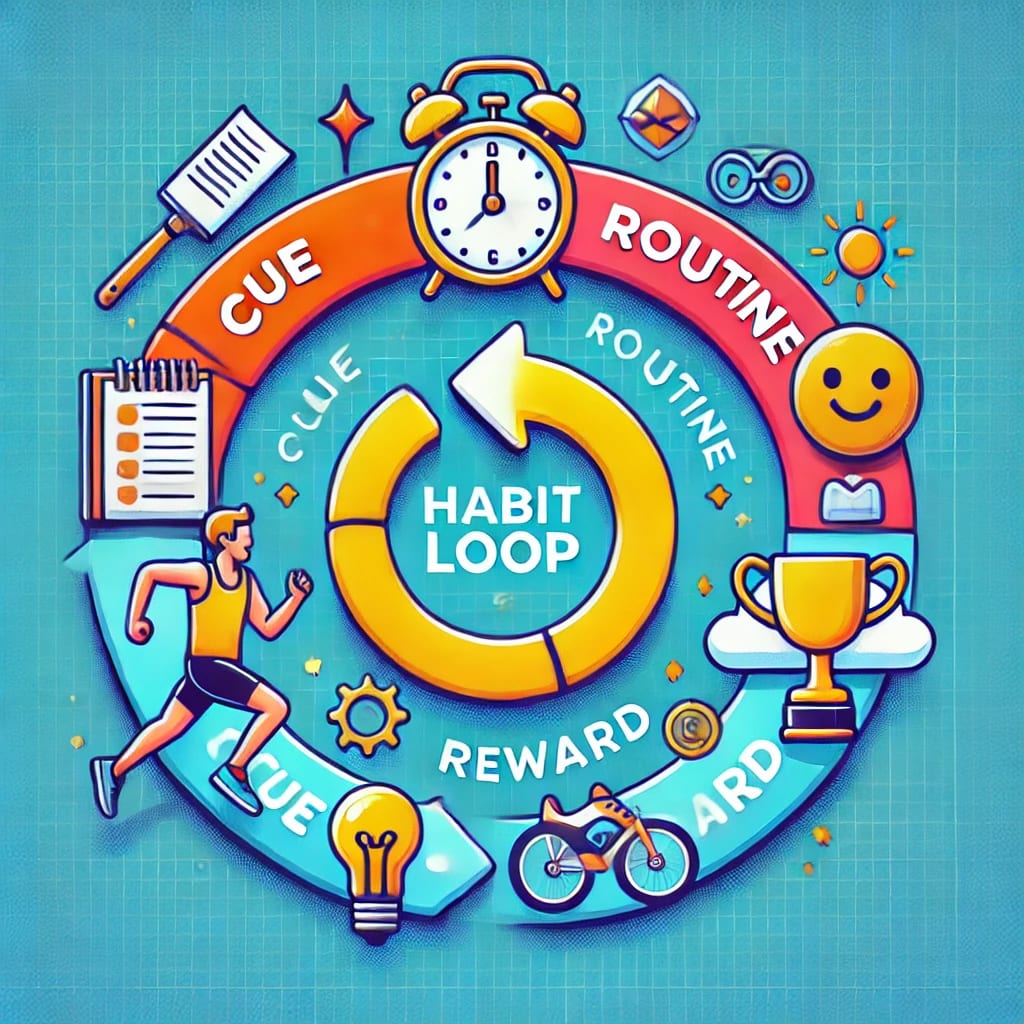
At the core of every habit lies a simple but powerful framework known as the habit loop. Coined by Charles Duhigg in his book The Power of Habit, the habit loop consists of three key components: cue, routine, and reward. Understanding this loop is the first step to building habits that stick. Whether you’re trying to adopt a new habit or break an old one, mastering the habit loop can make consistency feel almost effortless.
1. Cue: The Trigger for Action
The cue is the signal that initiates the habit. It’s the “why” behind the behavior. Cues can be external (like a time of day, a location, or an event) or internal (like an emotion or a thought). For example:
Feeling stressed (internal cue) might trigger the habit of biting your nails.
Seeing your running shoes by the door (external cue) might prompt you to go for a jog.
Cues are powerful because they operate on a subconscious level. Your brain is constantly scanning the environment for patterns, and when it detects a cue associated with a past behavior, it automatically prepares to execute the routine. This is why habits can feel so automatic—they’re deeply ingrained in your neural pathways.
To build a new habit, start by identifying a clear and consistent cue. For instance, if you want to start meditating daily, you could use your morning coffee as a cue—every time you finish your coffee, you sit down to meditate. The more specific and consistent the cue, the easier it will be to trigger the desired behavior.
2. Routine: The Behavior Itself
The routine is the action you take in response to the cue. This is the habit you’re trying to establish or change. Whether it’s exercising, reading, or flossing, the routine is the part of the habit loop that requires effort—at least initially.
The key to making routines stick is to start small. Instead of committing to an hour-long workout, begin with just 10 minutes. This reduces resistance and makes the habit easier to adopt. Over time, as the habit becomes automatic, you can gradually increase the complexity or duration of the routine.
For example, if your goal is to write a book, don’t start by trying to write 2,000 words a day. Begin with 200 words or even just 10 minutes of writing. The goal is to make the routine so easy that you can’t say no. As James Clear, author of Atomic Habits, famously said, “You do not rise to the level of your goals. You fall to the level of your systems.” By focusing on small, manageable routines, you set yourself up for long-term success.
3. Reward: The Positive Reinforcement
The reward is what makes the habit worth repeating. It’s the positive outcome that your brain associates with the routine. Rewards can be tangible (like a treat after a workout) or intangible (like the feeling of accomplishment after completing a task).
For example, if your goal is to build a habit of writing daily, your reward could be the satisfaction of seeing your progress or treating yourself to a favorite snack afterward. The reward reinforces the habit loop, making it more likely that you’ll repeat the behavior in the future.
Rewards are crucial because they satisfy your brain’s craving for dopamine, the “feel-good” neurotransmitter. When you experience a reward, your brain takes note and strengthens the connection between the cue and the routine. Over time, this reinforcement makes the habit more automatic.
Why the Habit Loop Works
The habit loop works because it taps into the brain’s natural tendency to seek efficiency. When a behavior is repeated consistently within the same loop, the brain starts to automate the process. Over time, the cue and reward become so strongly linked that the routine feels almost effortless.
This is why habits are so powerful—they free up mental energy by turning deliberate actions into automatic behaviors. Instead of relying on willpower, which is a finite resource, you can rely on the habit loop to carry you through.
Practical Tip: Map Your Habits
To apply the habit loop to your life, try mapping out your existing habits. Identify the cues, routines, and rewards for both good and bad habits. Once you understand how your habits work, you can start to tweak the loop—changing the cue or reward to create better habits or break unhelpful ones.
For example, if you want to stop scrolling through social media before bed (routine), you could replace your phone (cue) with a book and reward yourself with a sense of relaxation instead of dopamine hits from endless scrolling.
Real-Life Example: How One Person Transformed Their Life
Consider the story of Sarah, a busy professional who struggled to find time for exercise. She identified her cue (coming home from work), her routine (sitting on the couch), and her reward (relaxing after a long day). To build a new habit, she replaced her old routine with a 10-minute workout and rewarded herself with a relaxing bath. Over time, this small change led to a consistent exercise habit that transformed her health and energy levels.
A Thought-Provoking Quote
As Aristotle once said, “We are what we repeatedly do. Excellence, then, is not an act, but a habit.” This timeless wisdom reminds us that our habits shape our identity and our future. By mastering the habit loop, you can take control of your actions and, ultimately, your life.
Your Turn: Join the Conversation
Now that you understand the habit loop, it’s time to put it into practice! What’s one habit you’d like to build or break? Share your thoughts in the comments below—I’d love to hear about your goals and how you plan to use the habit loop to achieve them. Let’s support each other on this journey to consistency and growth!
About the Creator
Pure Crown
I am a storyteller blending creativity with analytical thinking to craft compelling narratives. I write about personal development, motivation, science, and technology to inspire, educate, and entertain.
Keep reading
More stories from Pure Crown and writers in Motivation and other communities.
Why Failure Is Essential for Success and Happiness
Failure. Just saying the word might make you cringe, right? You might imagine the worst-case scenarios: dropping a cake at your cousin’s wedding, missing the last train home, or worst of all, losing your Wi-Fi connection during the season finale of your favorite show. It feels awful. But here’s the twist—failure might be the best thing that ever happened to you. I know, sounds crazy. Stick with me, though, because I’m about to drop some truth bombs on why failure isn’t just a stepping stone to success—it’s essential for your happiness.
By Pure Crownabout a year ago in Motivation


Comments
There are no comments for this story
Be the first to respond and start the conversation.