
The Golden Cracks: A Story of Mending and Hope
Inspired by the Japanese art of Kintsugi, a young woman discovers the power of healing and resilience in the face of life's challenges.

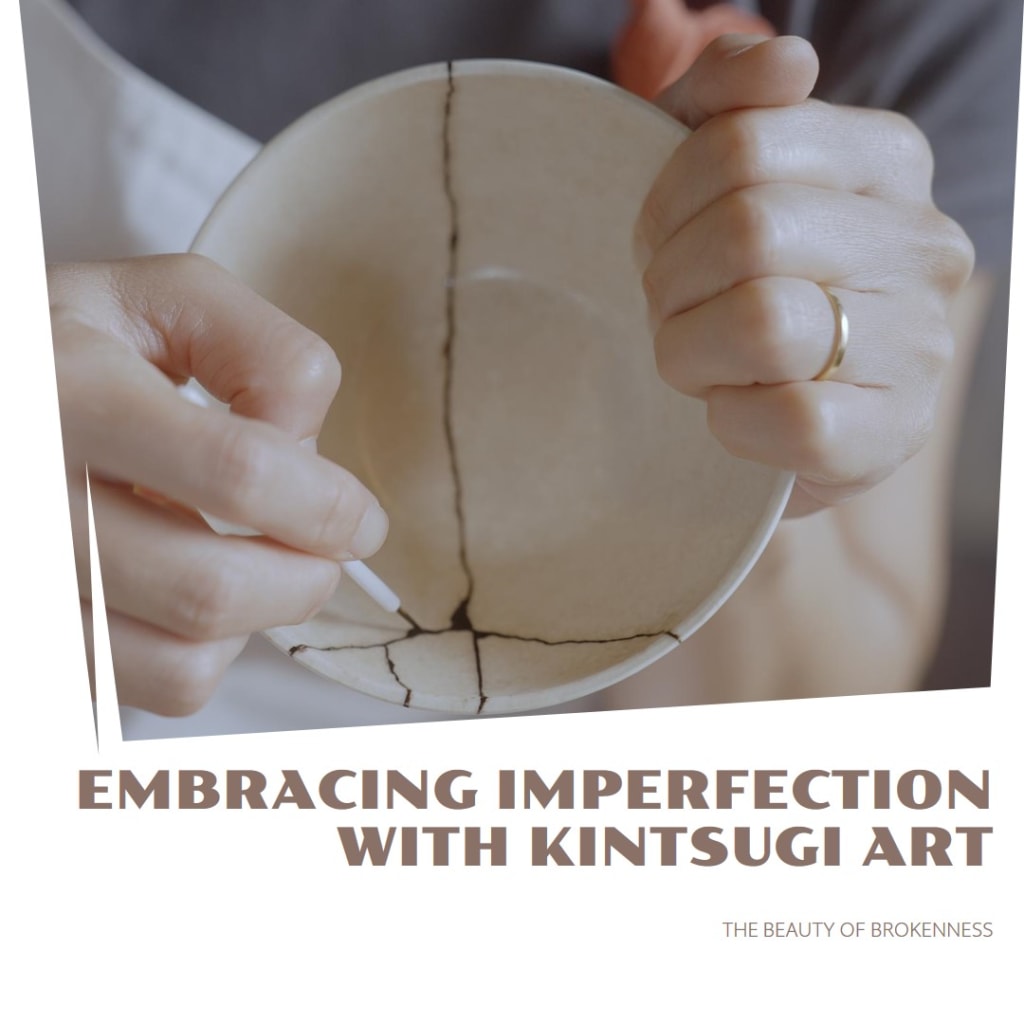
In the heart of Kyoto, nestled amongst the bustling streets, sat a hidden haven known as "Hana's Tea House." Sunlight streamed through the paper lanterns, painting intricate patterns on the worn wooden floor where Hana, a young woman with eyes as deep and serene as a koi pond, sat engrossed in a worn book. It wasn't just any book; it held the stories of her grandmother, tales of ancient wisdom and a philosophy that resonated in Hana's troubled heart – Kintsugi, the art of mending with gold.
The world seemed shrouded in darkness. News of war and strife filled the airwaves, casting a long shadow over Hana's dreams. She longed to make a difference, to mend the broken pieces of the world, but felt powerless, like a single drop in a vast and stormy sea.
Suddenly, a gust of wind swept through the open doors, carrying with it a flurry of cherry blossom petals and a familiar figure. It was her grandmother, Sakura, her silver hair framing a face etched with the wisdom of time. Her hands, gnarled by age, still held the grace of a seasoned artisan.
"Hana," she said, her voice as soft as the rustling leaves, "why such a long face on such a beautiful spring day?"
Hana poured her grandmother a cup of steaming tea, her voice heavy with despair. "Grandma, the world feels so broken. How can I possibly make a difference in the face of so much suffering?"
Sakura sipped her tea, a thoughtful silence settling between them. Then, she gently placed a chipped teacup on the table, its delicate surface adorned with intricate gold seams. "Hana," she began, "look at this cup."
Hana traced the gold with her fingertips, marveling at its beauty. "It's beautiful, Grandma. But what does it have to do with the world's problems?"
"This cup," Sakura explained, "was once whole, a symbol of perfection. But then, it fell and broke. It could have been discarded, forgotten. But instead, it was mended with Kintsugi. The gold doesn't hide the cracks; it highlights them, transforming them into a symbol of its resilience."
A spark of understanding flickered in Hana's eyes. "So, the cracks are not weaknesses, but a part of the story?"
Sakura smiled. "Precisely, Hana. Just like this cup, we too are broken at times. We experience loss, heartbreak, and disappointment. These become our cracks, but they don't define us. It's how we choose to mend ourselves, the lessons we learn from our experiences, that truly matter."
"But how can I mend the world, Grandma?" Hana persisted, her voice filled with a newfound determination.
Sakura pointed to the window, where children were laughter as they chased butterflies in the blooming cherry blossom orchard. "Look, Hana," she said, "the world is not just filled with darkness. There is still beauty, kindness, and resilience all around us. You can mend the world by mending the lives of those around you, one act of compassion at a time."
Inspired by her grandmother's words, Hana decided to start small. She began volunteering at a local community center, helping children with their studies and organizing workshops on traditional Japanese crafts like origami. As Hana watched the children, their faces aglow with creativity and joy, she realized that even the smallest act could make a difference.
One day, a young boy named Kenji approached Hana, clutching a broken toy car. His eyes were filled with tears. Hana, remembering her grandmother's teachings, gently took the car and, with careful hands, began to mend it using Kintsugi techniques. As she worked, she told Kenji stories of resilience and hope, stories her grandmother had told her.
When she finished, Kenji held the car in his hands, his tears replaced by a wide grin. "It's even more beautiful now, miss!" he exclaimed.
Hana smiled, her heart swelling with a sense of peace. She realized that Kintsugi wasn't just about mending objects; it was about mending hearts, fostering connections, and finding beauty in the broken pieces of life.
Years later, Hana's tea house had become a beacon of hope in the community. It was a place where people gathered to share stories, learn new skills, and find solace in each other's company. The walls were adorned with Kintsugi repaired objects, each one a testament to their resilience and a reminder of the beauty that could be found even in the cracks.
One evening, as Hana sat on the porch, sipping tea and watching the sunset paint the sky in hues of orange and purple, she felt a sense of contentment she had never experienced before. She understood that she couldn't mend the world alone, but her small acts of kindness, inspired by the wisdom of Kintsugi, had created a ripple effect, spreading compassion and resilience throughout her community.
About the Creator
A Peaceful Mind
Welcome to my corner of the internet, where stories come alive and products get honest reviews! ✨
Let's explore the world of imagination and discover hidden gems together!
Keep reading
More stories from A Peaceful Mind and writers in Motivation and other communities.
The Power of Opening Your Heart
We all have emotions deep inside us that shape how we see the world. Feelings like love, sadness, hope and more color our every experience. Sometimes it's easier to hide those feelings rather than let others see them. But I've learned that showing your true emotions is the best way to truly live.
By A Peaceful Mind2 years ago in Motivation
Hottest in the Office
Dear Rafi, You’re very distracting to work around. For the first second I saw you the other day, I thought you were some type of executive. It took a moment to realize no, you were just the new guy, dressed up for the job he wants. Be still, my heart.
By Gabriel Shames6 days ago in Pride




Comments
There are no comments for this story
Be the first to respond and start the conversation.