
The Diary of Defeats
How my failure wrote my success


The first entry was short.
"Missed the audition. Froze on stage. Everyone laughed."
Ellis stared at the words, etched into the leather-bound journal his grandfather once gifted him. A birthday present with the inscription: "Write even the storms. Especially the storms."
He hadn't meant to start a diary, especially not one about his failures. But that day, the sting of embarrassment demanded somewhere to go. So he wrote. Not to remember, but to release.
Days passed. Then came another blow.
"Rejected from the art exhibit. Curator said my work ‘lacked emotion.’ Felt like I’d handed over my soul only to be told it was empty."
More entries followed. Each a punch to the gut. A missed opportunity. A friendship lost. An idea ridiculed. A job interview that ended in silence. Ellis called it "The Diary of Defeats," a place to collect the bruises life handed him.
ting of failure, Ellis began writing why he tried in the first place.
"Auditioned because I wanted to feel alive."
"Painted that piece in a single breath, like music through my fingertips."
"Asked her to coffee because I was tired of being afraid."
The defeats were still there, raw and real. But now they came with context—courage. Effort. Heart.
And that changed everything.
Ellis wasn't alone in his defeats. At twenty-nine, most of his friends were mastering the art of pretending: pretending they had it all figured out, pretending their lives were highlight reels. He tried that too. Smiling through setbacks, shrinking his dreams so they’d fit inside safer boxes.
But then, he'd return to the diary. And it would remind him: there was power in truth. Even broken truth.
One night, after another failed pitch to investors, Ellis opened the journal and flipped through years of inked failures. But what caught him was not the pain—it was the persistence. Page after page of a man who kept showing up.
He saw the pattern.
Every defeat was followed by another attempt.
He hadn’t given himself enough credit for that.
And somewhere between the lines of “failed again” and “wasn’t chosen,” he saw the quiet victories: “learned something,” “got back up,” “still believe.”
He began calling them defiant footnotes.
On a cold morning in March, Ellis walked into a local community center and pitched a workshop called “The Diary of Defeats.”
The director raised an eyebrow. “You want people to write about how they failed?”
Ellis smiled. “I want people to see that trying is already a kind of winning.”
A month later, the first group sat in a circle—teenagers, single moms, retirees, mid-life dreamers. Each with their own silent battles. He asked them to write down their latest defeat.
There were tears. Laughter. Long pauses.
Then he asked them to write why they tried.
By the end of the session, the room felt lighter. Not because the problems vanished—but because shame did.
The workshop grew. Word spread. Ellis traveled, taught, listened. People brought their defeats, and left with something better than success—they left with self-respect.
Years later, Ellis was invited to speak at a major conference. Backstage, as nerves swirled like old ghosts, he pulled out a worn, weathered journal—his original Diary of Defeats.
The first page still hurt to read. But it also made him smile.
He stepped onto the stage.
“There’s a strange power in writing down your defeats,” he began. “Not to dwell. But to own them. To see that behind every stumble was a step forward, even if it didn’t look like it at the time.”
He held up the diary.
“This book isn’t about failure. It’s about fight. About heart. About the hundreds of times I could’ve quit—but didn’t.”
The crowd leaned in.
“So here’s what I ask of you. Write down your defeats. Not to wallow—but to witness your strength. Because every ‘no’ you survived shaped the ‘yes’ you're becoming.”
And so the diary continued.
Not as a chronicle of shame, but as a collection of courage. A reminder that the path to greatness is paved in falls—and that the brave don’t hide their scars.
They write them down.
And then they rise.
About the Creator
Daniel Henry
Writing is not a talent; it's a gift.
story wrting is my hobby.
Keep reading
More stories from Daniel Henry and writers in Motivation and other communities.
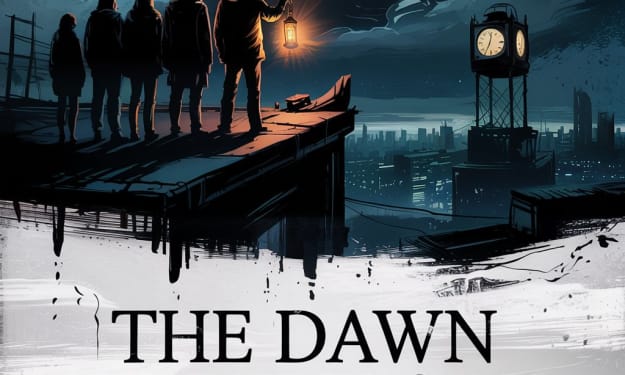
The Dawn That Never Came
The sky had promised light. But morning never broke. A thick mist clung to the city like regret—dense, unmoving, gray. For weeks, perhaps longer, the sun hadn’t risen. Not fully. The world below had adapted to the twilight: streetlights that never shut off, clocks that marked hours more by routine than by light, and people who had quietly stopped looking up.
By Daniel Henry11 months ago in Motivation
Influential Women on LinkedIn: Building Authority, Visibility, and Professional Impact
In today’s digital-first professional landscape, Influential Women on LinkedIn are redefining leadership, personal branding, and career growth. Through consistent thought leadership, meaningful engagement, and authentic storytelling, women professionals are using LinkedIn to expand their influence and shape industry conversations.
By influentialwomenmagazineabout 22 hours ago in Motivation
Tatt~Master
— Assembly Line Tatt Machine ~ Impressions to Impress — As I begin to understand more about the Tattoo Phenomenon. I've written silly, yet verbatim, dating site anecdotes in 'Frazzled.' So let me ask you: Would you be More attracted to someone slathered with tattoos, or Less?
By Jay Kantor3 days ago in Humor



Comments
There are no comments for this story
Be the first to respond and start the conversation.