
The Boy Who Drew Hope
A pencil, a poster, and a second chance.
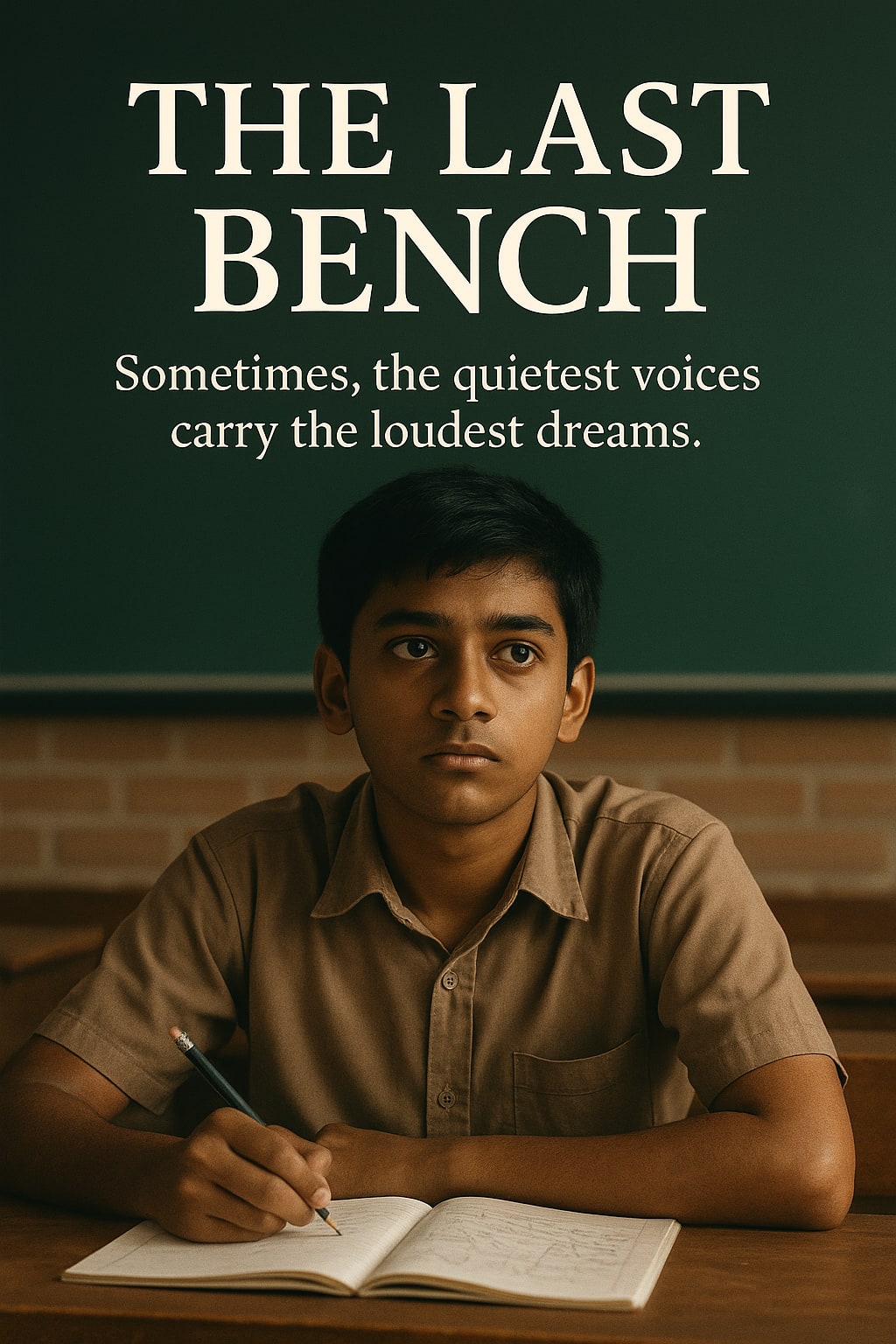
Arjun had always chosen the last bench.
It wasn’t rebellion. It wasn’t laziness. It was invisibility. In a world that moved too fast and expected too much, the last bench offered safety—a place where he could fade away, untouched by judgment or disappointment.
He was seventeen, a government school student in Delhi, and one of those quiet boys people often forgot existed. His father had lost his job during the pandemic. His mother cleaned homes in nearby colonies. Every rupee was stretched thin. Every dream, thinner.
Once, he had wanted to be a graphic designer. He’d sketch superheroes in the margins of his notebooks—always faceless, because he didn’t know what hope looked like anymore.
Then came Mr. Sen.
He wasn’t like the other teachers—there was a gentleness in his voice, a patience in his eyes. On his first day, he walked into the classroom, scanned the room, and instead of starting with rules, he asked:
> “What’s one thing you’ve given up on?”
The class giggled. Some joked about quitting sports or sleep. Arjun didn’t say a word. He looked down at his sketch—an unfinished figure with wings too heavy to lift.
After class, Mr. Sen walked over and asked, “Did you draw that?”
Arjun nodded.
“It’s powerful,” he said. “You ever think of showing your work?”
Arjun shrugged. “No one really cares.”
Mr. Sen smiled. “Then maybe it’s time they did.”
Over the next few weeks, something changed. Mr. Sen gave Arjun small tasks—helping design the class bulletin board, illustrating a poem for the school magazine. He never demanded, never praised too loudly—just left enough space for Arjun to grow.
At night, Arjun borrowed his mother’s old phone and watched YouTube tutorials. He downloaded free drawing apps, learned to shade digitally, experimented with color palettes. He didn’t tell anyone. It wasn’t for applause. It was for him—for the boy who used to dream.
When the school announced an art competition for the annual fest, Mr. Sen encouraged Arjun to participate.
“I’m not good enough,” Arjun said.
“You don’t have to be,” Mr. Sen replied. “You just have to show up.”
So he did.
His entry was a poster titled “Steps to Hope”. It showed a boy with worn-out slippers climbing stairs made of books. Each step was labeled with words: Failure, Doubt, Hunger, Loneliness. At the top, glowing in yellow, was the word: Hope.
On the day of the fest, his artwork hung in the middle of the exhibition. Students stopped. Teachers whispered. Even the principal stared at it for a long time.
“Who made this?” she finally asked.
Arjun hesitated. His heart raced. He didn’t know whether to speak up.
Mr. Sen stepped beside him and said, “He did.”
Arjun raised his hand slowly. For the first time, people looked at him—not through him.
That evening, he stood on stage holding a certificate, the school clapping for the boy from the last bench.
---
Five years later, a journalist interviewed Arjun Kapoor—now a freelance graphic designer whose work had been featured in social campaigns and youth magazines.
When asked what turned his life around, he didn’t talk about talent or struggle.
He simply said, “One teacher saw me before I saw myself.”
---
Author’s Note:
Many sit on the last bench—silent, invisible, forgotten. Not because they lack potential, but because no one gives them a reason to believe in it. Sometimes, one moment of recognition is enough to spark a lifetime of purpose.
Moral:This story reminds us that greatness often sits quietly in the shadows, waiting to be seen. Not every talented person is loud, confident, or recognized — some are hidden behind doubt, poverty, and silence. Arjun's journey teaches us that a single act of recognition, a simple word of encouragement, can spark a transformation no one expects. We often underestimate the power of a teacher, a mentor, or even a kind observer who chooses to believe in someone overlooked by the world. “The Last Bench” is not just about rising from failure; it’s about the unseen battles people fight within, and how compassion can turn a quiet life into a remarkable one. Everyone deserves a chance to be seen, heard, and believed in. Because sometimes, believing in someone when they don’t yet believe in themselves is the first miracle they need to begin their journey toward greatness.
About the Creator
Keep reading
More stories from Uzairkhan and writers in Motivation and other communities.
Looking back: 2025 was a beast
It's difficult to know how to start this. I've suggested that it's been a tough one from my title and in many ways, it has; however, there is an argument that it's not been that extraordinary at all, merely this wonderful thing we call "life" with all its climaxes and pitfalls.
By Rachel Deeming30 days ago in Motivation
How Regular Exercise Builds a Happier, Healthier Mind
Staying active is often linked to physical strength, yet its impact reaches far deeper. Movement shapes how people think, feel, and respond to daily stress. Many begin exercising to improve stamina or appearance, but soon notice emotional changes that feel just as important. When activity becomes consistent, it supports mood, focus, and resilience. This is where fitness mental health benefits begin to show up in real and lasting ways, especially for people seeking balance and calm in everyday life.
By Millicent Prince3 days ago in Motivation
Affection and Healing for Yourself
During the night of the last quarter moon, I gathered my ritual supplies. I carefully handled the chunk of black tourmaline that would protect me from your overall negative and narcissistic energy. I carefully walked the house with my stick of selenite in hand, asking the universe to cleanse our working space.
By Alisha Wilkins ✒️🦋🖋️2 days ago in Fiction



Comments
There are no comments for this story
Be the first to respond and start the conversation.