
The Art of Adaptation: Learn from the Animals That Did Not
When change was inevitable, some survived. Others didn’t. Their silence tells a story we all need to hear.

I remember the first time I heard about the dodo bird. I was eight, flipping through an old animal encyclopedia in the corner of our school library. The page had a simple illustration: a fat, awkward bird with tiny wings, standing like it had no idea what was coming.
The caption read:
“The Dodo: Extinct. Couldn’t adapt to human arrival.”
At eight years old, I didn’t really understand what that meant. Why would an animal not just fly away? Why didn’t it hide? Why didn’t it fight back?
Now, as an adult, I see how that single sentence holds a powerful truth about life, change, and survival.
Extinction Isn’t Just a Scientific Event—It’s a Lesson
Throughout history, the Earth has lost thousands of species—creatures who once roamed freely, breathed the same air we do, raised their young, and found a rhythm in their world. And then… they were gone.
We often think of extinction as something sad but distant. But what if we looked at it differently—not just as an ecological event, but as a deeply human story?
Because at the heart of every extinction lies one common cause: a failure to adapt.
The dodo didn’t fear humans because it never needed to. It evolved in isolation, on the island of Mauritius, where it had no natural predators. So when humans arrived, bringing rats and dogs and clubs, the dodo didn’t run. It didn’t change. It didn’t survive.
And it’s not alone.
The Mammoth, the Saber-Toothed Cat, the Great Auk: Creatures of the Past
Take the woolly mammoth. For thousands of years, it walked side by side with our human ancestors. It endured ice ages and roamed vast, frozen landscapes. But when the climate warmed and humans hunted them more aggressively, they couldn't keep up. Their size, which once protected them, became a burden.
Or the saber-toothed cat—its massive fangs were perfect for ambushing large prey. But as the big herbivores disappeared and the environment changed, its specialized skills no longer served it. Adaptation failed to arrive in time.
And then there’s the great auk—a flightless bird hunted into extinction for its feathers and meat. Like the dodo, it trusted too much, stayed too still, and vanished too fast.
What do these animals have in common?
They were specialized. Built perfectly for one world. But when that world changed, they couldn’t shift with it.
What Does This Have to Do With Us?
We humans like to think we’re different. Smarter. Stronger. More adaptable.
But are we?
We live in a world that is changing faster than ever—technology, climate, jobs, relationships, expectations, even our identities. Everything moves. Nothing stays the same for long.
And still, many of us cling to old ways.
We hold onto toxic relationships because we fear loneliness more than pain.
We resist learning new skills because we’re comfortable doing things “the way we always have.”
We ignore mental health because facing it means change.
We wait for life to return to “normal,” even when it’s clear that it won’t.
Like the dodo, we stay still, hoping the world will spare us.
But nature doesn’t work like that. Life doesn’t work like that.
Adaptation Is a Mindset, Not Just a Trait
Animals that survived massive change—like crocodiles, cockroaches, and even certain birds—share one trait: flexibility.
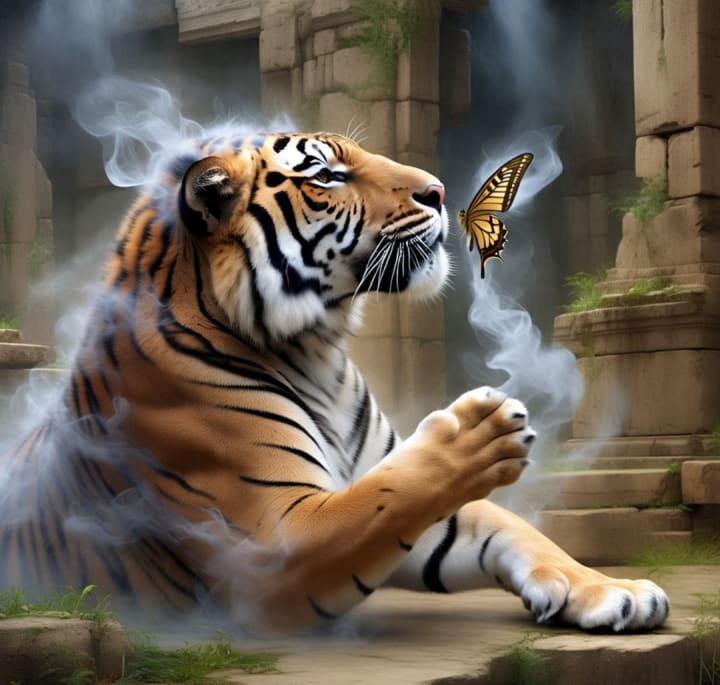
They didn’t just wait. They changed:
Changed how they hunted.
Changed what they ate.
Changed where they lived.
And because of that, they endured.
As humans, we too must learn to shift—not just to survive, but to grow.
I think back to my own life. A few years ago, I lost a job I loved. The company shut down, and overnight, I went from feeling secure to feeling lost. My identity was wrapped in that job. I didn’t know who I was without it.
For months, I resisted. I applied only to similar roles. I kept pretending the world hadn't changed. But it had. And I wasn’t moving with it.
It wasn’t until I let go of who I thought I had to be that I found who I could become.
I pivoted. I went back to school. I tried new things—some failed, some didn’t. But I kept moving. I kept growing.
That’s when I understood: adaptation isn’t weakness—it’s strength.
From Nature to Now: What We Can Learn
The animals that failed to adapt weren’t “bad” or “lazy.” They were simply unprepared for a world that didn’t wait.
We face the same challenge.
Will we stubbornly stick to our old ways, or will we embrace the discomfort of change?
Will we be the dodo—or the sparrow?
Will we freeze in fear—or move forward with faith?
The Moral: Grow or Go
The stories of extinct animals aren’t just about biology or history—they are mirrors.
They show us what happens when we stop evolving, when we trust too much in stability, and when we ignore the signs that it’s time to change.
The world won’t wait. Seasons will shift. Opportunities will pass. Life will continue.
But those who adapt—those who stay curious, open, humble, and brave—they don’t just survive.
They thrive.
So let the extinct teach us not just what we lost—but what we must never forget:
Adaptation isn’t a skill. It’s an art. And if we don’t learn it, we become the lesson.
About the Creator
From Dust to Stars
From struggle to starlight — I write for the soul.
Through words, I trace the quiet power of growth, healing, and becoming.
Here you'll find reflections that rise from the dust — raw, honest, and full of light.
Keep reading
More stories from From Dust to Stars and writers in Motivation and other communities.
Unlock the Gates to Wealth: Bill Gates' Top Secrets to Financial Freedom
When you hear the name Bill Gates, you probably think of Microsoft, billions of dollars, or perhaps even philanthropy on a global scale. But behind all the wealth and success is a man who followed a set of guiding principles—habits, beliefs, and decisions that opened the doors to extraordinary financial freedom.
By From Dust to Stars7 months ago in Motivation
Looking back: 2025 was a beast
It's difficult to know how to start this. I've suggested that it's been a tough one from my title and in many ways, it has; however, there is an argument that it's not been that extraordinary at all, merely this wonderful thing we call "life" with all its climaxes and pitfalls.
By Rachel Deeming28 days ago in Motivation
The Long Game of Becoming
Introduction: Why the Second Chapter Matters Motivation is often portrayed as a sudden spark—a lightning strike that changes everything in an instant. In reality, meaningful change rarely begins with fireworks. It begins quietly, often invisibly, in moments that feel too small to matter. This second chapter is written for those moments.
By Chilam Wonga day ago in Motivation


Comments
There are no comments for this story
Be the first to respond and start the conversation.