
The 4 Types of Introverts - Which One Are You?
If you're an introvert, you know that introverts are often misunderstood; your quiet nature may cause suspicion to arise in others - and sometimes even discomfort. When you're in social situations, people may perceive you as the awkward one, lacking communication skills and self-confidence; but that's not necessarily the truth

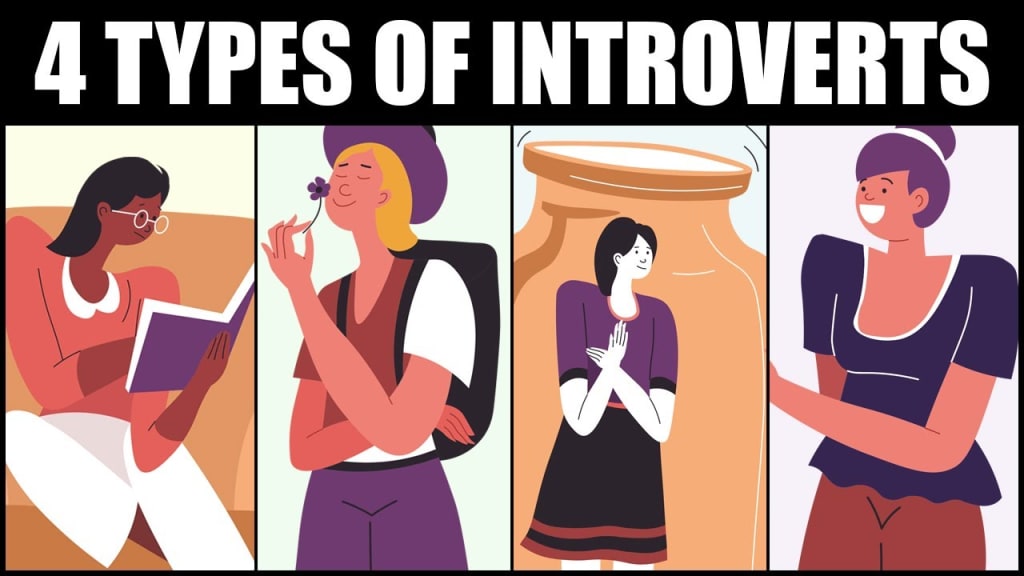
The 4 Types Of Introverts - Which One Are You?
If you're an introvert, you know that introverts are often misunderstood; your quiet nature may cause suspicion to arise in others - and sometimes even discomfort. When you're in social situations, people may perceive you as the awkward one, lacking communication skills and self-confidence; but that's not necessarily the truth. You're just introverted, and every introvert is different. While most introverts share the feeling of being drained by social interaction - especially large parties and events - there are many differences as well. Did you know there are four distinct categories of introverts? The main differences between each of these groups are the driving factors that cause introversion; you might feel like an outsider among social groups, but you'll surely identify with at least one of these archetypes.
The Social Introvert: If you have an idea of what it means to be an introvert, you're probably thinking of this classic archetype - the social introvert. The social introvert prefers to spend time alone; when they do socialize, they enjoy spending time with their tight-knit group of friends. Usually, these friends will have known each other for a very long time; and even though they love to connect with these friends, they make sure to set aside 'alone-time' for themselves since socializing with others is emotionally draining after a while. Thus, resting and recharging is essential to the social introvert, so they can function at their best; while these individuals are sometimes mislabeled as indifferent or aloof, they aren't necessarily shy or anxious - they simply just prefer to live with a bit of distance from others.
The Introspective Introvert: Like the social introvert, the introspective introvert prefers time alone; this time, however, is spent in a specific way. The introspective introvert engages in deep and serious self-reflection and critical thinking when they're alone; sometimes, they do it around others, too. When the introspective introvert draws their mind inward, others may perceive them as someone lost in their thoughts; these types of introverts may be told that they're living in a fantasy world or daydreaming too much, and many outsiders may see it as an affliction. But in reality, these people are thinking critically about the real world around them, and it's truly a gift. Introspective introverts think about everything they see and hear; they analyze social dynamics and consider how their presence and actions impact others. Their inner worlds are extremely complex, rich, and engaging - and since they spend most of their time there, it comes as no surprise; this intense and frequent self-reflection enables introspective introverts to engage in intellectual ideas wherever they are, even if it makes them seem spaced out to others, it also promotes positive personal growth.
The Anxious Introvert: Do you have social anxiety? If you feel threatened and fearful when you socialize (or when you think about socializing), you probably do; and you might be an anxious introvert. Anxious introverts struggle to interact; instead of refusing an invitation due to self-awareness of what's best for their mental health, anxious introverts avoid being around others out of fear. For this type of introvert, anxiety levels rise when they must socialize in large groups of people; they perceive themselves as incapable of functioning in these situations and often they manifest their fears into reality. This negative mindset - paired with distasteful social experiences from the past - reinforces their low self-esteem, a poor self-image causes them to predict that all future social interactions will play out just as badly, and the anxious introvert finds themselves stuck in an unhealthy cycle. They may withdraw from others for this reason, and after a while of having 'little to no' human connection, they may begin to feel lonely. If you identify with the anxious introvert archetype, there are things you can do to improve your life - whether you're alone or socializing; you can break your negative thought patterns with cognitive-behavioral therapy, or you can consult a professional for other techniques to better your life.
The Restrained Introvert: While the restrained introvert is a common type, many people have never heard of this term before; the restrained introvert is someone who restrains themselves in social situations. This means that they take the time to get to know someone before socializing in the way they would with close friends or family. Unlike the anxious introvert, the restrained introvert is not afraid of meeting new people or engaging with others; they enjoy these experiences, but they are also selective when sharing personal information. Instead of sharing personal details with just anyone, the restrained introvert waits to be vulnerable and transparent until someone has earned their trust. Since the decision to trust someone is usually well thought out, the restrained introvert typically doesn't change their mind about who they trust. Restrained introverts are often perceived as mysterious, quiet, or good listeners; indeed, they always consider what they'll say before they say it, and they prefer to sit back and observe before making a decision about your character.
Well, now you know. Not all introverts are the same, and they can be grouped into four distinct categories; hopefully, this list has helped you figure out what kind of introvert you are or why you prefer alone time. Even if you're not an introspective introvert, you can practice self-awareness; knowing what personality type you possess can help you navigate your relationships with other people, especially when they have a different personality type than you. With awareness, you can confidently tell others what you need, and maybe even why you need it; this will result in stronger and healthier relationships. There are countless ways for introverts to maintain a healthy social life, find success in their careers, and establish romantic relationships without sacrificing their much-needed alone time. Your newfound understanding of what you need, and where you fit into the big picture, will help you in all these endeavors. What do you think? Which type of introvert are you, and what have you noticed about yourself? Share your thoughts in the comments below!
About the Creator
Keep reading
More stories from Space Online and writers in Motivation and other communities.
How To Be More Attractive By Improving Your Personality
10 Ways To Become More Attractive By Improving Your Personality Some of us wonder if people don’t like us. And others wonder why. Is it how you look? Do you smell? Do you talk too much? Are you boring? If you think that attraction boils down to grooming, fashion, and genetics, you’re sorely mistaken. Your personality is just as - if not more - important than your physical appearance. Sure, maybe you do need to practice better hygiene. But you might also need to practice your social skills. No matter what the internet (and society) might lead you to believe, personal development does not stop at 25. Young or old, there is room for improvement in your life - and there always will be. Improving yourself will help you lead a more fulfilling, happier life and it will make your presence more appealing to others - in your personal life and your professional life. Here are some quick tips on how to increase your attractiveness through personal development.
By Space Online3 years ago in Motivation
The Last Voice Message
It was a quiet Sunday evening when Daniel’s phone vibrated on the kitchen table. He had just returned home after a long day at work, the kind of day that left your mind empty and your body tired. Outside, the sky was fading into deep shades of blue, and the city lights were slowly flickering on. Daniel poured himself a cup of coffee and glanced at his phone. 1 New Voice Message. The notification made him pause. He frowned slightly when he saw the sender's name. Lucas. Daniel’s heart skipped. Lucas had been his best friend since childhood. They had grown up together, shared secrets, dreams, and countless late-night conversations. But Lucas had died three days ago. A car accident on a rainy highway. The kind of sudden tragedy that leaves people staring at the floor during funerals, unsure what words could possibly make sense. Daniel had stood there at the funeral home, staring at the closed casket, trying to convince himself it wasn’t real. And now… A voice message from Lucas. Daniel stared at the screen, his coffee forgotten. Maybe it was an old message delayed by the network. Maybe Lucas had sent it earlier and it only just arrived. That had to be it. Still, his hands felt strangely cold as he pressed play. For a moment, there was only static. Then a familiar voice spoke. “Hey, Daniel… if you're hearing this, something probably went wrong.” Daniel froze. Lucas’s voice sounded calm, but there was something unusual in it. A strange heaviness. “I’m recording this because… well, I have a feeling something bad might happen tonight.” Daniel felt his chest tighten. Lucas continued. “You know how I always trust my gut. And right now it’s screaming at me.” A quiet laugh followed. “But you’ll probably call me dramatic.” Daniel remembered saying exactly that many times. Lucas had always been the intuitive one. The message continued. “I’m driving back from the lake house right now. It’s raining pretty hard, and the roads are terrible.” Daniel’s grip on the phone tightened. The accident had happened on that same road. Lucas paused for a few seconds before speaking again. “I didn’t want to call because I’d probably just sound paranoid. But there are things I’ve been meaning to say for a long time.” The rain could be heard faintly in the background of the recording. “First… thank you.” Daniel blinked, confused. “For sticking by me all these years. You’re more than a friend, man. You’re family.” Daniel swallowed hard. Lucas’s voice softened. “I know I don’t say stuff like this often, but you deserve to hear it.” Daniel suddenly felt a deep ache in his chest. The kind of ache that only comes from words that arrive too late. Lucas continued. “And there’s something else…” The sound of a windshield wiper swept across the background. “If anything ever happens to me… don’t let Mom stay alone in that house. She pretends she’s strong, but she’s not as tough as she acts.” Daniel closed his eyes. Lucas always worried about his mother. “Visit her sometimes. Even if she says she’s fine.” The message went quiet for a moment. Then Lucas spoke again, slower this time. “And Daniel… there’s one more thing.” A faint rumble of thunder echoed through the recording. “You keep putting your life on pause.” Daniel frowned slightly. “You always say you’ll chase your dreams later. Later when you have more money. Later when things are safer.” Lucas sighed. “Stop waiting.” The rain in the recording grew louder. “You wanted to write stories. You wanted to travel. You wanted to start that podcast we talked about.” Daniel’s throat tightened. “Life doesn’t wait for the perfect moment.” Lucas chuckled softly. “And clearly… neither does fate.” Daniel felt a chill run down his spine. “I guess what I’m trying to say is… don’t waste time the way I did.” The car engine could be heard revving slightly. “If you’re hearing this, it probably means I never made it home.” Daniel’s eyes filled with tears. There was a long pause in the recording. Then Lucas spoke one last time. “But I’m not scared.” Daniel leaned closer to the phone. “I’ve had a good life.” The rain softened slightly in the background. “And I had a great friend.” Daniel wiped his eyes. “Take care of yourself, okay?” A faint smile crept into Lucas’s voice. “And hey… if there’s Wi-Fi in the afterlife, maybe I’ll send you another message someday.” Then the recording ended. Silence filled the kitchen. Daniel sat there, staring at the screen long after the message had finished. Outside, the wind rustled softly through the trees. For the first time since the funeral, Daniel let the tears fall freely. But mixed within the sadness was something unexpected. Clarity. Lucas had known something might happen, and instead of fear, he had chosen to leave behind words that mattered. Daniel slowly stood up and looked out the window at the city lights stretching into the distance. For years he had postponed his dreams. Waiting. Delaying. Convincing himself there would always be more time. But Lucas’s final message echoed in his mind. Life doesn’t wait for the perfect moment. Daniel picked up his phone again. Not to replay the message. But to open a blank document. At the top of the page, he typed the title of his first story. “The Last Voice Message.” And for the first time in a long while, Daniel began to write.
By Sahir E Shafqat5 days ago in Motivation



Comments
There are no comments for this story
Be the first to respond and start the conversation.