
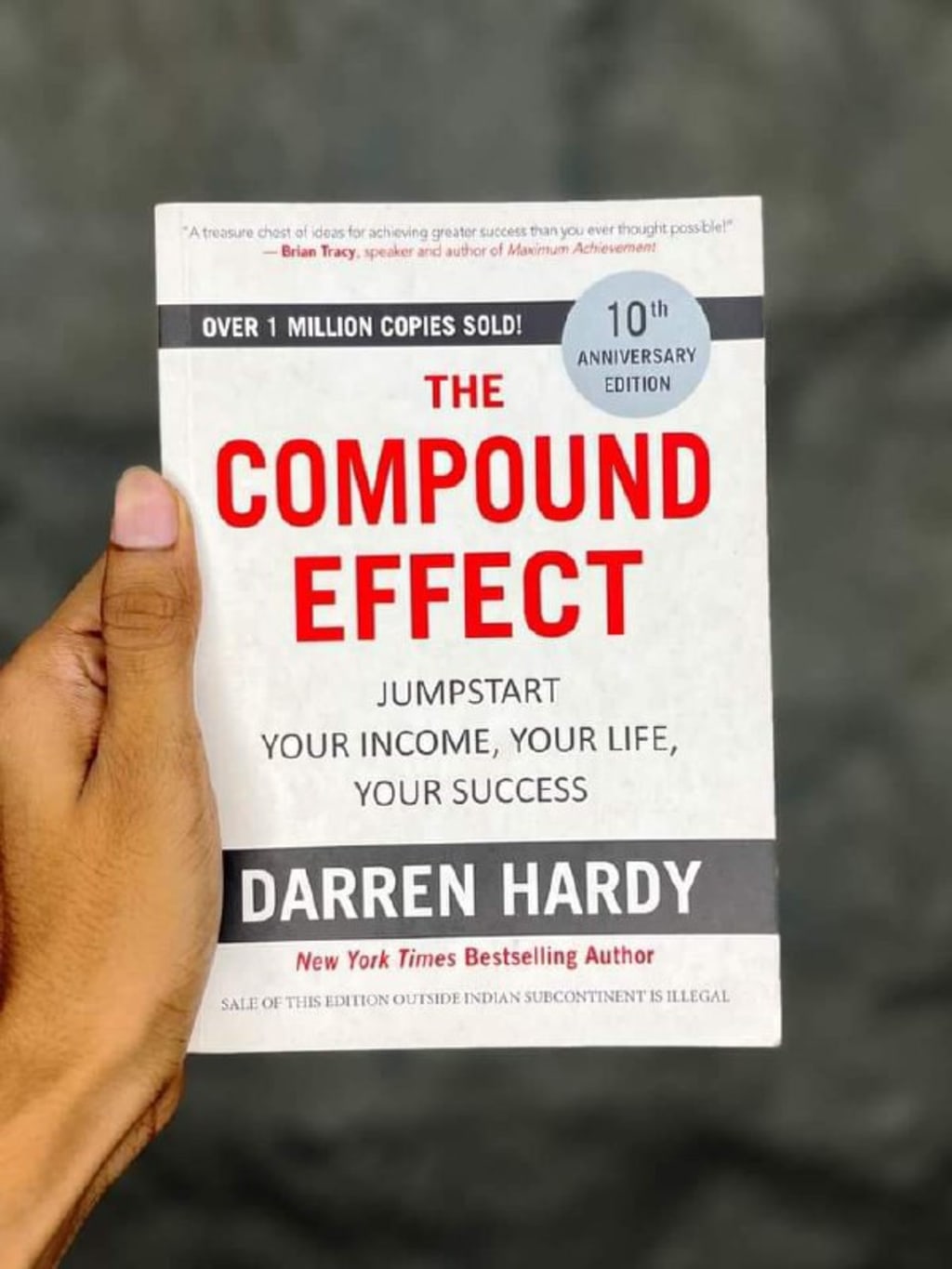
Summary of The Compound Effect: Multiply Your Success One Simple Step at a Time by Darren Hardy
The Compound Effect contains the essence of what every super achiever needs to know, practice, and master to obtain extraordinary success.

Introduction
Darren Hardy’s The Compound Effect is a transformative guide that uncovers the hidden power behind small, consistent actions. While many people look for quick fixes or overnight success, Hardy’s central message is that real, lasting success comes from daily habits compounded over time. This concept applies across all areas of life — finances, health, relationships, and career.
Published as a practical manual for personal growth, The Compound Effect challenges readers to take full responsibility for their choices and demonstrates how tiny changes, when accumulated, lead to exponential results. This summary unpacks the key ideas and strategies Hardy presents to help readers harness the compound effect and create lasting success.
1. The Principle of the Compound Effect
At the heart of Hardy’s book lies the compound effect — the process of small actions repeated consistently over time leading to remarkable outcomes. Hardy explains that just as compound interest grows wealth exponentially, the effects of our habits and decisions compound to shape our lives.
Many people underestimate the impact of their daily choices, assuming that small actions are insignificant. Hardy argues the opposite: small, smart choices, done consistently, produce life-changing results, while poor choices accumulate negative consequences.
2. Choices Shape Your Destiny
The first step toward leveraging the compound effect is recognizing that every outcome begins with a choice. Hardy urges readers to become conscious of the small decisions they make daily, from eating habits to time management and financial behavior.
He stresses the power of awareness: by tracking your choices and understanding their long-term consequences, you regain control over your life. This empowers you to make intentional, aligned choices that move you toward your goals.
3. Habits: The Building Blocks of Success
Habits are the backbone of the compound effect. Hardy explains how habits form through repetition and become automatic, influencing our behavior without conscious thought.
Because habits are powerful drivers of behavior, forming positive habits is crucial. Conversely, negative habits can derail success. The challenge, Hardy notes, is the initial discomfort of change. People often quit too soon, not realizing that consistency is what ultimately makes habits stick.
Hardy encourages readers to focus on making tiny improvements and sticking with them, reinforcing the idea that incremental progress beats occasional bursts of effort.
4. Momentum: The Big Payoff
Once positive habits are established, momentum builds. Hardy likens momentum to a snowball rolling downhill — it starts small but grows exponentially.
This momentum fuels motivation, making it easier to maintain progress and resist setbacks. Hardy’s advice is to get started immediately, no matter how small the step, because starting is the hardest part.
5. Tracking: The Secret to Staying on Course
Hardy highlights the importance of measurement and tracking progress. Without tracking, it’s easy to fall back into old habits or lose sight of your goals.
Tracking can be simple — a journal, app, or checklist — but it provides accountability and clarity. It also allows you to identify what works and where adjustments are needed.
6. Influence: Guard Your Environment
The Compound Effect discusses the impact of environment and social circles on success. Hardy advises being mindful of who and what you allow to influence you.
Negative influences can sabotage progress, while positive environments and mentors can accelerate growth. The book stresses surrounding yourself with supportive, like-minded individuals who encourage your goals.
7. Acceleration: Taking Your Success Further
After mastering consistency and momentum, Hardy encourages readers to accelerate their success by taking bold, calculated actions. This means increasing effort, learning from failures, and seizing opportunities.
Acceleration isn’t about reckless risk but intentional amplification of what’s already working.
8. Practical Applications: Money, Health, and Relationships
Hardy applies the compound effect to key life areas:
Money: Small savings and wise investments, repeated consistently, create financial freedom.
Health: Daily exercise and healthy eating habits build long-term wellness.
Relationships: Small acts of kindness and communication strengthen bonds over time.
By applying compound principles to these areas, readers can experience profound life improvements.
9. The Power of Consistency Over Intensity
One of the book’s most important lessons is that consistency beats intensity. Hardy explains why sporadic, intense efforts fail to create lasting change, while small, steady actions compound into success.
This perspective helps readers stay patient and persistent, avoiding the all-or-nothing mindset.
10. Overcoming Setbacks and Staying Motivated
Hardy doesn’t ignore obstacles; instead, he offers strategies to overcome setbacks:
Use failures as learning opportunities.
Maintain focus on your long-term vision.
Build habits that support resilience.
Seek inspiration and renew commitment regularly.
Conclusion
The Compound Effect teaches that success isn’t magic — it’s the product of choices, habits, and momentum built over time. By embracing small, consistent steps and cultivating a supportive environment, readers can transform their lives in powerful ways.
If you’re ready to multiply your success one simple step at a time, Darren Hardy’s The Compound Effect is an invaluable guide.
Get Your Copy Today
Take control of your future by harnessing the power of the compound effect. The Compound Effect: Multiply Your Success One Simple Step at a Time is available now on Amazon. Click the link below to grab your copy and start your journey to lasting success.
About the Creator
TAPHA
Hi! Whether you're looking for insightful answers or a fresh perspective on a topic,I'm here to provide engaging, accurate,and thought-provoking content tailored just for you. Stick around, and let's explore the world of knowledge together!
Keep reading
More stories from TAPHA and writers in Motivation and other communities.
Review of On Fire: The 7 Choices to Ignite a Radically Inspired Life by John O'Leary
Introduction On Fire: The 7 Choices to Ignite a Radically Inspired Life by John O’Leary is an inspiring book that Gives an account of the extraordinary life of a man who at the age of nine got involved in a terrible fire accident that saw him being admitted with third-degree burns in every part of the body. This is the most painful and emotional story of John O’Leary, at the same time there is a positive message that emerged from this adversity; which is when people are given choices they can change their lives. On Fire is a book by Michael J. O’Leary that outlines the seven decisions he took to actualize his sufferings and bring joy into existence.
By TAPHAabout a year ago in Motivation
Looking back: 2025 was a beast
It's difficult to know how to start this. I've suggested that it's been a tough one from my title and in many ways, it has; however, there is an argument that it's not been that extraordinary at all, merely this wonderful thing we call "life" with all its climaxes and pitfalls.
By Rachel Deeming26 days ago in Motivation
What I Learned Too Late
I spent years rushing. Rushing to finish tasks, chasing opportunities, trying to prove myself to the world. I thought success was about speed, about doing more, being more, having more. I believed that if I worked hard enough, life would reward me instantly.
By Fazal Hadiabout 15 hours ago in Motivation


Comments
There are no comments for this story
Be the first to respond and start the conversation.