
Steve Jobs: The Genius Who Dared to Be Human
Success Story

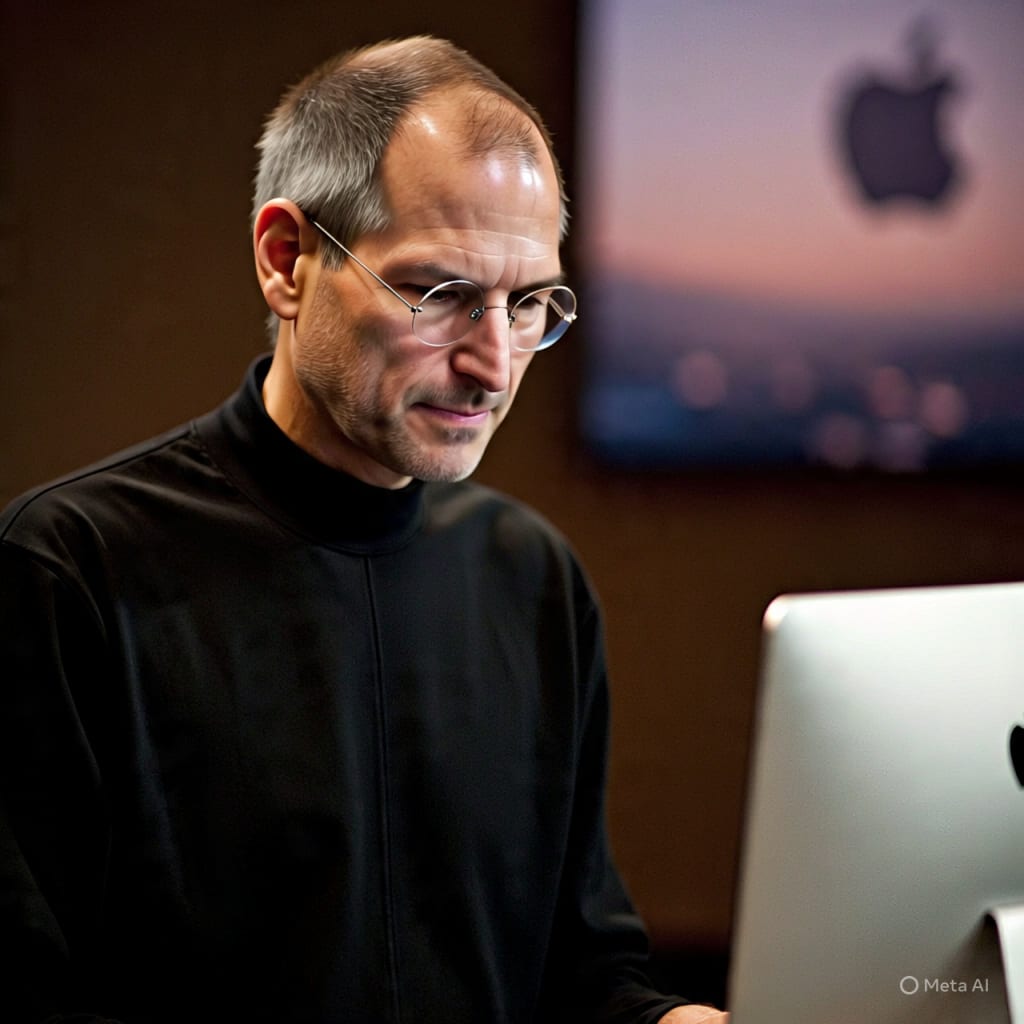
The Unseen Side of the Man Who Changed Everything
Steve Jobs wasn’t born in a Silicon Valley boardroom. He was born in 1955, the child of two students who couldn’t raise him — and was adopted by a working-class couple in California. He would later say that being “chosen” by Paul and Clara Jobs was one of the greatest blessings of his life. But what most people don’t know is that his sense of being unwanted shaped his obsession with control, beauty, and belonging.
As a teenager, Steve wasn’t the confident genius the world imagines. He was restless — barefoot, long-haired, and slightly lost. He wandered through Reed College’s hallways after dropping out, sleeping on floors and returning Coke bottles for food money. But it was during that chaos that he stumbled into a calligraphy class, purely out of curiosity. That random decision — one nobody would have thought mattered — gave birth to Apple’s obsession with design and typography.
Jobs used to sit quietly in Zen gardens, seeking calm from a storm that raged inside him. He experimented with LSD and eastern spirituality not as rebellion, but as a desperate search for meaning. He once told a friend, “Taking LSD was one of the most profound experiences of my life.” It wasn’t about drugs — it was about seeing the world differently.
He was a visionary, yes — but he was also deeply contradictory. He could meditate in the morning and explode in anger by noon. His coworkers feared his temper as much as they admired his genius. He didn’t just demand perfection; he expected the impossible. But his contradictions made him human.
In the early days of Apple, Jobs was fired from the very company he built. Most people know that part, but few know how deeply it broke him. He cried. He wandered aimlessly. He questioned his worth. Yet that painful exile became his rebirth. During those lost years, he started NeXT and bought Pixar — two moves that would later change not just his life, but entertainment and technology forever.
What the world saw as arrogance was often a shield for insecurity. Jobs once confessed privately to a friend that he feared dying without leaving something truly meaningful behind. He wasn’t chasing fame — he was chasing immortality.
When he returned to Apple in 1997, he wasn’t the same man. He had learned silence. Stillness. Focus. His leadership became calmer, sharper — like a monk with a mission. He didn’t just rebuild Apple; he reimagined how humans interacted with machines. The iMac, the iPod, the iPhone — they weren’t devices to him; they were portals of emotion, where art and technology kissed.
Few people know that he cried when the first iMac was unboxed. Not because it sold, but because it felt alive.
In his final years, facing cancer, Jobs became almost poetic. He spoke softly, smiled more, and said, “Remembering that you’re going to die is the best way to avoid the trap of thinking you have something to lose.” He designed his products like he lived his life — simple, elegant, but hiding enormous depth beneath the surface.
🍏 Steve Jobs: The Genius Who Dared to Be Human (Part 2)
The Unseen Soul Behind the Machine
When Steve Jobs returned to Apple in 1997, the company was gasping for air. The brand that once symbolized creativity had become a corporate relic. But to Steve, it was more than a company — it was his lost child, one he had been forced to abandon.
He walked through Apple’s headquarters like a monk revisiting sacred ruins. The once-bright hallways now felt dull, burdened with bureaucracy. The products lacked soul. Employees lacked spark. And yet, Steve’s eyes — those sharp, almost unblinking eyes — saw possibility.
He once told Jony Ive, Apple’s chief designer, “Let’s make something insanely great again.”
That was Steve: not just a CEO, but a storyteller in silicon. He didn’t sell computers — he sold dreams made tangible.
🪞 The Mirror of Imperfection
Few knew how much pain still followed him. The world saw a perfectionist visionary; his close circle saw a man fighting ghosts. He had made peace with Apple, but not with his past — especially with his daughter, Lisa Brennan-Jobs.
In his early years, Jobs had denied being her father. It was a denial born of fear — fear of failure, of responsibility, of imperfection. He was the man who demanded flawless design and flawless code, but when faced with the messy reality of love and fatherhood, he froze.
Years later, when he finally acknowledged Lisa, their relationship became a fragile thread — full of longing, distance, and moments of heartbreaking silence. She once described her father as “brilliant and cruel.”
Steve, too, knew his flaws. He once whispered to a friend, “I’m not proud of how I treated her. I was scared of love — maybe because I wanted to control everything.”
This admission shows a man who spent his life designing harmony in objects but struggled to find it in people.
⚙️ The Art of Simplicity
When Apple launched the iMac in 1998, Jobs proved that design could be an act of emotion. He believed that simplicity wasn’t just aesthetic — it was spiritual clarity.
He often said, “Simplicity is the ultimate sophistication.”
His office had almost nothing in it — just a lamp, a wooden table, and a few books: Autobiography of a Yogi, Zen Mind, Beginner’s Mind, and Be Here Now. These weren’t just titles to him; they were anchors of his philosophy.
He practiced Zen meditation every morning, sometimes sitting in silence for an hour before meetings. It was his way of aligning the chaos within him. To his team, he seemed otherworldly — detached yet driven, fierce yet gentle when the moment required it.
He would walk barefoot in the design studio, running his hand along the smooth edges of prototypes. If something “felt wrong,” he would scrap months of work. For Jobs, emotion was the blueprint — not data, not market trends.
He didn’t want to build products that worked.
He wanted to build art that breathed.
💔 The Fragility of Greatness
Behind his steel intensity, Steve was slowly losing a different battle — one with his body. In 2003, doctors diagnosed him with a rare form of pancreatic cancer. True to his nature, he didn’t rush into conventional treatment. He turned instead to meditation, vegan diets, herbs — anything that aligned with his spiritual compass.
But cancer doesn’t negotiate.
By the time he agreed to surgery, it had spread. Still, Steve refused to let death define him. He kept working. He sat in product meetings, fragile but focused, driven by the same fire that had ignited his youth.
He told his team, “We’re here to make a dent in the universe.”
His colleagues noticed his shrinking frame but never his shrinking spirit. He wore black turtlenecks not just for style but as a symbol — a monk’s robe for the modern world.
📱 The World in His Palm
The iPod, the iPhone, the iPad — each wasn’t just a device, but a manifestation of Jobs’ belief that technology could serve the human soul.
He once explained, “We’re not just building computers; we’re building bicycles for the mind.”
The iPhone launch in 2007 changed history. On stage, holding that sleek glass rectangle, he looked like a magician unveiling the future. But few saw the toll it took behind the scenes. His voice grew thinner. His movements slower. Yet, he smiled through it all.
The crowd saw a billionaire visionary.
He saw a fleeting moment of eternity.
🌙 The Final Design
In his last years, Steve became contemplative. He spent hours sitting by the window of his Palo Alto home, staring at the garden. Friends recalled that he often spoke about energy — how everything connects, how beauty and death are part of the same design.
He told his biographer, “I like to think that something survives when you die. It’s strange to think you just disappear.”
As death approached, he reconciled with Lisa. They spoke often. She said he became gentler, more human than ever before. In one of their final conversations, he held her hand and whispered, “I’m sorry for not seeing you sooner.”
When he passed on October 5, 2011, surrounded by family, his final words echoed like a mystery through history:
“Oh wow. Oh wow. Oh wow.”
No one truly knows what he saw — perhaps his life flashing before him, perhaps the light he always sought.
🌌 The Legacy of the Human Machine
After his death, the world mourned the innovator. But those who truly knew him mourned the artist, the seeker, the restless child who never stopped asking “Why?”
Steve Jobs wasn’t perfect. He wasn’t meant to be.
He was proof that flaws and brilliance can coexist, that a man can be both cold and compassionate, both arrogant and divine.
His greatest invention wasn’t the iPhone or the Mac.
It was the idea that humans could merge creativity with technology — and still keep their souls intact.
He taught us that innovation isn’t about adding — it’s about removing what doesn’t matter.
That life isn’t about endless accumulation — it’s about focus, presence, and love.
Even now, every time you swipe, tap, or create something digitally beautiful, a piece of Steve Jobs whispers through your fingertips.
He didn’t just change technology.
He changed the texture of human imagination.
💫 Epilogue: The Human Algorithm
If there’s one truth that defines Jobs, it’s this: He was never chasing money.
He was chasing meaning — a seamless blend of art, spirituality, and utility.
In the quiet corners of Apple Park, employees still feel his presence. His favorite tree — a Japanese maple — still shades the walkway near the main glass building. And in that silence, his mantra seems to linger:
“Stay hungry. Stay foolish.”
Words not meant for entrepreneurs only — but for every human being searching for purpose, for beauty, for something real in a world of screens.
Steve Jobs once said, “The people who are crazy enough to think they can change the world are the ones who do.”
He was right. He did.
And in that madness, he found his humanity.
About the Creator
Frank Massey
Tech, AI, and social media writer with a passion for storytelling. I turn complex trends into engaging, relatable content. Exploring the future, one story at a time
Keep reading
More stories from Frank Massey and writers in Motivation and other communities.
Rafael Nadal: The Relentless Spirit of Clay
(Part 1 – The Boy Who Never Gave Up) Under the scorching sun of Mallorca, a young boy ran barefoot across a cracked tennis court, his face burning with determination. The ball wasn’t just bouncing — it was alive, defying him to chase it again and again. His uncle, Toni Nadal, stood by the net, watching in silence as sweat dripped down the boy’s face.
By Frank Massey 5 months ago in Motivation
How Akshay Dhengale Uses Strategic Social Media to Build Digital Visibility
In the age of constant connectivity, the way individuals and businesses communicate online can define their success. Social media is no longer just a place to post photos or updates—it has evolved into a critical platform for brand identity, audience engagement, and professional growth. For those who understand its nuances, social media becomes more than a tool; it becomes a strategy. This is where professionals like Akshay Suresh Dhengale make a real difference.
By Thetribunemedia5 days ago in Motivation




Comments
There are no comments for this story
Be the first to respond and start the conversation.