
Rafael Nadal: The Relentless Spirit of Clay
The Story of Resilience

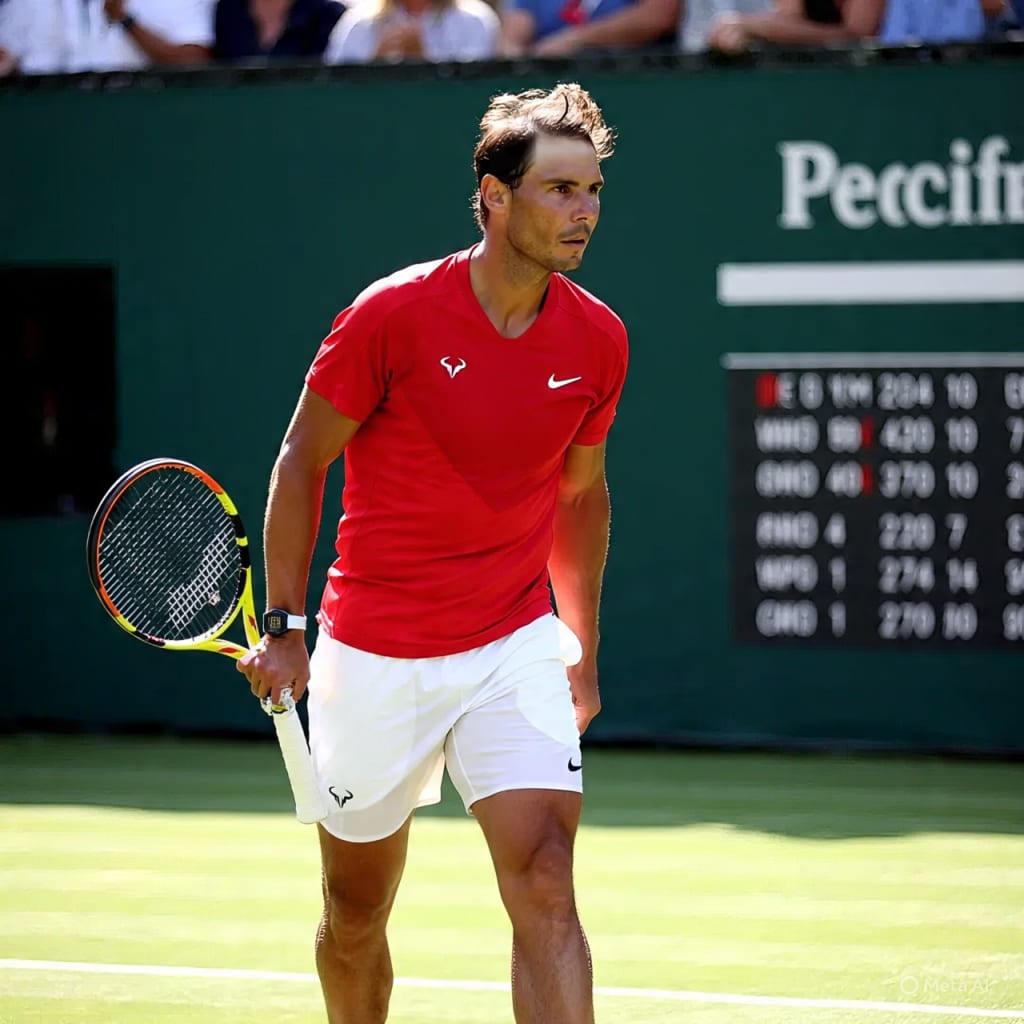
(Part 1 – The Boy Who Never Gave Up)
Under the scorching sun of Mallorca, a young boy ran barefoot across a cracked tennis court, his face burning with determination. The ball wasn’t just bouncing — it was alive, defying him to chase it again and again. His uncle, Toni Nadal, stood by the net, watching in silence as sweat dripped down the boy’s face.
“Do it again,” Toni said.
The boy nodded. No complaints. No excuses. Just effort.
That boy was Rafael Nadal, and even then, before the world knew his name, he was already a symbol of something rare — unbreakable will.
The Making of a Champion
Born on June 3, 1986, in the small town of Manacor, Spain, Rafael Nadal wasn’t destined for greatness — he built it. His family was modest but loving; his father a businessman, his mother a homemaker, and his uncle Toni, his lifelong coach and mentor.
Toni was tough. He believed talent was nothing without humility. He taught Rafa to play with his left hand even though he was naturally right-handed, a decision that gave him an unexpected edge. But more than technique, Toni taught him attitude.
> “You can’t always control if you win,” Toni would say, “but you can always control how hard you fight.”
And fight he did.
At just eight years old, Nadal won his first regional tennis title. By twelve, he was the best player in Spain in his age group. But what separated him wasn’t skill alone — it was his mind. Even as a child, Nadal had a quiet intensity, a refusal to accept defeat, and a respect for his opponents that would later define his legacy.
The Pain and the Power
When he turned professional at just 15, he entered a world that didn’t believe he’d last. His playing style was too physical, too brutal. His knees wouldn’t survive, they said. He was called “too intense” for tennis, a sport of calm and grace. But Nadal wasn’t here to fit the mold — he was here to break it.
By 2005, at only 19, he made history — defeating the world’s best to win his first French Open title. The tennis world gasped. A teenager from a small island had conquered the most demanding surface in the sport — clay — and he had done it with a ferocity that seemed almost supernatural.
But behind the triumph was agony. Every step on the court was a battle against pain. Chronic injuries haunted him — his knees, his wrists, even his foot — yet he refused to surrender.
There were nights when he couldn’t sleep because of the throbbing pain. Mornings when he couldn’t walk properly. But when match day came, he’d tape his knees, tighten his headband, and walk onto the court like a soldier heading into war.
> “Pain is part of my life,” Nadal once said. “I have learned to live with it, and that’s why I keep fighting.”
The Rivalries That Defined an Era
Then came the great rivalry — Federer vs. Nadal. It wasn’t just tennis; it was poetry in motion.
Roger Federer, elegant and effortless.
Rafael Nadal, raw and relentless.
Their matches weren’t just games; they were emotional epics. None more iconic than the 2008 Wimbledon Final, widely considered the greatest match in tennis history.
Rain delays. Darkness. Pressure.
Federer, the defending champion, fighting with all his grace.
Nadal, the challenger, grinding with all his heart.
After nearly five hours, Nadal collapsed on the grass in disbelief — he had defeated Federer in his own kingdom. Tears rolled down his face as he looked at his family. The boy from Mallorca had conquered the green cathedral of Wimbledon.
That moment transcended tennis. It was a story of faith, endurance, and destiny — the victory of willpower over perfection.
The Man Beneath the Warrior
Despite fame and millions, Nadal never lost his humility. In interviews, he still called others “better players.” He still carried his own bags. He still thanked ball boys and referees.
His philosophy was simple: “Respect first, success later.”
Off the court, he was deeply attached to his family. He often said his greatest joy wasn’t winning titles but being home in Mallorca, fishing, or playing football with friends. The sea, he said, reminded him that life was bigger than trophies.
And yet, even at home, he never truly rested. His training sessions were brutal, his discipline unmatched. Rain, heat, pain — nothing stopped him.
Because for Rafael Nadal, tennis wasn’t just a sport.
It was a test of the soul.
🎾 Rafael Nadal: The Relentless Spirit of Clay
(Part 2 – The Warrior’s Heart)
When most athletes speak of “pain,” they mean the kind that fades after rest.
When Rafael Nadal speaks of pain, he means the kind that never leaves — the kind that lives with you, grows with you, and dares you to stop.
And he never stopped.
⚡ The Battle Within
By the late 2000s, Nadal had already etched his name into tennis history. But success, for him, was never linear. Every victory came with a hidden cost — his body began to break down.
Chronic tendinitis in both knees, wrist injuries, a recurring foot issue from childhood — all pushed him to the edge. At times, doctors advised him to retire early. Some even said he might never walk properly again if he continued.
But Nadal refused.
“If I can run, I play. If I can hold the racquet, I play. If I can stand, I fight.”
That was his creed — one that turned him into a symbol of human resilience far beyond the tennis court.
Each match became a test not only of skill but of pain tolerance and mental fortitude. While others trained to win, Nadal trained to endure.
During the 2012 season, his knees gave in. He disappeared from tennis for seven long months.
The whispers began — “He’s finished.”
The press wrote him off. Rivals rose.
But when the world moved on, Nadal was in Mallorca, alone, rebuilding himself from scratch.
Day after day, he trained in silence — no cameras, no crowd, just pain and purpose.
And then, in 2013, when everyone least expected it, he returned.
🌟 The Unbelievable Comeback
When Rafael Nadal walked back onto the court at the 2013 French Open, people didn’t see the toll it took. They saw the smile, the headband, the fire. What they didn’t see were the sleepless nights, the injections, the blood, the tape holding him together.
But for Nadal, stepping onto the court was enough. He didn’t need sympathy — he needed a fight.
He swept through the tournament like a storm, beating the world’s best once again and claiming his eighth French Open title. The crowd roared. His tears fell. His uncle Toni embraced him.
It wasn’t just a title — it was a resurrection.
Even Roger Federer, his greatest rival, said:
“What Rafa does after injury is not normal. It’s heroic.”
That year, Nadal would go on to win two Grand Slam titles and finish the year as World No. 1, defying every prediction.
💔 When the Warrior Faltered
But life had more battles in store.
By 2015, his injuries returned. His body ached, his confidence dipped, and critics grew louder. Many called it “the end of the Nadal era.”
In interviews, he smiled, but the truth was darker.
He admitted he had lost confidence — not in his game, but in his body.
“I couldn’t play without fear of pain,” he confessed. “Every point was like walking on glass.”
Yet, as he always did, Nadal refused to let despair define him.
He went back to work — slower, older, but wiser.
And in 2017, something miraculous happened.
🏆 The King of Clay Returns
At 31, when most athletes begin to fade, Nadal rose again.
That year, he stormed through the tennis world, reclaiming his French Open crown for the 10th time — an achievement so rare it was nicknamed “La Décima.”
As he lifted the trophy, his hands trembled. The crowd stood in awe.
The boy from Mallorca had become the King of Clay, not because he was unbeatable, but because he refused to be beaten.
That victory reignited his career, leading to more Grand Slam titles — 2018, 2019, and even the emotional 2022 Australian Open, where he pulled off one of the greatest comebacks in sports history.
Down two sets in the final, most believed it was over.
But Nadal, even in his mid-30s, turned the match around — battling for five grueling hours to claim his 21st Grand Slam title, breaking Federer’s record.
After the match, he said softly:
“Sometimes, life is not about winning. It’s about fighting. Today, I fought.”
❤️ The Human Side of a Legend
Off the court, Rafael Nadal remains as humble as ever. Despite global fame, luxury, and endorsements, he lives quietly in Mallorca with his wife, Maria Francisca Perelló, his childhood sweetheart.
He speaks softly, rarely brags, and always credits his team and family.
He also founded the Rafa Nadal Foundation, helping underprivileged children gain access to education and sports — because he knows that opportunity is the seed of greatness.
“Life gave me chances,” he once said. “Not everyone gets them. So, I must help others get theirs.”
That humility is what separates Nadal from so many modern athletes. He plays not for fame, but for love — love of tennis, love of effort, love of struggle.
Even now, as younger players rise and his body ages, Nadal continues to step onto the court, wrapped in tape, driven by passion. Each match might be his last — but he gives it everything as if it were his first.
🐂 The Legacy of a Warrior
Rafael Nadal’s story is more than a sports biography.
It’s a philosophy of life.
He taught the world that greatness is not built on perfection — it’s built on persistence.
That pain is not an enemy — it’s a teacher.
That humility, not ego, sustains success.
When future generations speak of him, they won’t just say, “He won 22 Grand Slams.”
They’ll say, “He never gave up.”
Because Nadal didn’t just play tennis.
He lived it.
He bled for it.
He became it.
🕊️ The Final Chapter
When he finally retires, the stadiums will fall silent, but his impact will echo forever.
Young athletes will look to his journey — not for technique, but for courage.
Somewhere, on a small court in Spain, a young boy might pick up a racquet and remember what Nadal said:
“Work hard. Stay humble. Fight every point. That’s how you win — in tennis, and in life.”
And maybe, just maybe, that’s how the spirit of Rafael Nadal will live on — not in records, but in hearts.
About the Creator
Frank Massey
Tech, AI, and social media writer with a passion for storytelling. I turn complex trends into engaging, relatable content. Exploring the future, one story at a time
Keep reading
More stories from Frank Massey and writers in Motivation and other communities.
Hugh Jackman: The Man Behind the Claws ( Becoming Wolverine and Beyond)
When most people hear the name Hugh Jackman, they picture the steel-clawed mutant, Wolverine — a symbol of power, pain, and raw endurance. But behind that legendary character lives a man who built himself from heartbreak, rejection, and relentless determination. His story isn’t only about fame; it’s about identity, discipline, and the quiet strength that turns an ordinary person into an extraordinary one.
By Frank Massey 5 months ago in Motivation
She Was Broke at 27… The Side Hustle That Rewrote Her Future
At 27, Maya felt like she was standing still while the rest of the world raced ahead. Every morning she woke up before the sun, rushed through a quick breakfast, and squeezed onto a crowded bus heading to a job she didn’t love. The paycheck barely covered her rent, groceries, and the growing pile of bills waiting on her kitchen table. By the end of each month, her bank balance was usually close to zero.
By MIGrowth7 days ago in Motivation
Pandora’s Burden
“My brother warned me to not accept gifts from the one who commissioned you,” said Epimetheus to the woman clad in silvery raiments standing at the entrance to the temple. Her silver tiara and the silver rings on her fingers and toes glinted in the firelight cast by torches set on either side of the doorway. Lingering in the shadows, beyond the reach of the flames as she was, he could not tell what she held in her hands. At first what appeared to be a box was perhaps a funerary urn, or maybe merely an apple.
By J. Otis Haas3 days ago in Fiction




Comments
There are no comments for this story
Be the first to respond and start the conversation.