
Ramadan Information Sheet
Ramadan Information: A Month of Spiritual Rejuvenation and Renewal

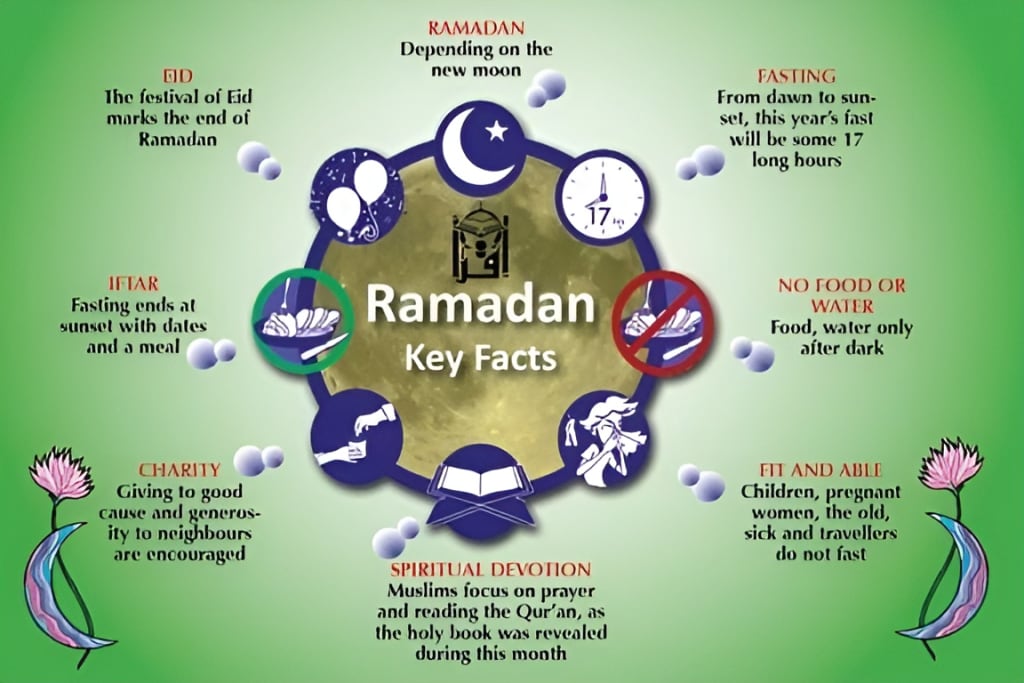
As the holy month of Ramadan approaches, Muslims around the world prepare themselves for a period of intense spiritual rejuvenation and renewal. At Jamia Saeedia Darul Quran, we invite you to join us in observing this blessed month, and to reap the numerous spiritual, physical, and emotional benefits that come with it.
What is Ramadan?
Ramadan is the ninth month in the Islamic (Hijri) calendar and one of the holiest periods of worship for Muslims. The month lasts a period of 29 or 30 days, depending on the sighting of the moon, and appears to shift forward approximately 11 days each year as the Islamic calendar is based on the lunar cycle instead of the Gregorian calendar we commonly use today.
The Significance of Ramadan
Ramadan is the ninth month of the Islamic calendar, and is considered one of the holiest periods of the year. It is during this month that Muslims commemorate the revelation of the Quran, and fast from food and drink during the sunlit hours as a means of drawing closer to God and cultivating self-control, gratitude, and compassion for those less fortunate.
The Purpose of Fasting
Fasting in Ramadan is not merely a physical act, but a spiritual one as well. By abstaining from food and drink, Muslims are able to develop greater self-awareness, discipline, and empathy for those who are less fortunate. The ultimate goal of fasting is to attain a state of greater God-consciousness, known as taqwa, which enables individuals to lead a more righteous and virtuous life.
The Benefits of Fasting
In addition to its spiritual benefits, fasting in Ramadan has numerous physical and emotional benefits as well. Fasting has been shown to lower cholesterol levels, improve digestion, and boost the immune system. It also provides an opportunity for individuals to develop greater self-control, willpower, and resilience.
Read More: Ramadan and the Quran
Ramadan at Jamia Saeedia Darul Quran
At Jamia Saeedia Darul Quran, we invite you to join us in observing the blessed month of Ramadan. Our mosque will be hosting a range of activities and events, including daily iftar programs, taraweeh prayers, and Quran recitation competitions. We also encourage you to take advantage of our Ramadan classes and workshops, which will cover a range of topics related to the Quran, hadith, and Islamic spirituality.
Eid ul-Fitr Celebrations
At the end of Ramadan, we will be hosting Eid ul-Fitr celebrations at our mosque. Join us for a day of prayer, food, and festivities, as we mark the end of the blessed month of Ramadan and the beginning of the new month of Shawwal.
We look forward to welcoming you to Jamia Saeedia Darul Quran this Ramadan, and to sharing in the blessings and joys of this special month with you.
Read More: Importance Of Ramadan
Ramadan Mubarak!
Frequently Asked Questions (FAQs) about Ramadan
Q1: What is the significance of Ramadan in Islam?
Ramadan is the ninth month of the Islamic calendar and is considered a sacred period of fasting, reflection, and spiritual growth. It commemorates the revelation of the Quran to the Prophet Muhammad (peace be upon him) and is a time for Muslims to reconnect with their faith, practice self-discipline, and develop empathy for those in need.
Q2: What are the rules of fasting in Ramadan?
During Ramadan, Muslims fast from dawn to sunset, abstaining from food, drink, and other physical desires. The fast begins at Fajr (dawn) and ends at Maghrib (sunset). Muslims are also expected to abstain from sinful behaviors and focus on spiritual growth and self-improvement.
Q3: Who is exempt from fasting in Ramadan?
Certain individuals are exempt from fasting in Ramadan, including:
Children under the age of puberty
Pregnant or breastfeeding women
Travelers on long journeys
People with chronic illnesses or disabilities
Elderly individuals who are weak or frail
These individuals may be required to make up their missed fasts later or provide compensation in the form of charity.
Q4: What are the benefits of fasting in Ramadan?
Fasting in Ramadan has numerous physical, emotional, and spiritual benefits, including:
Improved self-discipline and willpower
Enhanced empathy and compassion for others
Increased focus on spiritual growth and self-improvement
Improved physical health, including reduced blood pressure and cholesterol levels
Enhanced mental clarity and focus
Q5: What is the significance of the Taraweeh prayer in Ramadan?
The Taraweeh prayer is a special prayer performed in the evening during Ramadan, after the Isha prayer. It is a time for Muslims to come together and recite the Quran in congregation, seeking forgiveness, guidance, and spiritual growth.
Q6: What is the difference between Iftar and Suhoor?
Iftar is the meal eaten by Muslims to break their fast after sunset, while Suhoor is the meal eaten before dawn to prepare for the fast. Both meals are important in Ramadan, as they provide sustenance and energy for the day ahead.
Q7: Can non-Muslims participate in Ramadan activities?
Yes, non-Muslims are welcome to participate in Ramadan activities, such as attending Iftar dinners or Taraweeh prayers. This is a great opportunity for people of different faiths to come together, learn about each other's traditions, and build bridges of understanding and respect.
Q8: How can I wish someone a happy Ramadan?
You can wish someone a happy Ramadan by saying "Ramadan Mubarak" or "Ramadan Kareem". These phrases mean "Blessed Ramadan" and "Generous Ramadan", respectively.
About the Creator
Jamia Saeedia Darul Quran
Jamia Saeedia Darul Quran is a renowned Islamic institution dedicated to Quranic education, Hadith, and Islamic teachings. Serving for over 25 years, it nurtures students with religious and academic knowledge.
Keep reading
More stories from Jamia Saeedia Darul Quran and writers in Motivation and other communities.
The Proper Way to Read the Holy Quran
The Holy Quran is the divine book of guidance revealed by Allah to the last Prophet, Hazrat Muhammad Mustafa ﷺ. Every Muslim must read, understand, and implement its teachings in daily life. Reciting the Quran correctly is essential, as it carries immense rewards and strengthens one’s faith. This article provides a comprehensive guide on how to read the Quran correctly, following Islamic principles.
By Jamia Saeedia Darul Quran12 months ago in Education
How One Hour a Night Turned Her Side Hustle Into Financial Freedom
At 6:03 p.m. every weekday, the office lights flicked off behind her. At 6:17 p.m., Maya unlocked her apartment door. At 6:45 p.m., after reheating leftovers and changing into sweatpants, she opened her laptop again.
By MIGrowthabout 6 hours ago in Motivation
Medical Voices vs Disabled Voices
I was diagnosed in a hospital room. The language was clinical. Precise. Measured. Words like lesions, inflammation, progression, relapse. The explanation focused on my nervous system, on my brain and spinal cord, on what could be seen on a scan.
By Millie Hardy-Sims4 days ago in Motivation
Magic
Note from the Author: I want to let you know that this is an unusual story, and it has been written purely from whatever is in my unconscious mind, because before I start writing, I get into a flow state that reaches my unconsciousness. I also write in my subconscious mind, which is like a mid-flow state between the conscious and unconscious mind.
By Denise Larkin7 days ago in Fiction


Comments
There are no comments for this story
Be the first to respond and start the conversation.