
Rafale: The Sky’s Dominator
A masterpiece of French engineering, the Rafale fighter jet combines power, precision, and technology to rule the skies.

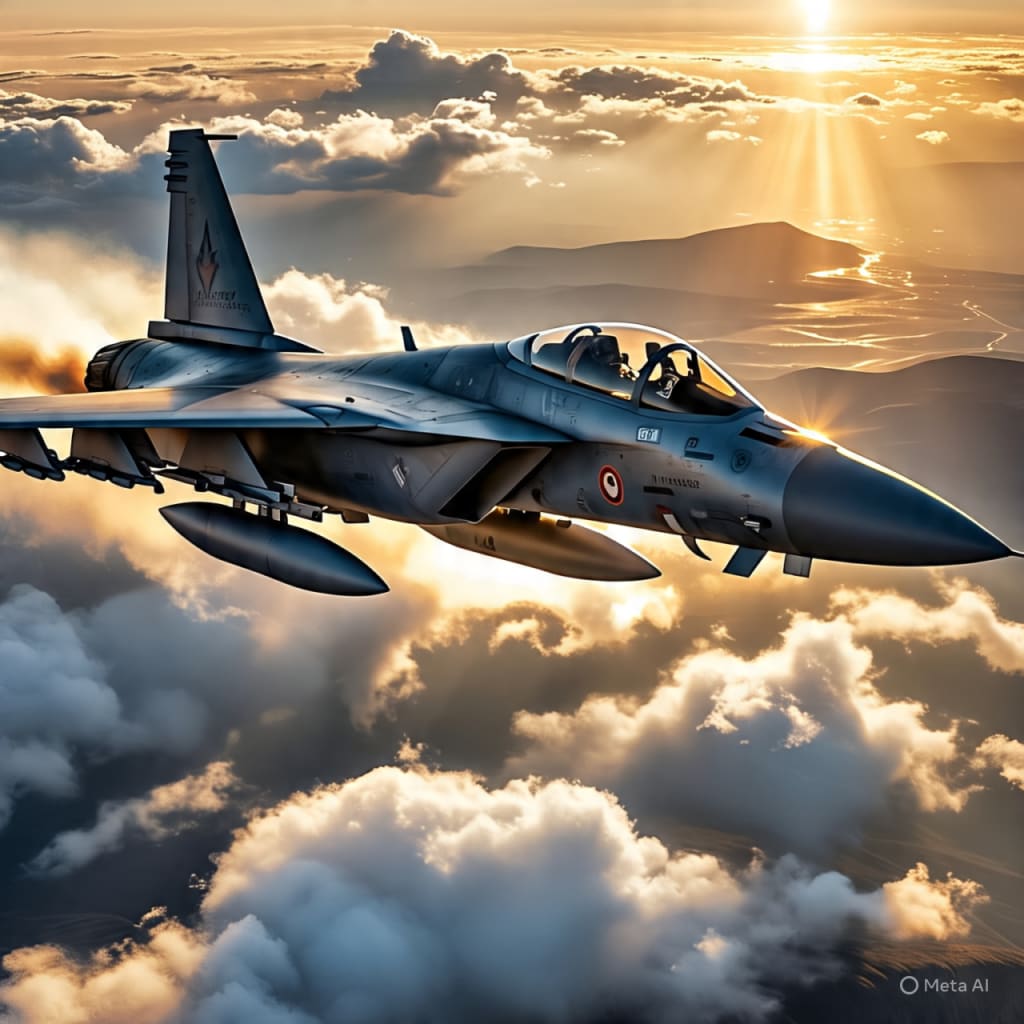
Above the battlefield, where clouds meet conflict, one aircraft glides with elegance and strikes with deadly precision. This is the Rafale fighter jet — a symbol of technological excellence, aerial supremacy, and strategic power.
Designed and built by the French aerospace company Dassault Aviation, the Rafale is a 4.5-generation multirole combat aircraft, trusted by some of the world’s most advanced air forces. It’s more than just a machine; it’s a flying weapon system that combines agility, intelligence, and lethality in one platform.
The Birth of a Beast
The development of Rafale began in the 1980s when France decided to build an aircraft that could perform air dominance, ground attack, reconnaissance, and nuclear strike — all in one plane. Unlike most other jets built for specific roles, the Rafale was designed from the start as an “omnirole” fighter — meaning it could do it all.
The first flight of Rafale took place in 1986, and after years of refinement, it entered operational service in the French Air Force and Navy in the early 2000s. Since then, it has proven its worth in combat missions in Afghanistan, Libya, Mali, Iraq, and Syria.
Design: Sleek, Smart, and Stealthy
Rafale’s sleek design is not just for show — it’s a blend of aerodynamics and stealth. Its delta wings and canard foreplanes give it superior maneuverability, allowing it to perform tight turns and rapid climbs.
It has a reduced radar cross-section, making it harder for enemy radars to detect. While it’s not a full stealth aircraft like the F-35, Rafale uses passive stealth techniques — such as special materials and shape — to minimize its visibility.
Power and Performance
Powered by two Snecma M88 engines, the Rafale can fly at a speed of Mach 1.8 (around 2,222 km/h). It has a combat range of about 1,850 kilometers and can refuel mid-air, making it capable of deep-strike missions.
The jet is capable of taking off from both land bases and aircraft carriers, making it extremely versatile. Its powerful engines and fly-by-wire controls allow it to remain stable at all speeds and altitudes — from dogfights to high-altitude bombing runs.
Technology and Avionics
One of the Rafale’s strongest points is its cutting-edge avionics — the electronic systems that help it fly, fight, and survive.
RBE2 AESA radar: Detects multiple targets from long range with pinpoint accuracy.
SPECTRA electronic warfare system: Detects and jams enemy radar, launches countermeasures, and provides 360-degree threat awareness.
OSF (Optronique Secteur Frontal): Infrared and optical sensors that allow Rafale to track and target without using radar.
The cockpit is designed for the pilot’s ease and survival, with a wide-angle HUD (Head-Up Display), voice command system, and hands-on throttle-and-stick controls. The pilot can focus entirely on the mission without getting overwhelmed.
Weapons: A Flying Arsenal
The Rafale can carry a wide variety of air-to-air, air-to-ground, and air-to-sea weapons. It has 14 hardpoints (attachment stations for weapons) and can carry over 9.5 tons of external load.
Key weapons include:
Meteor: A beyond-visual-range air-to-air missile that can destroy enemies before they even see the Rafale.
MICA: Dual-purpose missile for both short and medium-range aerial combat.
SCALP: Long-range cruise missile for deep strikes.
Hammer: Smart bombs with GPS and laser guidance.
Exocet: Anti-ship missile.
Nuclear capability: The Rafale is also capable of delivering nuclear warheads as part of France’s deterrence strategy.
Rafale Around the World
While initially a French exclusive, the Rafale has gained international popularity. Countries like India, Egypt, Qatar, Greece, and the UAE have bought Rafale jets, often praising their combat readiness, ease of maintenance, and operational flexibility.
India’s acquisition of Rafale jets in 2016 was a landmark deal. In a region where aerial dominance is key, the Rafale gave India a strategic edge. Indian pilots have lauded the aircraft’s capabilities during training and operational missions.
Battle-Tested Excellence
Rafale is not just about numbers and specs — it’s a battle-proven aircraft. It has seen real combat in some of the world’s toughest environments. Whether bombing terrorist hideouts in the desert or intercepting enemy aircraft at high altitude, Rafale has always performed with reliability and precision.
The Future of Rafale
Dassault continues to upgrade the Rafale with next-generation sensors, improved engines, and network-centric warfare capabilities. It is expected to stay relevant well into the 2040s, and may even play a role in future European stealth fighter programs.
---
Conclusion
The Rafale is not just an aircraft — it’s a statement of power, technology, and modern warfare. It embodies the future of air combat while delivering results today. With its unmatched versatility, advanced systems, and graceful dominance in the skies, the Rafale stands as a legend in the world of fighter jets.
Every time it takes off, the sky makes way — for the Rafale is not just flying, it is commanding the air.
About the Creator
Noman Afridi
I’m Noman Afridi — welcome, all friends! I write horror & thought-provoking stories: mysteries of the unseen, real reflections, and emotional truths. With sincerity in every word. InshaAllah.
Keep reading
More stories from Noman Afridi and writers in Motivation and other communities.
Saddam Hussein: The Last Roar of Arab Pride
The Beginning of a Storm Born in 1937 in the humble village of Al-Awja, near Tikrit, Saddam Hussein rose from poverty and abandonment to become one of the most influential — and controversial — figures of the Arab world. Orphaned young and raised by a harsh uncle, his early life was molded by survival, ambition, and a deep resentment toward colonial influence and oppression.
By Noman Afridi10 months ago in Motivation
You're Going to Feel the Pain Either Way. Choose Which One.
The question was never "how do I avoid discomfort?" The question is "which discomfort am I choosing?" Because there are only two options, and you're picking one of them every single day - whether you're conscious of it or not.
By Destiny S. Harris3 days ago in Motivation
The Side Hustle That Started as a Joke and Ended in Millions
It started with a joke. On a random Friday night, 23-year-old Marcus was sitting on his couch with three friends, eating cheap pizza and complaining about being broke. Rent had just gone up. His car needed repairs. His bank account was doing that familiar dance between zero and overdraft.
By MIGrowth2 days ago in Motivation
Review of 'Man on the Run'
My wife and I saw Man on the Run, a nearly 2-hour documentary on Amazon Prime, about Wings, Paul McCartney's group that flew around the world from shortly after The Beatles broke up in early 1970 to shortly after John Lennon was murdered at the end of 1980, making a Beatles reunion forever impossible.
By Paul Levinson5 days ago in Beat


Comments
There are no comments for this story
Be the first to respond and start the conversation.