
Pomodoro vs. Deep Work: Choosing the Best Focus Strategy for Maximum Productivity
Learn When to Use the Pomodoro Technique vs. Deep Work for Optimal Productivity

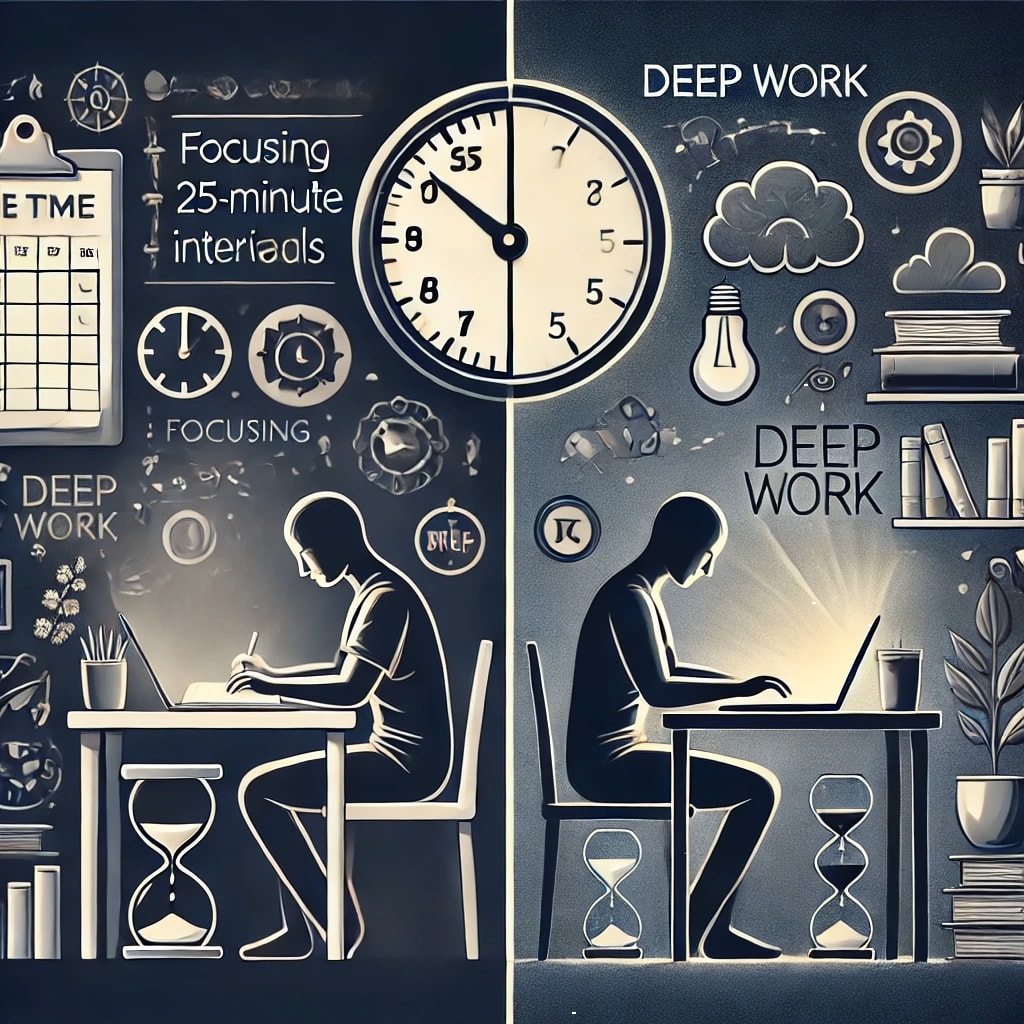
In today’s fast-paced world, staying focused and productive can be a challenge. Whether you’re working on a tight deadline, studying for exams, or pursuing a personal project, finding an effective way to concentrate is essential for success. Two popular focus-boosting methods are the Pomodoro Technique and Deep Work, both designed to help you maximize your productivity. But which one is right for you? Let’s break down the differences, benefits, and ideal scenarios for each method to help you make an informed decision.
What is the Pomodoro Technique?
The Pomodoro Technique is a time management method developed by Francesco Cirillo in the late 1980s. The principle is simple: work in focused intervals of 25 minutes, followed by a 5-minute break. Each 25-minute session is called a "Pomodoro," and after completing four Pomodoros, you take a longer break of 15-30 minutes.
This technique is ideal for tasks that require sustained attention but don’t demand hours of deep concentration. The regular breaks help refresh the mind, preventing burnout and promoting sustained focus.
Key Benefits of the Pomodoro Technique
- Promotes Consistency: The Pomodoro Technique is built on short, manageable intervals of focused work. This structure helps you maintain momentum throughout the day by breaking up your tasks into chunks that feel more achievable. By focusing on one task at a time, you're less likely to feel overwhelmed, and the technique helps you stay consistent in your productivity.
- Prevents Mental Fatigue: One of the biggest challenges in maintaining long-term focus is mental exhaustion. Working for hours without a break can lead to burnout and decreased effectiveness. The Pomodoro Technique helps prevent this by incorporating regular 5-minute breaks, allowing your brain to rest and recharge before diving back into another session. After four Pomodoros, a longer 15-30 minute break gives you additional recovery time, ensuring you stay sharp throughout the day.
- Easy to Implement: Unlike more complex productivity systems, the Pomodoro Technique is simple to start. All you need is a timer and a to-do list. You don’t need special tools or expensive apps—just a straightforward way to break down tasks into time intervals. This makes it highly accessible and easy to incorporate into your daily routine, regardless of your work environment.
- Boosts Motivation: The Pomodoro Technique helps to create a sense of urgency within each work interval. Knowing that you only have 25 minutes to work before a break encourages you to focus and work more efficiently. Additionally, each completed Pomodoro gives you a sense of accomplishment, reinforcing positive behavior and providing motivation to keep going.
- Minimizes Procrastination: The Pomodoro Technique’s structured nature helps prevent procrastination. When you break down large tasks into smaller, more manageable blocks, it can reduce the overwhelming feeling that often leads to delaying work. With the promise of a break coming soon, it’s easier to dive into tasks that may otherwise feel daunting.
Best For:
- Tasks that require moderate focus: The Pomodoro Technique works well for tasks that involve a fair amount of concentration but don’t require intense focus for long periods. For example, responding to emails, writing reports, or conducting research are tasks that benefit from this technique.
- People who struggle with staying on task for long periods: If you often find yourself distracted after a short time, the Pomodoro Technique’s regular intervals of focused work and breaks can help you develop a sustainable routine.
- Those with a tendency to multitask: Multitasking can lead to decreased productivity and mental overload. The Pomodoro Technique helps you focus on one task at a time, leading to better quality work and a more fulfilling sense of accomplishment.
- Those who need to stay energized: The short work sessions and frequent breaks help keep you fresh and focused throughout the day, making it ideal for individuals who tend to lose energy or focus after extended periods of work.
- Tasks with clear endpoints: If you’re working on tasks that are discrete (e.g., completing a section of a report or answering a batch of emails), the Pomodoro Technique offers a clear framework for completing these smaller parts efficiently.
What is Deep Work?
Deep Work, a concept popularized by Cal Newport in his book Deep Work: Rules for Focused Success in a Distracted World, is the practice of engaging in cognitively demanding tasks with full concentration for extended periods. Unlike the Pomodoro Technique, Deep Work involves longer, uninterrupted blocks of time—usually 90 minutes or more—where you are completely immersed in your work. The goal is to produce high-quality, creative output by eliminating distractions and focusing solely on one task.
Deep Work requires a level of discipline and preparation, as it involves setting aside time for focus, turning off all distractions (including phone notifications and social media), and getting into a state of flow.
Key Benefits of Deep Work
- High-Quality Output: Deep Work is designed for periods of deep, undistracted focus, which enables you to produce high-quality work. When you fully immerse yourself in a task without interruptions, you’re able to think creatively, make better decisions, and produce more refined results. Whether you’re writing, coding, or solving complex problems, the quality of your output is often significantly improved when you embrace Deep Work.
- Longer Concentration: Unlike the Pomodoro Technique, which is based on short intervals, Deep Work emphasizes long, uninterrupted blocks of time. This approach allows you to tap into a state of "flow," where you lose track of time and become fully immersed in your work. The ability to concentrate for extended periods is a skill that improves with practice and is invaluable for tackling complex, deep-thinking tasks.
- Enhanced Skill Development: Engaging in Deep Work regularly leads to accelerated learning and mastery of difficult tasks. Because you’re dedicating your full attention to complex projects, your ability to develop new skills or expand your expertise improves. Over time, you’ll find that you can work faster and more efficiently on challenging tasks, allowing you to reach a higher level of proficiency.
- Increased Satisfaction: Deep Work isn’t just about productivity—it’s also about the satisfaction that comes from engaging in intellectually stimulating work. By immersing yourself in complex tasks, you often experience a deeper sense of accomplishment. Unlike tasks that feel repetitive or shallow, Deep Work involves activities that push you to grow and learn, providing a sense of fulfillment and pride in your work.
- Eliminates Distractions: One of the core tenets of Deep Work is minimizing distractions. By creating an environment where you are free from interruptions (like social media, phone notifications, or email), you can maintain complete focus on the task at hand. This level of discipline helps you produce more in less time, as you’re not wasting energy on multitasking or switching between different activities.
Best For:
- Complex, high-stakes work: Deep Work is perfect for tasks that require problem-solving, strategic thinking, or high-level creativity. If you need to write a book, design software, research a complicated subject, or tackle an intricate business problem, Deep Work gives you the uninterrupted time necessary to make substantial progress.
- Professionals or students aiming to master a skill: If you’re striving to become an expert in a particular field, Deep Work is the most effective method for pushing through the plateau of beginner-level understanding to reach advanced levels of proficiency.
- Tasks that require uninterrupted thinking: When you're dealing with work that needs total focus—whether it’s drafting a proposal, conducting deep research, or building a website—Deep Work helps you stay in the zone for the long periods required to make meaningful progress.
- Creative work or innovation: Deep Work encourages sustained focus, which is vital for those engaged in creative professions like writing, art, design, and product development. The method allows you to experiment, iterate, and make breakthroughs that may not come from shallow or fragmented thinking.
- People who can create long, uninterrupted time blocks: Deep Work works best for those who have the ability to carve out substantial chunks of time (90 minutes or more) without interruption. If you have control over your schedule and can schedule long work periods, Deep Work will help you maximize productivity during those hours.
Pomodoro Technique vs. Deep Work: When to Use Each
Choosing between the Pomodoro Technique and Deep Work depends on several factors: the type of task you're working on, your work environment, and your personal preferences. Understanding when to use each method can help you maximize your focus and productivity.
Use the Pomodoro Technique When:
- You have multiple small tasks: The Pomodoro Technique is excellent for breaking down large, multifaceted projects into smaller, more manageable tasks. For example, if you need to handle administrative work, answer emails, or work on short tasks like writing blog posts, this technique helps you stay on track and complete tasks one by one.
- You need regular mental breaks: If you often feel fatigued or your focus starts to wane after a short time, the Pomodoro Technique's frequent breaks help you stay refreshed and energized throughout the day. This method works best for those who need a structured way to work and rest.
- You work in a distractive environment: For those who work in environments where distractions are frequent, the Pomodoro Technique can help you maintain control over your work pace. By focusing for short bursts, you can stay productive even if you’re frequently interrupted.
- You want to build a productive habit: The Pomodoro Technique is great for those looking to develop consistency in their work routine. The 25-minute intervals provide a structured framework for making steady progress without feeling overwhelmed.
Use Deep Work When:
- You need to tackle complex, high-level tasks: Deep Work is perfect for tasks that require sustained, undistracted focus over extended periods. If you're dealing with projects like writing a research paper, solving a business strategy challenge, or creating a software prototype, Deep Work provides the immersive environment necessary to excel.
- You can create large blocks of uninterrupted time: If your schedule allows for uninterrupted periods of 90 minutes or more, Deep Work enables you to make significant strides on difficult tasks. This strategy works best for individuals who can control their schedules and minimize distractions during work hours.
- You’re aiming to improve your expertise or mastery: If you’re in the process of mastering a complex skill or discipline, Deep Work provides the uninterrupted focus necessary to make real progress. Whether you’re learning a new programming language or studying for a professional exam, this method helps you retain information and improve your abilities at a faster rate.
- You want to foster creativity or innovation: Deep Work is ideal for creative professionals who need uninterrupted time to brainstorm, design, or experiment with new ideas. Whether you’re a writer, artist, or product designer, engaging in long blocks of Deep Work helps you push past surface-level ideas and make breakthroughs in your field.
Which Focus Strategy is Right for You?
Both the Pomodoro Technique and Deep Work offer valuable strategies for enhancing focus and productivity, but they cater to different types of tasks and working styles. The Pomodoro Technique excels when you need to maintain consistent productivity with manageable tasks and regular breaks, while Deep Work is suited for tasks requiring intense focus and immersion.
Ultimately, your choice depends on your task's complexity, your energy levels, and your ability to create uninterrupted time. You can even combine both methods for a balanced approach: use the Pomodoro Technique for smaller, routine tasks and Deep Work for deep, creative endeavors that demand extended focus.
By understanding the strengths and limitations of each method, you can tailor your approach to maximize productivity, avoid burnout, and achieve your goals with greater efficiency.
About the Creator
Richard Bailey
I am currently working on expanding my writing topics and exploring different areas and topics of writing. I have a personal history with a very severe form of treatment-resistant major depressive disorder.
Keep reading
More stories from Richard Bailey and writers in Motivation and other communities.
Unlocking Your Inner Drive: How to Stay Motivated and Achieve Your Goals
Motivation plays a crucial role in achieving goals. It is the driving force that will push us to take action, overcome obstacles, and help us to stay focused on our objectives. Without motivation, it can be challenging to stay committed and dedicated to our goals. In this article, we will explore the importance of motivation in achieving goals and provide practical tips and strategies to help you stay motivated throughout your journey.
By Richard Bailey3 years ago in Motivation
The Breakthrough You’re Waiting for Is Already in Motion
Most people quit right before the breakthrough. They quit when the grind gets loud, when the effort outpaces the reward, when progress seems invisible. They confuse silence with failure, struggle with stagnation, and patience with passivity.
By Imran Pisani2 days ago in Motivation
Becca
"Everything is so... flat." Denille said stupidly as she looked around her new neighborhood. She looked around at the muted desert where even the smallest sign of life seemed to have given up. The plant life was shrubs that were half cooked by the heat and where there should have been a lawn, a mess of white rocks laid glistening in the sun. Even the sky looked stretched thin, like the sun had ironed it smooth. She’d moved from Riverside, where at least there were hills, but here in Barstow, everything felt baked and brittle.
By Sara Wilsona day ago in Fiction


Comments