
Poet Who Wrote Without Ink
A humble Irish postman proves that the truest poetry lives in the heart, not on paper


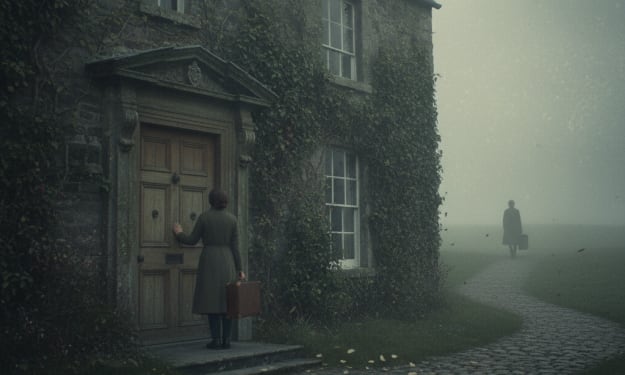
In a small village near the coast of Ireland lived a man named Thomas Gray. He wasn’t famous, nor was he rich. He worked as a postman, walking miles each day through rain and fog, delivering letters no one remembered once they were opened. Yet, in his pocket, Thomas carried poems — not written on paper, but carved in memory.
He had always loved words. As a boy, he’d listen to the sea whispering against the cliffs and imagine it was reciting verses in a language older than time. But his family was poor, and life demanded work, not poetry. So he grew up, found a steady job, and buried his dreams under the quiet rhythm of daily life.
But Thomas never stopped composing. Every morning as he walked his route, he spoke softly to himself, shaping lines from what he saw. A crooked fence became a metaphor for stubborn hope. A single yellow flower in the mud became a stanza about courage. He remembered every word, holding them in his mind like fragile glass.
At night, when the world slept, he would sit by the small window of his cottage, watching the light of distant fishing boats and whispering the poems he had written that day. He had no notebook, no ink, no audience — only the wind, the stars, and his heart.
One stormy evening, as rain beat hard against the window, a young woman named Eliza knocked on his door. She had just moved into the village and had lost her way. Thomas invited her in, offered her tea, and lit a fire to warm her hands. They spoke for hours about books and music. When she mentioned poetry, his eyes lit up like candlelight.
“You write?” she asked.
Thomas hesitated. “I suppose I do. But not in the usual way. I’ve never owned a proper pen or paper. I just... remember them.”
Eliza smiled. “Then your mind must be your book.”
From that night on, Eliza began to visit often. Sometimes she’d bring a loaf of bread, sometimes just conversation. Thomas grew to trust her, and one evening, she asked him to recite one of his poems. Nervously, he began.
His voice was gentle but steady. The poem was about the sea and a man who spent his whole life waiting for a ship that never came. By the time he finished, Eliza’s eyes were glistening.
“Thomas,” she whispered, “you must write these down. The world should hear them.”
He shook his head. “No. They’re not meant to be owned. Once I write them, they stop being alive. In my head, they keep breathing.”
But Eliza didn’t forget his words. One day, while walking through the village, she heard Thomas reciting softly as he passed the post office. She began to memorize his verses, one after another. She would write them later, carefully, exactly as he had spoken.
Months passed. Thomas never knew. To him, his poems still lived only in the air. But one afternoon, when the village held its annual fair, Eliza surprised him.
Under a white tent stood a small table with a handwritten sign: Poems by Thomas Gray. Dozens of villagers gathered around, reading the verses pinned to the wall — poems about the sea, the hills, the silence of winter mornings.
Thomas froze when he saw them. “You... wrote them down?” he asked.
Eliza nodded. “I only borrowed your words. They deserved to be heard.”
He stood silently, reading his own thoughts written in her careful handwriting. He felt both exposed and grateful. The villagers clapped and smiled, moved by the beauty and honesty of his words. For the first time, Thomas realized that poetry didn’t lose life when it was written — it simply began a new one.
From that day forward, Thomas continued to write — still without ink, still in his head. But Eliza became his pen. She wrote what he spoke, preserving his verses for others to read. Together, they filled pages with the songs of their little village, with stories of love, loss, and the sea that never stopped whispering.
Years later, when Thomas grew old and his steps slowed, he sat once more by the window overlooking the cliffs. Eliza, now a writer herself, read his poems aloud beside him.
When he passed away one spring morning, the villagers found a small notebook on his table. Its first page carried only one line, written in his uneven handwriting.
“I wrote without ink, but not without love.”
They buried him overlooking the sea. The wind that day carried his words across the cliffs like a hymn. And the villagers swore that if you stood there quietly at dusk, you could still hear his voice — reciting poetry to the waves, forever unwritten, forever alive.
About the Creator
LUNA EDITH
Writer, storyteller, and lifelong learner. I share thoughts on life, creativity, and everything in between. Here to connect, inspire, and grow — one story at a time.
Keep reading
More stories from LUNA EDITH and writers in Motivation and other communities.
Sculpture of Bones
I used to think bones were just silent things, hidden under the surface, holding us up without asking for recognition. But when I stood in front of my grandfather’s old workshop, staring at what he left behind, I realized bones could tell stories.
By LUNA EDITH5 months ago in Motivation
Golden Years Ahead: Smart Strategies for a Secure Retirement
Preparing for retirement starts with a clear picture of what you want to achieve. You need to decide how you want to live when work is no longer your daily focus. Some people dream of traveling frequently, while others prioritize time with family or pursuing personal hobbies. Defining these goals gives your financial plan direction. As a result, your savings and investments align with your desired lifestyle.
By Michael Petruska6 days ago in Motivation
Trickle Them Down, But Not Out
The thing about smart people is that they should know better, but alas, intelligence is not the same as wisdom. Not only do the mistakes of experts too short on vision—when they are not corrected—have the potential to do great and far-reaching damage, but they also undermine public confidence in the very notion of expertise. This is particularly so when expertise is wielded in defence of the rich and powerful as a cudgel against those laid low. As an academic, this lack of faith in “so-called experts” is painful to see as it plays out in the spread of dis-/misinformation, conspiracy theories, and anti-intellectualism writ large. But it is also an understandable impulse given the catastrophic failure of an economic ideology pushed by certain economic experts. Supply-side economics has shaped a broken system for the last half-century and has arguably done more to undermine the fabric of the American Dream than any policy framework of the past century.
By Cory Wright-Maley6 days ago in Humans



Comments (1)
This is beautiful