
Mind and Meaning: A Journey Through Study and Self
Exploring the Power of Knowledge and Inner Growth

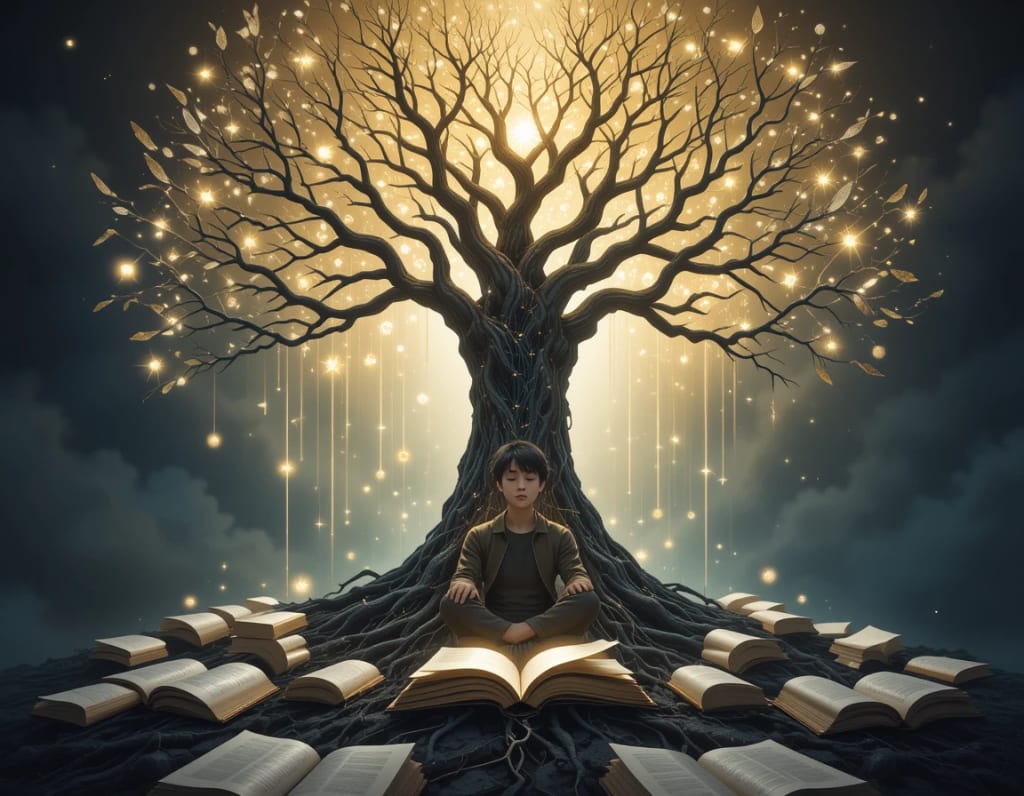
There was a time when Arman believed that learning was a duty—something to be done for grades, degrees, and expectations. Raised in a small town with limited resources, his relationship with knowledge was purely transactional. He studied to pass, to please his parents, and to someday secure a respectable job. But beyond the surface, something deeper stirred within him—an unspoken curiosity that refused to die, even in the noise of routine and responsibility.
It wasn’t until he moved to the city for university that his perspective began to shift.
The city, with its libraries that stretched across buildings and minds that debated late into the night, became his silent mentor. Arman was struck not just by the volume of books, but by the diversity of thought. People argued about philosophy in coffee shops, quoted ancient texts during bus rides, and questioned beliefs without fear of judgment.
One evening, during his first semester, Arman stumbled into a campus book fair. Among the stalls of popular titles and academic tomes, a weathered table caught his eye. It had a simple handwritten sign: “Books That Changed Lives.” The man behind the table was elderly, wearing spectacles that looked older than Arman’s father. He offered Arman a dusty copy of Man’s Search for Meaning by Viktor Frankl.
“This book won’t give you answers,” the old man said. “But it will help you ask the right questions.”
That night, Arman read until dawn. The words struck him with a quiet force. Here was a man who had endured unspeakable suffering in a concentration camp, yet emerged with a profound understanding of human purpose. Frankl’s belief—that even in the worst circumstances, one could choose their attitude and find meaning—planted a seed in Arman’s heart.
That seed would grow slowly, watered by other authors, experiences, and reflective moments. Arman began to read not just to learn facts, but to explore ideas. He ventured into philosophy, psychology, world religions, and personal development. Each book offered him a window into someone else’s mind, yet reflected something of his own inner world back to him.
He started journaling. What began as scribbles turned into deep, nightly reflections—on fear, ambition, happiness, and the meaning of success. He realized that inner growth wasn’t about becoming someone else, but about peeling away the noise to discover who he truly was.
During one of his classes on Eastern philosophy, a professor said something that Arman would carry with him for years:
“True education is not the accumulation of knowledge. It’s the transformation of the self.”
That quote haunted him—in the best way.
The transformation didn’t happen all at once. There were setbacks. Times when he doubted himself. Times when he felt lost, buried under expectations or trapped in old habits. But gradually, he noticed change—not just in how he thought, but in how he responded to life. He began to listen more, to question without the fear of being wrong, and to embrace silence as a space for insight rather than awkwardness.
One day, while volunteering at a literacy program for underprivileged children, Arman met a boy named Iqbal. He was shy and hesitant to read aloud. But one afternoon, Arman gave him a book about stars and space. Iqbal’s eyes lit up. He read every word with wonder, asking questions about planets and black holes. Arman saw himself in that boy—the same spark that once flickered uncertainly in him.
In that moment, he realized something powerful: knowledge wasn’t just for personal growth. It was a torch to be passed on. It was both a path and a gift.
Arman eventually completed his degree, not at the top of his class, but with a mind transformed. He didn’t rush into the job market. Instead, he traveled—backpacking through rural areas, speaking with elders, visiting monasteries, and teaching at small schools where curiosity was alive but resources were few. He read under trees and shared stories with strangers. Everywhere he went, he saw how learning transcended classrooms, and how inner growth didn’t need a syllabus.
Years later, Arman became a writer and educator. His classes weren’t typical. He began each session with a question rather than a lecture. He encouraged his students to read widely, think deeply, and reflect honestly. He told them what he had once learned:
“Don’t just seek knowledge. Let it change how you see, how you feel, how you live.”
He wrote a book titled Exploring the Power of Knowledge and Inner Growth. It wasn’t an academic text—it was a journey. A map for those lost in the mechanical pursuit of learning, yearning for something more soulful. The book included stories, journal prompts, and insights drawn from thinkers across cultures and eras. It wasn’t a bestseller, but those who read it wrote to him with gratitude. Some said it gave them courage. Others said it made them pause for the first time in years and ask themselves what truly mattered.
In the quiet moments of his life—when watching the rain, hearing children read, or sharing a cup of tea with old friends—Arman often thought back to that first book fair. That dusty copy of Frankl’s words. The beginning of his inner revolution.
About the Creator
Keep reading
More stories from Taslim Ullah and writers in Motivation and other communities.
The Learning Within Us
We often think of classrooms as physical places—four walls, a chalkboard, maybe a screen or a projector. We imagine teachers in front, students in rows, books opened and pens poised. But the most profound classroom we will ever know exists within us, invisible to the eye yet endlessly expansive. It is not bound by time or place, and its lessons are not always easy to grasp. It is the mind’s hidden classroom.
By Taslim Ullah10 months ago in Motivation


Comments
There are no comments for this story
Be the first to respond and start the conversation.