
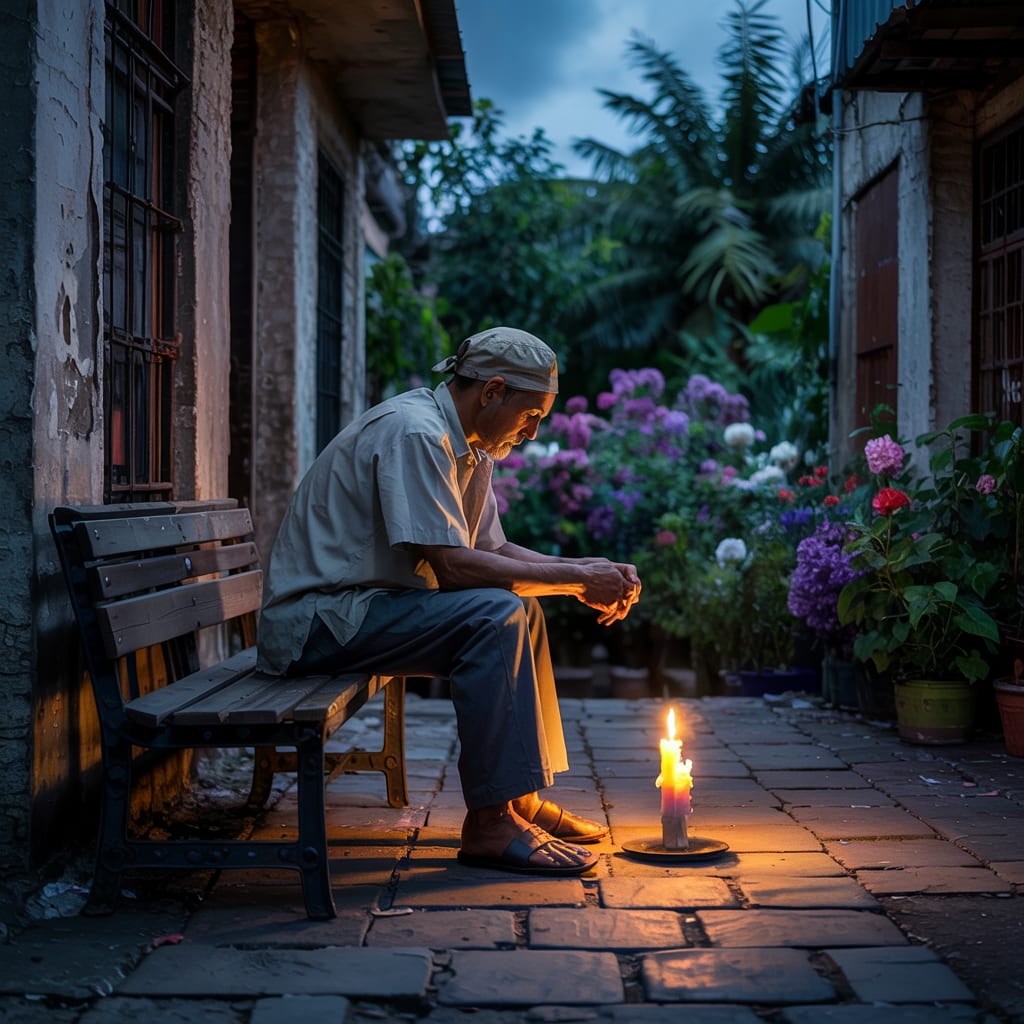
In the small village of Dharampur, nestled between dry hills and sun-baked fields, lived a man named Ramu. He was a weaver by trade, with rough hands and a quiet smile. Every morning, before the sun painted the sky orange, he would rise, tie a faded cloth around his forehead, and begin work on his rickety loom. The loom had been his father’s and his grandfather’s before that. It creaked like old bones but still managed to spin magic out of thread.
Ramu was poor—too poor to dream, some would say. He lived in a mud house with his wife Meera and their young son, Arjun. They had just enough to eat, just enough to live, but never enough to hope for more. Still, Ramu was content. He believed in hard work, in honesty, and in the quiet rhythm of life.
But Meera saw the world differently. She saw the merchants in town with their fine clothes and gold rings. She heard tales of cities where streets gleamed with lights and children never went hungry. Her eyes often lingered on the worn patches of Arjun’s clothes or the cracked soles of Ramu’s sandals. "There must be more to life than this," she would say.
One day, Ramu received an order from a wealthy landowner to weave a special silk shawl for his daughter’s wedding. It was the biggest order he had ever gotten. The landowner paid him half in advance—more money than Ramu had ever held in his hands.
That night, under the dim light of a kerosene lamp, Meera whispered, “Use this money to buy a train ticket. Go to the city. Find better work. Find a better life. For Arjun.”
Ramu hesitated. The city was a world he did not know—a place of noise, strangers, and danger. But he saw the hope in Meera’s eyes and the hunger in Arjun’s. The next morning, he packed his clothes and the landowner’s silk and left for the city.
The city was like nothing Ramu had imagined. It was loud, fast, and full of people who didn’t look at each other. He rented a small room and found work in a textile mill. The machines roared day and night, and Ramu worked till his arms ached. The pay was better, but the soul of the work was missing. It was all speed, all numbers—no beauty.
In the evenings, Ramu would walk past shops filled with fine clothes and rich colors. He missed his loom. He missed Meera’s cooking. He missed the soft snore of Arjun sleeping beside him. But he kept going. Each month, he sent money back to the village.
One day, while walking through a market, Ramu saw a woman struggling to sell handmade scarves. They were poorly displayed, but the designs were beautiful. He asked her who made them, and she said, “I do. But nobody wants handmade things anymore. They want factory-made. Cheap.”
That night, an idea bloomed in Ramu’s mind. What if he could bring the village’s weavers together and create something unique—something traditional, yet desired by the city?
He spent the next few months working double shifts. Every rupee he saved went into buying threads, tools, and renting a small shop. He wrote letters to Meera, asking her to gather the village weavers, to teach the old patterns again.
A year later, Ramu’s shop opened: “Dharampur Threads – Woven with Heart”. The scarves, shawls, and stoles were unlike anything in the city. They told stories in their patterns—of harvests, of rains, of love and loss. People began to notice. A boutique owner placed a large order. Then a fashion designer. Then an article appeared in the newspaper: “The Poor Man Who Brought the Village to the City.”
Ramu moved his family to the city, not in a big house, but in a warm, clean one. Arjun went to school with polished shoes and a full tiffin. Meera smiled more. The shop grew. He hired more weavers from the village, and the name "Dharampur Threads" became known far and wide.
Years later, when asked how he succeeded, Ramu would smile and say, “I was just a poor man who followed a thread of hope.”
About the Creator
Keep reading
More stories from Muhammad Nasim and writers in Confessions and other communities.
The Dog and the Duck: An Unlikely Friendship
Start writing...At the edge of a quiet little village sat a peaceful farm named Cloverhill. It was the kind of place where time moved slowly—where morning dew clung to the grass, and every sunset painted the skies in soft pastels. The animals of Cloverhill lived their days in comfort and calm, each one content in its own little world.
By Muhammad Nasim10 months ago in Chapters
Thoughts on Vocal and the way the world is
"Death cannot stop true love, only delay it." – Wesley in The Princess Bride. I decided to come back to Vocal on a very cold and dark night at the end of December. I had been, and still am, convalescing from a horrible staph infection that had gone misdiagnosed for months. This, paired with the increasing challenges of being healthy, making the best choices for my co-parented child, being a wife, and being a director at a new job, was a lot to manage.
By Jazzy 3 days ago in Confessions
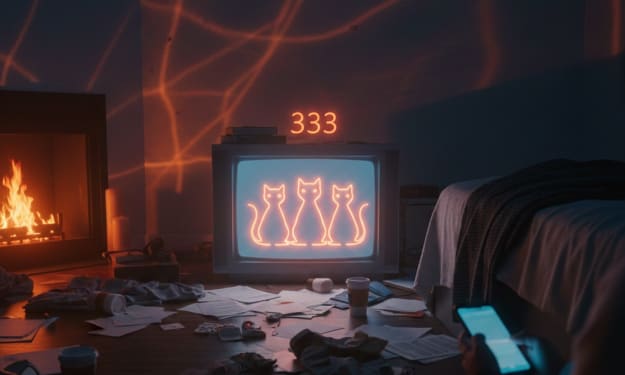
I Missed the Meeting, But the Fire Cats Stayed
I’m sitting here watching a strange video—three orange cats, neon-bright, glowing like embers. The number 333 keeps flashing on the screen, and for some reason it feels intentional, like the universe is tapping me on the shoulder instead of shaking me awake. The sound from the TV hums softly, almost like a bonfire crackling on a beach. Fire cats. That’s what they are. I don’t know why that comforts me, but it does.
By Jhon smith6 days ago in Confessions



Comments
There are no comments for this story
Be the first to respond and start the conversation.