
Loneliness in the Digital Age: A Silent Struggle
The Silent Struggle in the Digital Era

In today’s fast-paced digital world, humans are more connected than ever before. With just one click, we can speak to someone across the globe, share our thoughts instantly, and express our emotions through emojis, likes, and comments. Yet beneath this surface of constant connection lies a quiet warning: loneliness is spreading faster than ever.
The Paradox of Connection
It may sound strange, but the very tools designed to bring us together are the ones pulling us apart. Social media gives us endless scrolling, but often, it leaves our hearts empty. Online interactions, though quick and easy, rarely replace the warmth of a real conversation or the comfort of sitting beside a friend. This paradox of connection shows us that while we may never feel alone online, many of us are lonelier than we have ever been.
When Silence Speaks Loudly
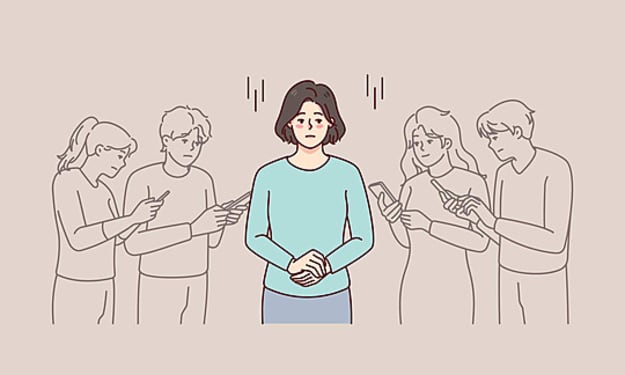
Digital platforms fill our lives with noise—notifications, messages, and advertisements—but silence has taken root in our human interactions. Families sit together in the same room, yet each member is lost in their own digital world. Couples text across rooms rather than speaking face-to-face. This silence is not peaceful; it is heavy, a reminder that human bonds are fading while digital ties are strengthening.
The Hidden Pain of Loneliness
Loneliness is not always visible. A person may post smiling pictures online but cry silently at night. They may gain hundreds of followers, yet feel that no one truly knows them. Loneliness carries hidden pain—mental stress, depression, and even physical illness. Scientists have compared loneliness to smoking a pack of cigarettes a day; that’s how damaging it can be to human health.
The Illusion of Belonging
In the digital space, likes and comments create the illusion of belonging. A single notification can make us feel noticed, but this feeling fades quickly. Real belonging cannot be built on temporary attention. Belonging requires trust, presence, and genuine care—qualities that technology alone cannot provide. Without them, humans risk becoming addicted to the illusion while starving for the reality.
Rediscovering Human Touch
Despite the challenges, hope remains. Technology itself is not the enemy; how we use it defines its impact. To fight loneliness, we must rediscover the human touch. A simple phone call instead of a text, a visit to a friend instead of a comment, or sharing a meal without screens—these actions rebuild the bridges that technology has weakened.
Balancing the Digital and the Human
The digital age will only grow more advanced. Artificial intelligence, virtual reality, and new technologies will make the digital world more attractive than ever. But humans must learn to balance the digital with the human. The more time we give to real relationships, the more alive and fulfilled we become. Balance is the key—not complete rejection of technology, but wise use of it.
A Human Detail We All Share
At the end of the day, loneliness is a human detail we all share. Everyone, at some point, feels the emptiness of being unseen or unheard. But loneliness can be defeated with empathy, compassion, and genuine effort. In the digital age, the greatest revolution may not be technological—it may be human. Choosing to care, choosing to listen, and choosing to truly be there for one another can bring back what we are slowly losing.
Conclusion: A Call to Humanity
The digital world may give us speed, efficiency, and endless possibilities, but only humanity gives us meaning. Loneliness is the quiet warning of our time, but it does not have to be our future. If we hold on to each other with kindness and prioritize real connection over virtual attention, we can turn this age of loneliness into an age of togetherness. The choice is ours, and it begins with one small step—reaching out to another human with sincerity.
About the Creator
Keep reading
More stories from Waqas Ahmad and writers in Motivation and other communities.
One Percent Better: Tiny Daily Wins That Change Everything
Last winter, I opened my window before sunrise and felt the cold air on my face. I wasn’t in the mood for big changes or big promises. I only made one decision: I would do one small thing a little better today than I did yesterday. No drama. No pressure. Just one percent better. That tiny decision didn’t make noise, but it changed the tone of my whole day.
By Waqas Ahmad 7 months ago in Motivation
A More Human Vocal
When we launched Vocal nearly a decade ago, the world was a very different place. LLMs did not exist, and stories were created one at a time by people sitting down to write, revise, and share something personal. Many of our assumptions about publishing, trust, and participation were built for a world where effort and output were inseparable.
By Justin @ Vocal6 days ago in Resources



Comments
There are no comments for this story
Be the first to respond and start the conversation.