

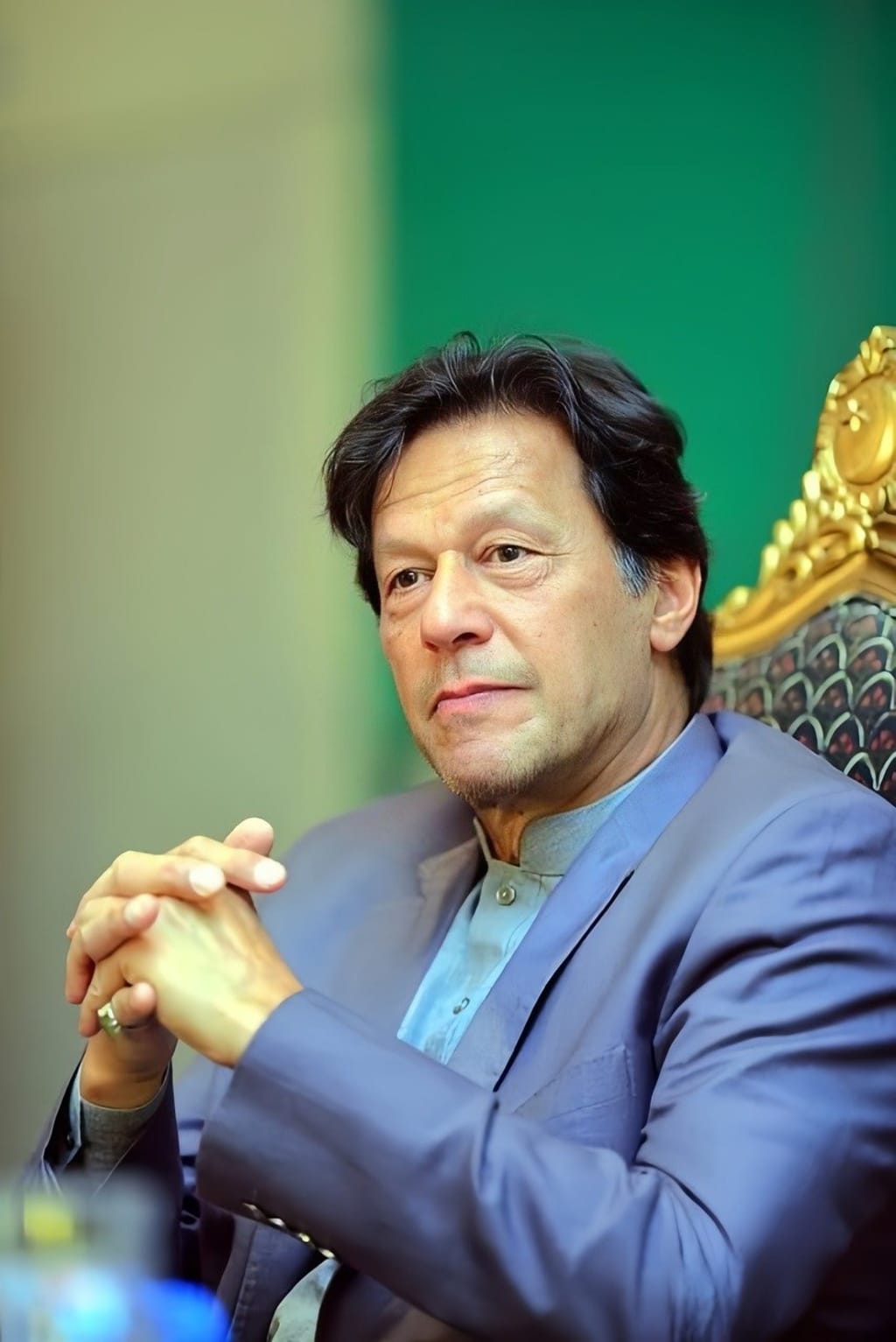
From the roaring cricket stadiums to the heart of Pakistan’s political battleground, Imran Khan has lived a life shaped by resilience, sacrifice, and an unshakable belief in his people.
Born on October 5, 1952, in Lahore, Imran was raised in a well-educated and respected family. As a boy, he was quiet and determined — not loud, but laser-focused. He had one dream: to make his mark in cricket. And he did.
By the time he was in his 20s, Imran Khan was already a star on the pitch. A tall, fiery fast bowler with charisma, intelligence, and grit, he became the captain of the Pakistan national cricket team in the early 1980s. But what truly immortalized him was the 1992 Cricket World Cup. Under his leadership, Pakistan — often dismissed as the underdogs — defeated all odds and lifted the trophy.
It wasn’t just a win; it was a national moment of pride, unity, and belief.
But Imran Khan wasn’t satisfied with personal glory. That victory, in his eyes, was just the beginning of his real mission.

In 1985, tragedy struck. His beloved mother, Shaukat Khanum, passed away after a painful battle with cancer. Watching her suffer in a healthcare system that lacked proper cancer treatment broke him. That pain turned into purpose.
He announced the creation of Shaukat Khanum Memorial Cancer Hospital, the first of its kind in Pakistan. Critics laughed. Experts said it was impossible. But Imran, the same man who once led an underdog team to a world championship, took on the challenge.
He raised funds tirelessly, knocking on doors, holding rallies, and even auctioning off his cricket memorabilia. He wasn’t asking for charity — he was asking for belief. In 1994, the hospital opened its doors in Lahore, built entirely from donations. Today, it treats thousands of cancer patients, many of them free of charge.

Still, Imran Khan wasn't finished. He believed Pakistan needed change on a much deeper level — a political and moral awakening. In 1996, he founded the political party Pakistan Tehreek-e-Insaf (PTI). Once again, he was laughed at. The political elite saw him as a naïve outsider, just a cricketer trying to play a different game.
For over a decade, he struggled. His party barely won seats. People doubted him. He was called a dreamer, even a failure. But Imran never gave up.
He spent years traveling across Pakistan, meeting farmers, laborers, students, and tribal leaders. He spoke of justice, clean governance, and a “Naya Pakistan” — a new, fairer, stronger Pakistan.
Finally, after 22 years of political struggle, the tides turned. In 2018, Imran Khan’s PTI won the general election, and he became the 22nd Prime Minister of Pakistan.
His leadership was marked by efforts to strengthen institutions, improve healthcare, fight corruption, and build a welfare state. He launched programs like Ehsaas, providing financial support to the poor, and built shelter homes for the homeless.
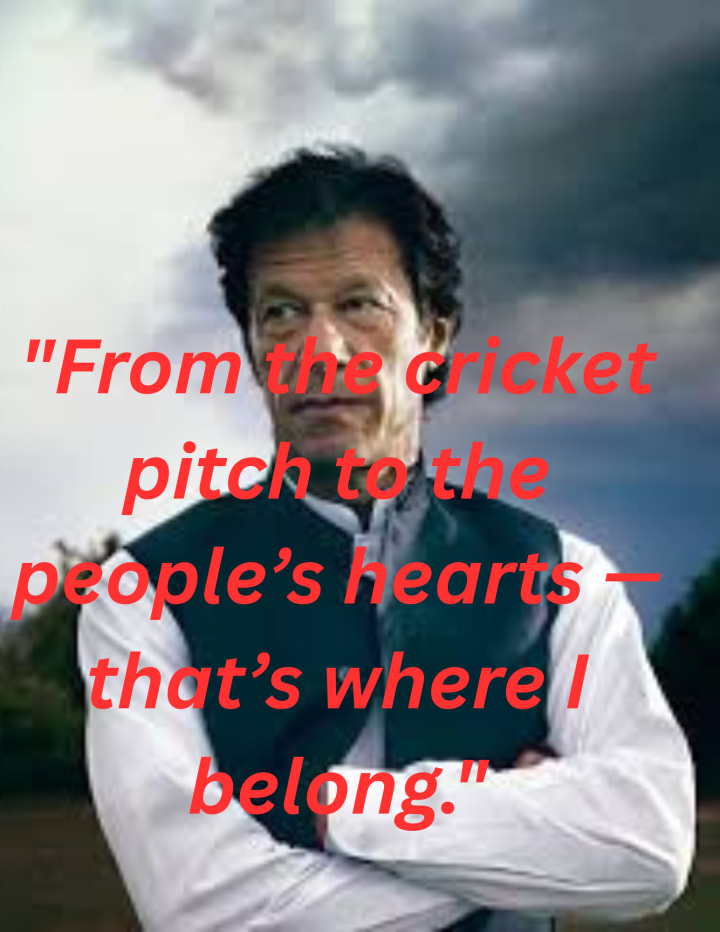
Throughout his journey, Imran Khan has sacrificed fame, wealth, and comfort. He could have lived a luxurious life as a cricket legend. Instead, he chose the rough road of reform — one filled with criticism, political storms, and personal attacks.
But to millions of Pakistanis, Imran Khan is more than just a politician or sportsman. He is a symbol of belief — someone who doesn’t just speak of dreams but dares to chase them, no matter how impossible they seem.
His story teaches us that real change takes time. That leadership isn’t about perfection — it’s about perseverance, honesty, and courage.
As Imran himself once said:
“You lose when you give up. Until then, you're still in the game.”
And Imran Khan? He’s never left the game.

About the Creator
The Manatwal Khan
Philosopher, Historian and
Storyteller
Humanitarian
Philanthropist
Social Activist
Keep reading
More stories from The Manatwal Khan and writers in Motivation and other communities.
How To Change Your Current Status
Once upon a time, in a bustling city, there lived a woman named Maya. Maya was in her early forties, working a high-paying job that she had grown to despise. The long hours, the toxic environment, and the constant pressure had taken a toll on her emotional well-being. She felt trapped, like a bird in a gilded cage—beautiful but unable to fly. Her days were filled with stress, and her nights were restless. She often wondered if this was all life had to offer.
By The Manatwal Khan10 months ago in Motivation
The BAFTA Awards
By now, in a stunning departure from recent years, most of the world is aware of what happened at the BAFTA film awards. Social Media Headlines will tell you the bare bones: that John Davidson, a Tourette's Syndrome advocate, shouted a racial slur at two Actors of Colour, Michael B Jordan and Delroy Lindo.
By Natasja Rose5 days ago in Psyche




Comments
There are no comments for this story
Be the first to respond and start the conversation.