
How You Spend Your Time and Your Money Reveals A Lot About You
Your calendar and checkbook tell who you are based on how you spend time and money.

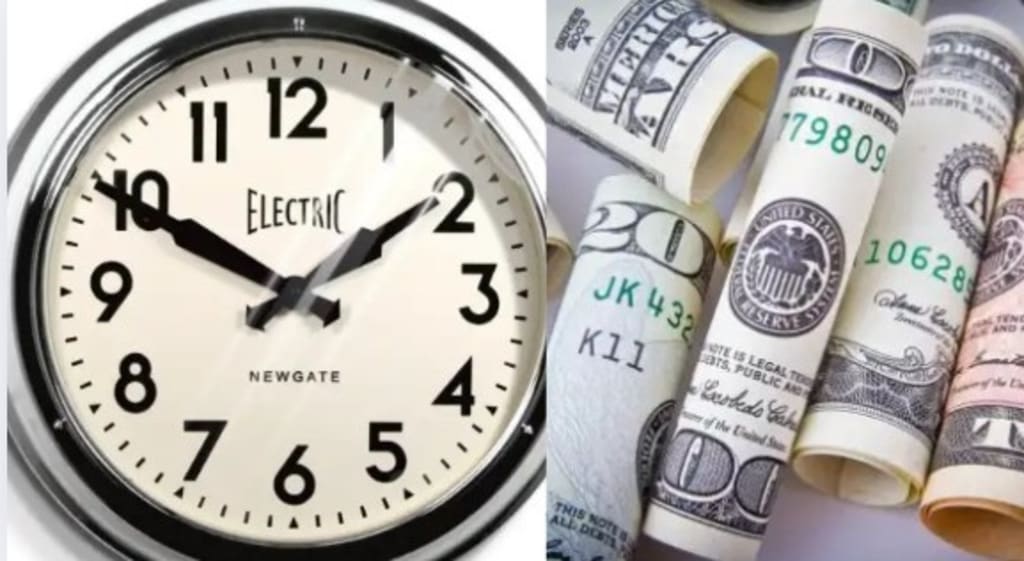
Time and money are your most honest currencies. You can lie with words, curate your social media personas, and tell yourselves comforting stories about who you are. If someone wanted to understand your values, priorities, and beliefs, they wouldn’t need to interview you.
They would just need two things:
- your calendar
- your bank statement
Your calendar and bank statement don’t lie. They quietly document your priorities, values, fears, and aspirations in real time.
How you spend your time and money tells a far more honest story than words ever could. These two resources—limited, valuable, and constantly in demand—reveal who you are right now, not who you hope to be or who you say you are.
Time and money are arguably life’s most valuable resources. One of the great laws of economics is that time equals money. What really matters is to spend both wisely.
Your life isn’t defined by your goals or intentions. It’s defined by your habits. And your habits are written clearly in how you spend your time and money.
About Your Time
Everyone gets the same 24 hours every single day, no more, no less. What you do with those hours shapes your identity. If your free time is consistently spent learning, creating, or resting with intention, that says something powerful about your self-respect and long-term thinking. If it’s mostly consumed by distractions, resentful obligations, or endless busyness, that also reveals something about you. Your calendar doesn't lie. It doesn’t judge you. It simply mirrors who you are.
A packed schedule can be a way to avoid discomfort, reflection, or hard decisions. When you slow down enough to examine where your time goes, you might discover what you’re running toward—or what you’re running from.
Your Time Test
Here is a test to chart how you are spending your time. The test is quite simple. Grab your date book, appointment book, calendar, and whatever you use to schedule your time.
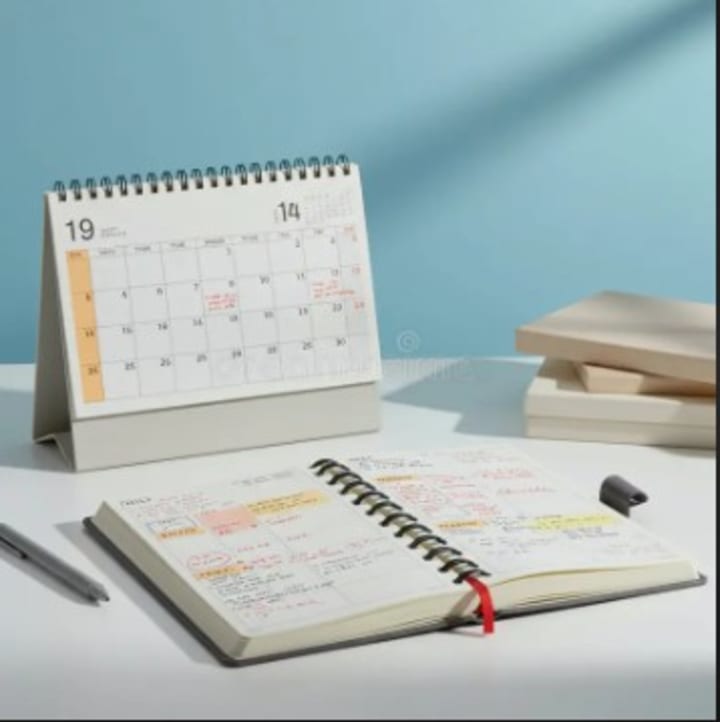
Look at the last month to see how you spent your time. Did you waste time, or fill every block on your calendar with things that were not productive?
Spending Money Shows What You Value
Money works the same way as time. Your spending habits reveal what you believe will bring happiness, security, comfort, or status. The money you spend is a trail of breadcrumbs leading straight to your values. What you invest in repeatedly—experiences, convenience, education, status symbols, or comfort—reveals what you believe will make a better person.
This doesn’t mean spending money on fun, entertainment, or comfort is wrong. It means every dollar you spend has a message attached to it. When you look at your expenses honestly, you will see patterns. You see what you prioritize when you’re stressed, what you reward yourself with, and what you avoid investing in altogether.
You spend money. You spend time. Your spending habits reveal what you believe will bring you happiness, security, comfort, or status.
Your Money Test
Here is a simple test to chart how you are spending your money. Grab your checkbook or bank statement to take inventory of how you spend your money.

Look at the last month to see whether you have used most of it to buy worldly things that are temporal; things that will rust, bend, break, or go out of style.
The Good News: These Patterns Are Changeable
If you do not like the patterns you see, there is good news. You can change those undesirable patterns. You don’t need a dramatic overhaul. A slight redirection of spending will align with your future self. Each choice is a quiet vote for the life you want to live.
Call to Action
If this article resonated with you, take a few minutes today to change something about how you spend your time and your money.
Ask yourself:
- Do I spend money to feel loved, accepted, or seen?
- Do I save obsessively to feel in control or avoid dependence?
- Do I give generously to others but deny myself basic comforts?
- Do I believe that spending on myself is selfish?
Each of these patterns points to a belief, often unconscious, about who you are and what you’re worth. Until those beliefs are acknowledged, no amount of budgeting apps or financial advice will change your relationship with time or money.
Your calendar and your checkbook are mirrors of your habits. Let them reveal what you will always be proud of.
About the Creator
Margaret Minnicks
Margaret Minnicks has a bachelor's degree in English. She is an ordained minister with two master's degrees in theology and Christian education. She has been an online writer for over 15 years. Thanks for reading and sending TIPS her way.
Keep reading
More stories from Margaret Minnicks and writers in Motivation and other communities.
Why You Should Not Tell Everyone Your Personal Problems
When we have good news or bad news, we want to share it with people. Unfortunately, not everyone is on your side. Some people will undoubtedly take your personal information and hold it against you, either then or later.
By Margaret Minnicks10 days ago in Motivation
One Hard Thing
Stop me if you’ve heard this one before: You have the number, you know your schedule- you’ve even picked out the perfect day and time to make this appointment. Shoot, you’ve even picked out alternative days and times just in case their schedules can’t accommodate you!
By Taylor Rigsby11 days ago in Motivation
How Golf Shapes Elite Decision-Makers
Golf offers far more than leisure and competition. For many executives and emerging leaders, the game provides a powerful training ground for strategic thinking, emotional control, and disciplined decision-making. Unlike fast-paced sports, golf demands patience, focus, and mental clarity. Therefore, leaders who embrace the game often discover valuable lessons that translate directly into professional success. Through thoughtful play and steady reflection, golf shapes habits and mindsets that strengthen leadership performance and personal growth.
By Paul Wiedmaier2 days ago in Motivation
Why Black History Matters in America?
The United States of America is celebrating their 250th anniversary in 2026. I'm proud to be an American and as someone who was born here, I wouldn't imagine myself living anywhere else. This is a country where opportunities are possible. Where anyone can be successful in anything they desire to do. Equality, community, and togetherness are the backbones of what America is and should be about. However, we have an administration who wants to erase and disregard those who have made positive, meaningful impacts in our country, specifically Black figures, such as Martin Luther King, Jr., Rosa Parks, and Maya Angelou. President Trump and his administration have been constantly complaining and fighting against what they call the "Woke agenda". They use this excuse as a distraction from other issues they refuse to address, such as the high cost of living, climate change, and inflation. That equality is dividing America, when in reality, it's bringing us together. Being woke is not tied to a specific political party. No matter where you stand on the political spectrum, you can still care about other people and their plights. Compassion and empathy for others isn't tied to a political party, either. We were taught as children to treat others the way we want to be treated and not judge others because they're different from us. Caring about others isn't a personal attack on your beliefs. It doesn't make you any less of a person. People who are easily offended over African American figures, past or present, or anything related to it, are grasping at straws. Current and future generations need to know who people like Harriet Tubman and Shirley Chisholm were, especially in the classroom. Black History is part of American History. It should be recognized, not hidden or forgotten. Besides, you can't shield children from everything, just because your feelings are easily hurt.
By Mark Wesley Pritchard 4 days ago in The Swamp




Comments
There are no comments for this story
Be the first to respond and start the conversation.