
How to Connect Shopify with Alibaba: A Complete Guide for Entrepreneurs
Unlock global suppliers, streamline your online store, and build a profitable e-commerce business by integrating Shopify with Alibaba.

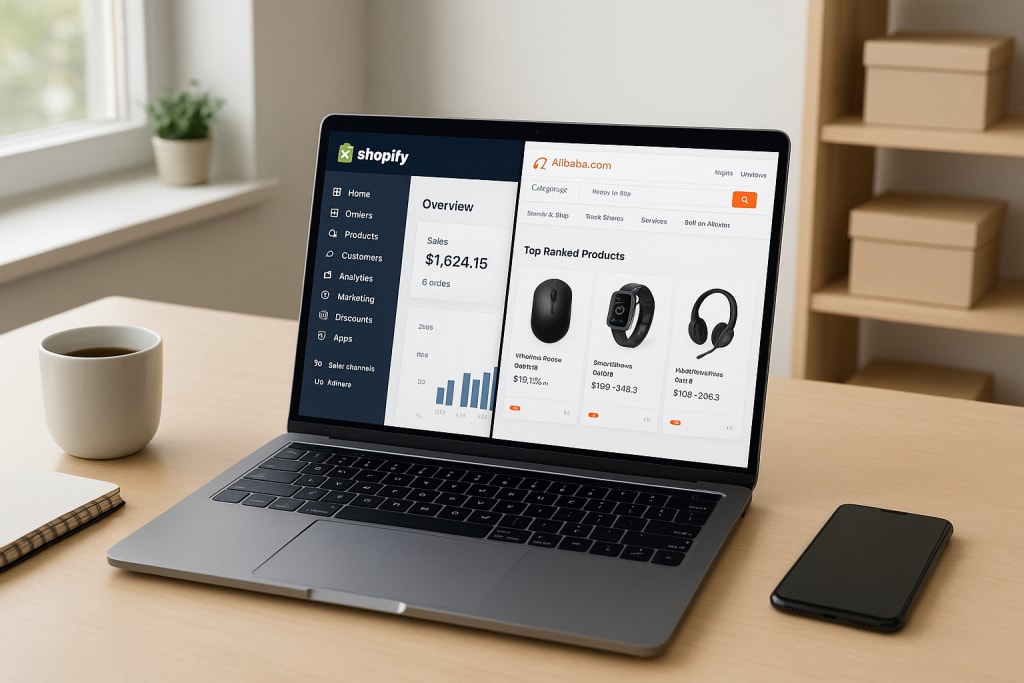
How to Connect Shopify with Alibaba: A Complete Guide for Entrepreneurs
BY [ WAQAR ALI ]
In the fast-paced world of e-commerce, entrepreneurs are always looking for ways to streamline their businesses and maximize profits. Shopify has emerged as one of the most powerful platforms for online stores, offering tools to build, customize, and scale a digital storefront with ease. On the other side, Alibaba is one of the world’s largest wholesale marketplaces, giving business owners direct access to manufacturers and suppliers worldwide at highly competitive prices.
For many entrepreneurs, the question is: how can I connect Shopify with Alibaba to build a profitable business model? The answer involves a mix of strategy, technical know-how, and understanding how both platforms work together. In this guide, we’ll break down everything you need to know—from why this integration is so valuable to step-by-step methods you can follow to make it happen.
Why Connect Shopify with Alibaba?
Before diving into the “how,” let’s talk about the “why.” Combining Shopify with Alibaba opens up a world of opportunity for small and medium-sized businesses:
Access to Global Suppliers – Alibaba hosts thousands of suppliers who produce everything from clothing and electronics to custom products. This means you can find items to fit any niche.
Lower Costs – Buying directly from manufacturers allows you to cut out middlemen, often securing lower wholesale prices and increasing your margins.
Scalability – With Shopify handling your storefront and Alibaba providing bulk supply, scaling your business becomes easier without needing to juggle multiple tools.
Customization – Many Alibaba suppliers allow custom branding, making it possible to create private-label products and stand out in competitive markets.
Step 1: Understand the Business Models
When connecting Shopify with Alibaba, it’s important to know what business model you want to pursue. The two most common models are:
Dropshipping: Products are shipped directly from the supplier to your customer. You don’t hold inventory, which reduces risk but can mean longer shipping times.
Wholesale/Private Label: You purchase products in bulk, customize them, and ship from your own storage or fulfillment center. This gives you more control over quality and shipping times but requires upfront investment.
Knowing your business model will help you choose the right suppliers and integration tools.
Step 2: Use the Alibaba.com App for Shopify
In 2020, Alibaba officially launched an Alibaba.com app on Shopify, making integration easier than ever. Here’s how to use it:
Log in to Shopify and go to the Shopify App Store.
Search for “Alibaba.com” and install the official app.
Connect your Alibaba account or create a new one if you don’t already have it.
Browse suppliers and products directly through the app.
Add products to your Shopify store with a few clicks.
The Alibaba app simplifies the process of importing products into your Shopify store, while also letting you communicate with suppliers to negotiate prices or request customization.
Step 3: Communicate with Suppliers
Once you’ve found a product, don’t rush into adding it to your store. Take time to:
Message suppliers to confirm minimum order quantities (MOQs), production time, and shipping options.
Request samples before committing to large orders to ensure product quality.
Negotiate pricing if possible, as many Alibaba suppliers are open to discussion.
This step is crucial. Building good relationships with suppliers can save you from costly mistakes down the road.
Step 4: Optimize Product Listings on Shopify
Simply adding products to Shopify isn’t enough. To make sales, you’ll need optimized listings:
High-Quality Images – Use product photos from the supplier or take your own after ordering samples.
Compelling Descriptions – Go beyond generic details; explain how the product benefits your customer.
SEO Optimization – Use keywords in your titles and descriptions to help your products appear in search engines.
Competitive Pricing – Factor in your wholesale cost, shipping, and Shopify fees while keeping prices attractive for customers.
Step 5: Manage Shipping and Fulfillment
One of the biggest challenges of working with Alibaba is managing shipping times. Customers today expect fast delivery, and waiting weeks can hurt your business. To solve this:
Look for suppliers with U.S. or European warehouses if your customers are in those regions.
Consider bulk purchasing and using a fulfillment center like ShipBob or Shopify Fulfillment Network.
Be transparent with customers about expected delivery times if dropshipping.
Step 6: Scale Your Business
Once you’ve successfully connected Shopify and Alibaba, the real work begins—scaling. Some proven strategies include:
Run targeted ads on Facebook, Instagram, or Google to drive traffic.
Leverage email marketing to build repeat customers.
Experiment with private labeling to make your brand stand out.
Track analytics using Shopify’s built-in tools to see what’s working and what
About the Creator
WAQAR ALI
tech and digital skill
Keep reading
More stories from WAQAR ALI and writers in Motivation and other communities.
Stop Giving Your Power to the Wrong People
Your Energy Is Precious Most people underestimate how valuable their energy is. We wake up every morning with a limited amount of emotional and mental energy, just like a phone starts the day with a full battery. Every conversation, every worry, every argument, and every attempt to impress someone drains that battery little by little.
By Yasir Rehman7 days ago in Motivation
How Inspirational People Supercharge Your Motivation and Push You Toward Success
Motivation is often influenced by forces beyond our immediate control. While personal goals and discipline are crucial, the people we interact with regularly can profoundly shape our drive to achieve. Inspirational individuals—whether mentors, peers, public figures, or colleagues—serve as catalysts for action, helping us envision possibilities and maintain focus during challenging moments. Understanding how their influence works is key to harnessing external motivation for personal growth.
By Lukáš Hrdličkaabout 8 hours ago in Motivation
A More Human Vocal
When we launched Vocal nearly a decade ago, the world was a very different place. LLMs did not exist, and stories were created one at a time by people sitting down to write, revise, and share something personal. Many of our assumptions about publishing, trust, and participation were built for a world where effort and output were inseparable.
By Justin @ Vocal7 days ago in Resources




Comments
There are no comments for this story
Be the first to respond and start the conversation.