
How to Become an Astrologer in 2025?
How to Become n Astrologer


Astrology has seen a resurgence in recent years, with platforms like Co–Star, The Pattern, and Chani revolutionizing how people engage with their birth charts. According to a 2023 Pew Research Center report, over 27% of Americans now believe in astrology, up from 18% a decade earlier. Whether you're drawn to its mystical roots or intrigued by its psychological depth, learning how to become an astrologer in 2025 is more accessible and meaningfulmthan ever before.
In this blog post, we'll walk you through every step you need to take, from beginner basics to building your own astrology practice. Let's look to the stars and get started!
1. Cultivate Curiosity and Passion for the Cosmos
Astrology isn’t just about knowing when Mercury goes retrograde. It’s a language of symbols that helps us interpret human experience. The first step in becoming an astrologer is developing a genuine passion for celestial mechanics and human behavior.
Ask yourself:
- Do I enjoy learning about people?
- Am I drawn to symbols, archetypes, and mythology?
- Can I commit to ongoing learning and self-reflection?
This isn’t a one-time course—it’s a lifelong journey.
2. Learn the Core Components of Astrology
Before diving into advanced techniques, you need a firm grasp of the fundamentals. Here are the essential elements every budding astrologer should master:
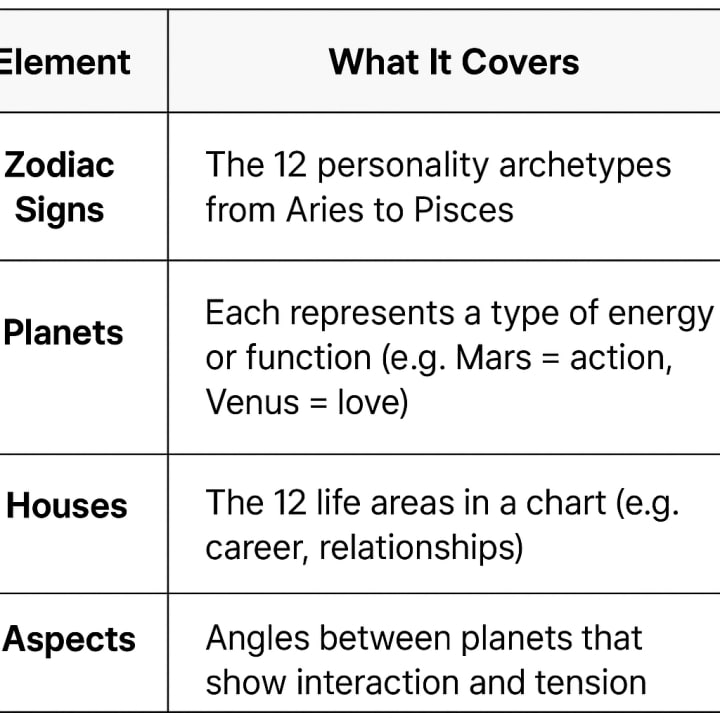
Recommended Reading: The Only Astrology Book You'll Ever Need by Joanna Martine Woolfolk
3. Choose Your Astrological Tradition
Astrology isn’t one-size-fits-all. There are multiple branches, and choosing the one that resonates with you can define your focus.
- Western (Tropical) Astrology: Most popular in the West; focuses on psychological insight.
- Vedic (Jyotish) Astrology: Ancient Indian tradition rooted in karma and dharma.
- Chinese Astrology: Uses lunar calendar and animal signs; highly symbolic.
- Evolutionary Astrology: Focuses on the soul’s growth through lifetimes.
Start broad, then specialize once you find your philosophical match.
4. Invest in Formal Education or Training
While self-study is powerful, a structured course offers depth, community, and accountability. Here are some highly regarded programs in 2025:
India-Based Programs:
- Institute of Vedic Astrology (IVA) – Offers diplomas and certifications in Vedic astrology. ivaindia.com
- IIAG Jyotish Sansthan – A leading institute with flexible learning modules. iiag.co.in
- Faculty of Astrological Studies (UK) – Offers a prestigious diploma recognized worldwide. astrology.org.uk
- Kepler College (USA) – Provides a blend of modern and traditional techniques. keplercollege.org
- Astrology University – Offers online certification programs with mentorship. astrologyuniversity.com
- Astro.com and AstroSeek – Free and accurate chart generators.
- Solar Fire (Windows) or TimePassages (Mac/iOS) – Advanced paid software.
- Mobile apps like Astro Gold and AstroMatrix for chart analysis on the go.
- Analytical: Study historical charts, take notes, use workbooks, and learn transits.
- Intuitive: Meditate, use Tarot or symbols, and develop your “gut feel” for planetary energy.
- Astrology University Certification: Requires natal and timing consultations, ethics training.
- National Council for Geocosmic Research (NCGR): Offers four levels of proficiency testing.
- Future Point India: Offers practical training and certificate programs for Indian astrologers.
- Create a Website: Use platforms like Squarespace or Wix to showcase your services and testimonials.
- Start a Blog or Newsletter: Share horoscopes, case studies, or new moon updates.
- Use Social Media: Instagram and TikTok are powerful for astrology content in 2025.
- Journals like The Mountain Astrologer
- Conferences such as ISAR, NORWAC, and UAC
- YouTube channels & Podcasts (e.g., The Astrology Podcast, Chani App)
- Confidentiality is non-negotiable.
- Avoid deterministic predictions (e.g., "You will get divorced").
- Empower clients with insight—not fear.
- Pew Research Center – “Spirituality and Belief Trends” (2023)
- IBISWorld – “Psychic Services Industry Report” (2024)
- Steven Forrest – The Inner Sky
- Demetra George – Ancient Astrology in Theory and Practice
- Astrology University, Kepler College, IVA India (course and program description.
Global Programs:
Tip: Look for courses that include chart interpretation, ethics, and client counseling.
5. Get Hands-On with Chart Interpretation
Theory without practice is like knowing the rules of music but never playing an instrument. Start interpreting charts as early as possible.
Tools to use:
Start by reading your own chart, then offer free interpretations to friends and family. Keep a journal to track patterns and insights.
6. Sharpen Both Analytical and Intuitive Skills
Astrology blends left-brain analysis with right-brain intuition. Here’s how to build both:
According to professional astrologer Steven Forrest, “Great astrology is 60% intuition, 40% technique. But you have to earn the intuition through years of practice.”
7. Consider Getting Certified
While not legally required, certification boosts your credibility—especially if you’re planning to work professionally.
Top Certification Options:
Clients are more likely to trust someone who’s trained and vetted.
8. Build Your Brand and Start a Practice
Starting an astrology practice requires marketing savvy along with skill. Here’s what to focus on:
According to IBISWorld, the psychic services market—including astrologers—has grown to $2.4 billion in the U.S., with a 1.9% annual growth rate as of 2024.
Related Article- Gemini Best Match: Making the Most of Your Gemini Charm
9. Commit to Lifelong Learning
Astrology is dynamic. New techniques, celestial events, and client needs mean you’ll always be a student.
Stay Current With:
As astrologer Demetra George says: “Astrology is not static; it evolves with culture and consciousness.”
10. Follow an Ethical Code of Conduct
Clients come to you at vulnerable moments. Maintain high ethical standards:
Join associations like the Association for Astrological Networking (AFAN) to stay connected and accountable.
Final Thoughts
Becoming an astrologer in 2025 isn’t about memorizing planetary placements—it’s about developing insight, compassion, and a lifelong commitment to understanding the human experience through the stars.
Whether you’re drawn to this path as a spiritual calling or a full-time profession, know this: The cosmos is a mirror, and learning to read it can change your life—and the lives of others.
Sources
About the Creator
Maria Hayes
Maria Hayes is a seasoned astrologer and fortune-teller with 38 years of experience. She has guided thousands of clients worldwide to transform their lives through her unique gift. Driven by a passion for helping others.
Keep reading
More stories from Maria Hayes and writers in Motivation and other communities.
Top 5 Most Boring Zodiac Signs: What Astrology Says
Some zodiac signs are considered boring because they like routine and peace. In astrology, personality traits are associated with the 12 zodiac signs, and some are often called boring because they are stable, quiet, or predictable. Here we take a look at the 5 "most boring" zodiac signs and the reasons behind their image. Remember—being "boring" is just an opinion, and astrology is for entertainment, not facts.
By Maria Hayes11 months ago in Motivation
Why We Compare Ourselves to Others
Have you ever scrolled through social media and suddenly felt like everyone else is doing better than you? Someone got a new job, someone started a business, someone is traveling, and another person seems to have the perfect life.
By Being Inquisitive4 days ago in Motivation
Indrajeet Balasaheb Madhale: Leading Teams with Technical Expertise and Operational Excellence
In today’s technology-driven work environment, effective leadership requires more than just management skills. It demands a combination of technical knowledge, strategic thinking, and the ability to inspire teams toward achieving organizational goals. Indrajeet Balasaheb Madhale exemplifies this approach, building a career that merges his expertise in computer applications with strong leadership and team management abilities.
By Thetribunemedia6 days ago in Motivation
Why Didn't Anyone Tell Us
Men, move along. This is not for you. This is for the women. I was forty-five when I began menopause. It is pretty young for that to be going on in a woman’s life, but I had undiagnosed PCOS, my entire life. Thank you to all the gynecologists I had seen my entire life. That in itself should encourage women to keep seeking second opinions, especially when you are not getting correct answers or any at all.
By Alexandra Grant4 days ago in Humans



Comments
There are no comments for this story
Be the first to respond and start the conversation.