
How to beat bad habits and break away from your phone screen
break bad habits


The phone often turns from a useful tool into an addiction. On the one hand, without leaving home, you can buy plane tickets, chat with friends, order grocery delivery and choose a new dress. On the other hand, the constantly addictive viewing of the news feed, an endless stream of unnecessary information, problems with concentration and distracted attention. How to get rid of the habit of constantly being distracted by the phone? How do we change our habits in general? How to strengthen willpower and not give up after the first miss? This post contains important advice from psychotherapist Richard O'Connor, along with useful phone apps and simple tricks to help you get rid of your phone addiction.
Psychotherapist Richard O'Connor views our dependence on the phone and the Internet as one of the patterns of self-destructive behavior, along with overeating, overworking, and an inability to prioritize. In his book The Psychology of Bad Habits, Richard explains where our bad habits come from and how to get rid of them.

It's hard to stop
"Such bad habits like procrastination, over-eating or refusal to exercise , strike us as a natural property of human nature. And even if they do not go too far and are not very annoying, they still make us feel guilty and "eat off" a piece of our self-esteem. Feelings of guilt serve as a lever when something needs to be changed. But more often than not, it is impossible to change, and then the guilt becomes an unnecessary burden that we take on our shoulders. We have tried many times to stop, because at first glance it seems that this is easy. But knowing perfectly well what is good and what is bad, we continue to choose the latter. So why can't we deal with it? "
“Why we do things that harm us is one of the great mysteries of the human mind. And this is a rather controversial secret, since most of our actions are motivated by things that give pleasure, make us proud, love, and evoke a sense of superiority. Such aspirations, driven by the desire for gratification, are at the heart of the pleasure principle, and it explains much of human behavior. Then why do we sometimes do things that will obviously make us feel bad and lead us away from the desired results? "
Oh, I happen to be!
Richard O'Connor believes that the reason for our bad habits may be that we have two areas of consciousness that do not correlate well with each other. They give us conflicting advice and we often make unconscious choices. We have a thoughtful, conscious and reflective self, but we also have an “involuntary self” that does its job without attracting our attention.
The “Conscious I” can also make mistakes, but many troubles fall on our head through the fault of the “involuntary I”. It is guided by motives and biases that we are not aware of. This is our inner choice, which often does not correspond to reality. These are our old habits of living a certain way and experiencing certain feelings. The "involuntary self" controls our behavior to a large extent, especially with regard to spontaneous actions. The “Conscious I” enters when we think about our choice, but it is able to focus on only one thing at a time. In the meantime, we are constantly making many decisions at once. This is how the “involuntary self” makes us greedily eat potato chips while the “conscious self” is busy with something else.
Willpower Trainer
“People think they don't have willpower, but willpower is not something we have or not, like eye color. It is an acquired skill, like playing tennis or typing on a computer keyboard. You just need to train your nervous system the way we train our muscles and reflexes. We should go to the "gym", but not for physical, but for mental exercises, each time to practice alternative forms of behavior, and each time it will be easier and easier. "
Neurophysiologists have proven that if you just practice good habits, the brain changes and develops in response, and it becomes easier to follow these habits. When we do something constantly, focusing attention on it, nerve cells create new material connections with each other. For example, there is a certain nerve center A - it is responsible for the intention to go to the gym. And there is nerve center B, which regulates the duration of the intention - it gives the signal to stay in the gym until you do all the exercises. Centers A and B develop new connections. Neurons that are activated at the same time form new contacts. As a result, training in the gym becomes a habit and gets a physical embodiment in the brain. We forget about muscle pain and the desire to lie in bed - about anything that can distract us, and just exercise. And whenever we do this,
Practice and practice again

New connections and new habits are not formed so quickly. We don't expect to learn how to play the guitar or learn a new language in a couple of weeks, but we often expect to overcome our habits acquired over the years.
“Habits die hard. Each time we acquire a bad habit, we make it easier for ourselves to get to it in the future. But at the same time, every time we acquire a good habit, we get a high probability of returning to it. We can learn to program our brains so that it’s easier and more natural to make the right choices and exercise willpower. Concentration and relentless practice will change the "reward system", and then bad habits will lose their attractiveness: they will be replaced by new, creative forms of behavior. "
★ Trying to get rid of bad habits (give up sugar, stop going to bed late, overcome addiction to the Internet), one of the bad days we easily slide back. At this moment, we may give up and feel that we have wasted energy, but this is not so. The acquired knowledge is not lost. Every day of good practice leaves an imprint in our brain, and from Monday we do not start all over again, but continue to move in the right direction.
60 minutes without Instagram
The Atlantic's Science Editor James Hamblin advises that you stop using your phone an hour before bed. This will help not only fall asleep faster, but also do things that we have put off for a long time: take things apart, sew a button to your favorite dress, or finish reading a book.
★ Try not using your phone before bed for a week, and you will see that your to-do list has decreased significantly and your sleep quality has improved.

Be in time in 5 minutes
An hour before bed doesn't seem like a long time, but what about your phone during office hours? If you often postpone work for the sake of an Instagram feed, remember the law that psychologist Rith Emmett writes about in her "Book for Lazy People": "The horror of completing a task takes more of our time and energy than doing it."

★ If you don't know where to start, start with what lies on the surface or right in front of your nose. As you gradually get involved in the work, it will be much easier to prioritize.
3 phone apps to help you avoid phone distractions
As funny as it sounds, apps on your phone can also help you beat the habit of being distracted by your phone.
Moment
Calculate how much time you spend on your phone and draw conclusions. Moment shows you how many minutes or hours you spent on your phone and also shows which apps are taking up the most of your time.
Rescue Time
This app keeps track of what we spend our time on on the computer and on the phone. Rescue Time shows how much time we spent on each site, and how much on Word and Excel. The graph will show how much time we spent on entertainment, education and communication. An efficiency index is built on the basis of statistics. The application can be installed as a browser extension or on Android.
Forest: Stay focused
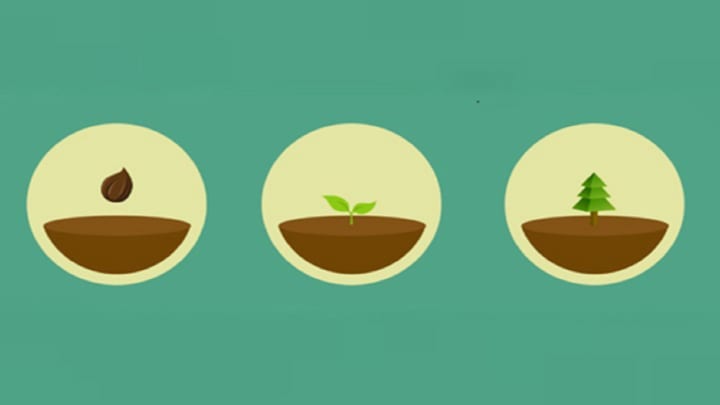
The application "Forest: Stay focused" saves when it is difficult to concentrate. The principle of operation is very simple: you plant a seed from which a tree grows in 30 minutes. During this time, you must not touch the phone (except for calls), otherwise the tree will wither and die. Here you can grow a whole forest, which cannot but motivate.
About the Creator
Sahina Bano
Freelance Blogger and Content Writer. I owe a website and write for my clients.
Keep reading
More stories from Sahina Bano and writers in Motivation and other communities.
4 signs your life is about to change
Change is an integral part of life, but many are very afraid of it. And even those that will lead to the resolution of problems and psychological comfort. How to stop being afraid of change? And how do you know that your life is about to change?
By Sahina Bano4 years ago in Motivation
Delivering Service That Customers Remember Long After the Purchase
Customer service plays a critical role in shaping how people view a brand. Products and prices may attract customers at first, but the quality of service often determines whether they return. In a competitive market where customers have endless options, businesses must go further than simply solving problems. They must create experiences that customers remember and appreciate.
By Apex Service Partners5 days ago in Motivation




Comments
There are no comments for this story
Be the first to respond and start the conversation.