
How TATA Built an Empire Bigger Than Business
150 Years of Innovation, Integrity, and Impact on India & the World

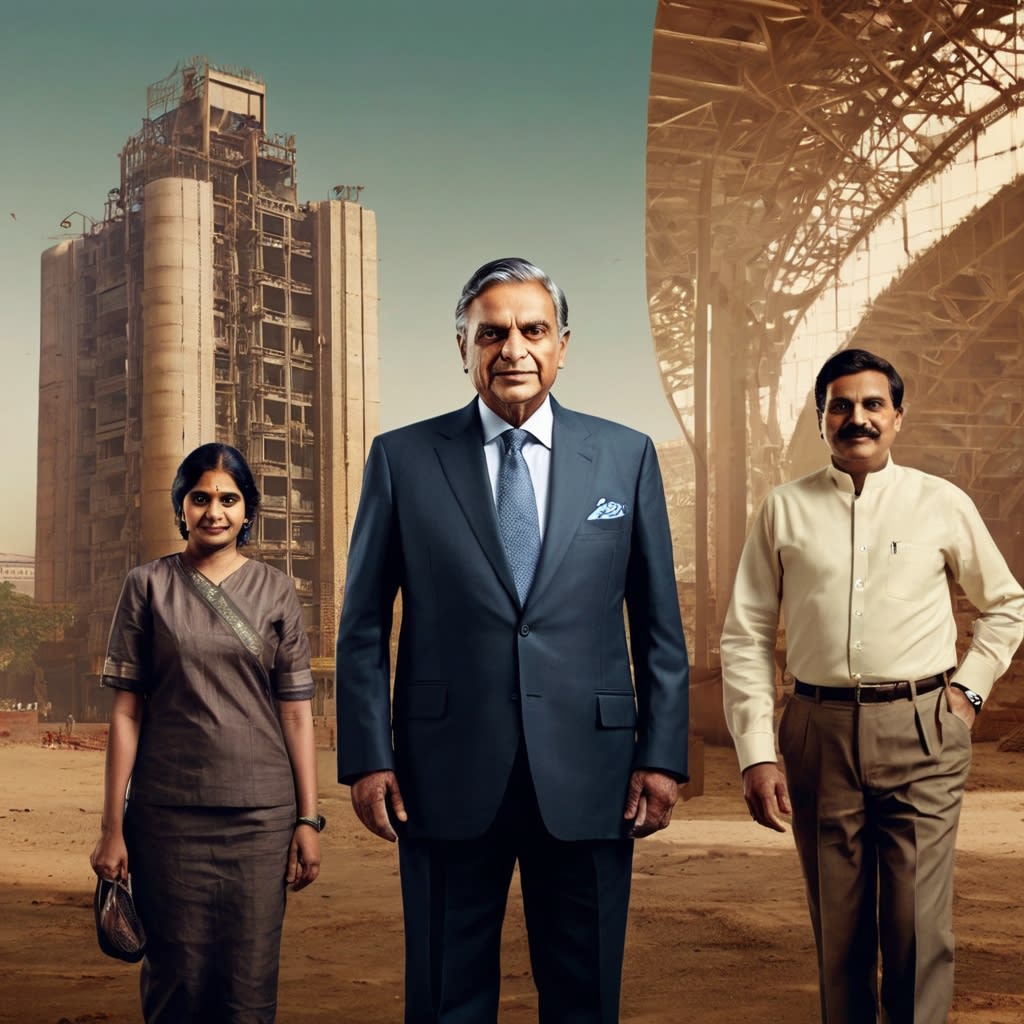
Introduction: A Vision That Transformed a Nation
Over 150 years ago, a humble cotton trader named Jamshedji Tata sowed the seeds of a dream that would one day become the Tata Group—one of the most respected and diversified business conglomerates in the world. This is not just a business success story; it is the story of India's transformation, guided by visionary leadership, groundbreaking innovations, and an unwavering commitment to nation-building.
Jamshedji Tata: Laying the Foundation of Indian Industry
Born in 1839, Jamshedji Tata entered the cotton trading business in 1858 with his father. Within a decade, despite facing numerous challenges, their business flourished. However, Jamshedji was not content with merely trading cotton; he wanted to manufacture textiles in India. In 1877, he established the Empress Mill in Nagpur, launching India's journey into industrial manufacturing.
His revolutionary approach to labor welfare made headlines. He introduced Provident Fund schemes, medical insurance, and celebrated worker achievements through Family Days and Sports Days. These pioneering efforts created a motivated workforce and set global benchmarks for employee welfare—decades ahead of their time.
Building a Self-Reliant India
Jamshedji Tata strongly believed that economic self-sufficiency was essential for India’s independence. He ventured into multiple industries, including strawberry farming in Panchgani and silk farming in Bangalore and Mysore. These ventures not only promoted local industry but also laid the foundation for iconic products like Mysore Silk Sarees.
In 1898, he began constructing the Taj Mahal Hotel in Mumbai, a luxurious world-class hotel that opened in 1903. It became the first building in Mumbai to use electricity and is still regarded as an architectural marvel.
But Jamshedji's most ambitious dream was to establish a steel plant in India. After years of searching for the right location, he identified iron ore deposits in present-day Jharkhand. Sadly, he passed away in 1904, before witnessing the fruition of his dream.
Dorabji Tata: Turning Dreams into Reality
Jamshedji's son, Dorabji Tata, took on the mission of realizing his father’s dreams. He established the Indian Institute of Science (IISC) in 1909, which went on to produce luminaries like Nobel laureate C.V. Raman and contributed to breakthroughs like India's first supercomputer and indigenous aircraft.
In 1912, under Dorabji's leadership, Tata Steel (then TISCO) produced its first steel, and by World War I, it had become the backbone of Britain’s military infrastructure. The city that grew around the plant was named Jamshedpur, and the railway station became Tatanagar.
Dorabji also established Tata Power in 1911, India's first hydroelectric project, which powered mills and businesses across Mumbai.
J.R.D. Tata: Expanding the Horizon
J.R.D. Tata became chairman in 1938 and took the Tata Group to new heights. He launched India's first airline, Tata Airlines (later Air India), in 1932 and became the country’s first licensed commercial pilot.
During World War II, Air India supported the British military, and after independence, J.R.D. played a key role in India’s aviation and defense planning. Despite the nationalization of Air India in 1953, J.R.D. remained focused on industrial development.
He founded Tata Chemicals in 1939, bringing essential chemical manufacturing to India, and launched Lakmé in the 1950s—India’s first cosmetic brand aimed at competing with foreign luxury brands.
He also transformed Tata Engineering and Locomotive Company (TELCO) into Tata Motors, launching the popular Tata 407 truck and eventually dominating the Indian commercial vehicle market.
Ratan Tata: Taking India Global
In 1991, Ratan Tata succeeded J.R.D. Tata and revolutionized the Tata Group. He saw the need to modernize and diversify. One of his first major achievements was launching India’s first indigenously designed car, the Tata Indica, in 1998.
He then turned Tata Consultancy Services (TCS) into a global software giant by shifting its focus from administrative work to high-value IT solutions. The IPO of TCS provided the company with funds to scale exponentially.
In 2009, Ratan Tata introduced the Tata Nano, a revolutionary car priced at just ₹1,00,000. Though the project failed commercially due to its perception as a "cheap car," it taught Tata Motors valuable lessons about Indian consumer behavior.
Going Global: Strategic Acquisitions and Global Presence
Ratan Tata aimed to make Tata a global brand. He led the acquisitions of international companies like Jaguar-Land Rover, British tea brand Tetley, and U.S. coffee brand Eight O'Clock Coffee. These moves made Tata Group a major player on the global stage.
Today, over 50% of the Tata Group’s revenue comes from international markets. With over 100 companies in diverse sectors like IT, automotive, chemicals, hospitality, and steel, the Tata Group contributes significantly to India’s GDP and employment.
Philanthropy and Nation-Building
The Tata Group has always balanced business success with social responsibility. Through the Tata Trusts, it has funded hospitals, schools, and disaster relief efforts. The Group's motto, "Leadership with Trust," reflects its commitment to ethical business practices and nation-building.
From establishing the Tata Institute of Fundamental Research to funding India's space and nuclear programs, the Tata legacy goes beyond profits. It is a testament to how business can be a force for good.
Conclusion: A Legacy That Inspires Generations
From Jamshedji Tata's cotton trading days to Ratan Tata's global vision, the Tata Group has become a symbol of innovation, integrity, and inclusive growth. With a strong foundation in values and a future-focused vision, the Tata legacy continues to inspire millions.
About the Creator
Muhammad waqas
Turning Dreams into Reality – One Story at a Time
I'm passionate about telling real success stories that inspire and empower. From ordinary beginnings to extraordinary achievements, I share journeys of resilience, hope, and transformation.
Keep reading
More stories from Muhammad waqas and writers in Motivation and other communities.
The Fisherman and His Wife
Introduction In the world of timeless fairy tales, few stories are as profound and thought-provoking as The Fisherman and His Wife. Set against the serene backdrop of the deep blue sea, this story explores human nature — our insatiable desire for more and the power of contentment. It’s not just a children’s tale, but a powerful life lesson that remains relevant in every era.
By Muhammad waqas9 months ago in Motivation
How Akshay Dhengale Uses Strategic Social Media to Build Digital Visibility
In the age of constant connectivity, the way individuals and businesses communicate online can define their success. Social media is no longer just a place to post photos or updates—it has evolved into a critical platform for brand identity, audience engagement, and professional growth. For those who understand its nuances, social media becomes more than a tool; it becomes a strategy. This is where professionals like Akshay Suresh Dhengale make a real difference.
By Thetribunemedia4 days ago in Motivation




Comments
There are no comments for this story
Be the first to respond and start the conversation.