
How IoT is Changing the Future of Home Automation
From voice-activated lights to intelligent security systems, discover how the Internet of Things is transforming home automation and redefining comfort, safety, and convenience.

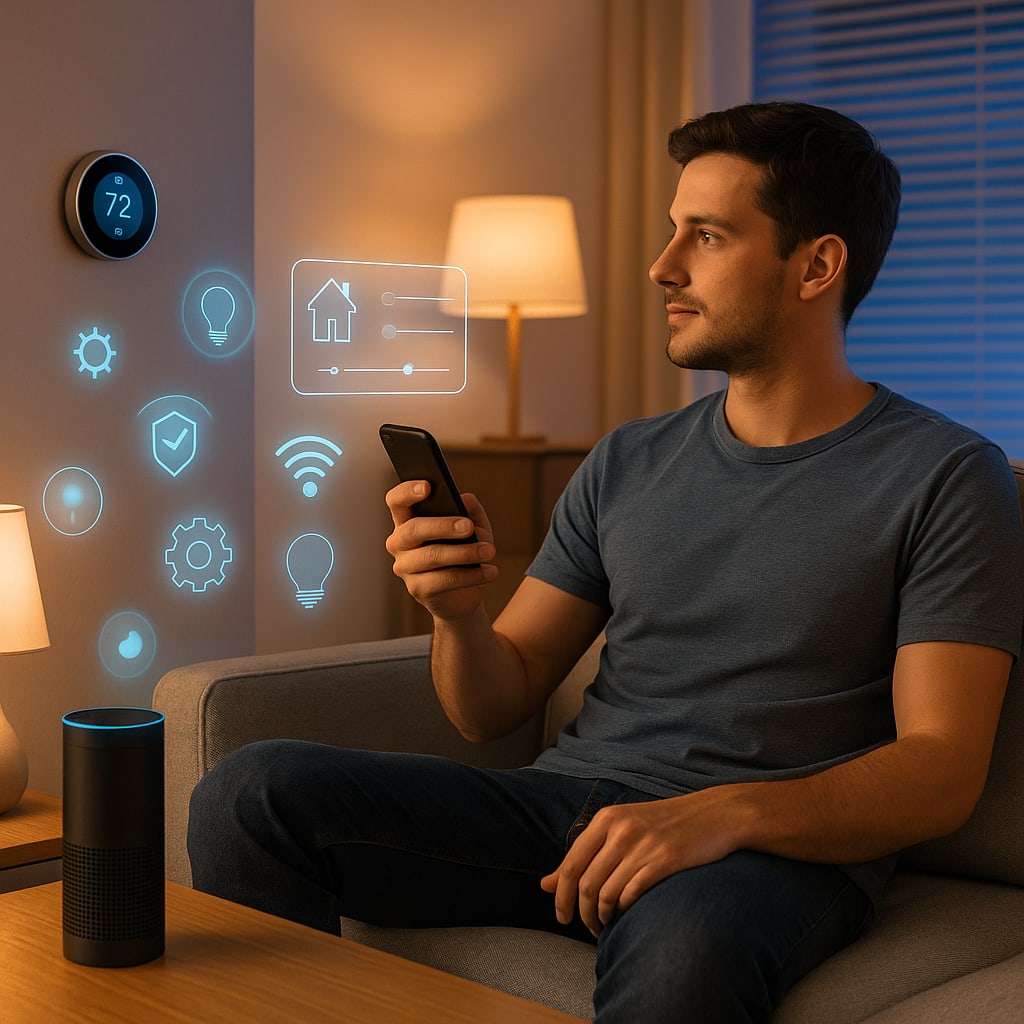
The Smart Home Revolution: How IoT Is Reshaping the Way We Live
BY [ WAQAR ALI ]
In today’s digital era, home automation is evolving faster than ever, and at the heart of this transformation is the Internet of Things, or IoT. This groundbreaking technology refers to a network of physical devices—ranging from smartphones and appliances to security systems and sensors—that communicate and share data with each other via the internet. What was once only imagined in science fiction films is now becoming a reality in households around the world. Modern homes are no longer simply places to eat and sleep. Thanks to IoT, they are becoming intelligent ecosystems that adapt to the daily needs of their occupants. With smart lights that turn on automatically, thermostats that learn your preferences, and appliances that can be controlled remotely, the concept of a “smart home” is becoming less of a luxury and more of a standard. This shift is not only reshaping the way we interact with our living spaces, but also redefining the future of comfort, efficiency, and safety.
One of the most appealing aspects of IoT in home automation is the remarkable convenience it provides. With just a few taps on a smartphone or a simple voice command, users can control nearly every aspect of their home environment. Devices like Amazon Echo, Google Nest Hub, and Apple HomePod act as central control systems, making it possible to dim the lights, adjust the temperature, play music, or even start a robot vacuum cleaner without ever getting up from the couch. These devices learn user behavior over time, enabling them to offer personalized experiences that improve with daily use. For example, a smart coffee maker might learn that you wake up at 7 a.m. and start brewing your favorite blend automatically, while your smart blinds open to let in the morning sunlight. As IoT technology continues to advance, homes are not just becoming automated—they’re becoming intuitive, adapting in real time to match the routines and preferences of the people who live in them.
Security is another area where IoT is making a major impact. Traditional alarm systems and basic door locks are being replaced by smarter, more reliable alternatives. IoT-enabled cameras, doorbells, motion sensors, and smart locks allow homeowners to monitor and protect their property with unprecedented ease. Real-time alerts sent to a mobile device can notify you of suspicious activity, package deliveries, or unexpected visitors. Many smart systems even include facial recognition features and two-way audio, allowing homeowners to speak with someone at the front door from anywhere in the world. You can lock or unlock your doors remotely, check camera footage at any time, and receive alerts if a window is left open. These innovations have brought a new level of peace of mind, especially for families with children, elderly relatives, or frequent travelers. With IoT-driven security, your home becomes not only smarter but significantly safer.
In addition to convenience and security, the IoT is also helping homeowners save energy and money. Smart thermostats, for example, adjust heating and cooling systems based on real-time data and user habits, ensuring that energy isn’t wasted when no one is home. Smart plugs and power strips can cut off electricity to unused devices, and intelligent lighting systems can automatically switch off when a room is empty. Even outdoor watering systems are being transformed with sensors that consider weather forecasts and soil conditions to minimize water usage. These energy-saving features are not just good for the planet—they also lead to noticeable reductions in utility bills. As the global cost of energy continues to rise and climate change becomes an ever-pressing concern, IoT-based solutions offer both economic and environmental benefits. For many homeowners, these advantages are more than enough reason to invest in smart home technology.
Despite its many advantages, the rise of IoT in home automation is not without challenges. As more devices connect to the internet, the risk of cybersecurity threats increases. Hackers could potentially exploit weak points in the system to access private data or control connected devices. This makes secure networks, data encryption, and regular software updates essential. Another challenge is compatibility—since different brands often use different platforms, not all devices work well together. Fortunately, ongoing efforts are being made to create universal standards for smart devices. As 5G networks and artificial intelligence continue to advance, we can expect IoT to become even more reliable, secure, and capable. In the near future, our homes may not only respond to our commands but also anticipate our needs, creating an environment that is truly intelligent, personalized, and proactive. With these innovations, the IoT is not just changing how we live—it’s transforming the very concept of what a home can be.
About the Creator
WAQAR ALI
tech and digital skill
Keep reading
More stories from WAQAR ALI and writers in Motivation and other communities.
The Rise of Low-Code and No-Code Platforms: Revolution or Risk for Developers?
The Rise of Low-Code and No-Code Platforms: Revolution or Risk for Developers? BY [ WAQAR ALI ] How drag-and-drop tools are changing the way we build — and what developers need to do to stay ahead.
By WAQAR ALI8 months ago in Motivation
My Body Is Not a Moral Failure
There are two labels that tend to arrive before people know anything else about me. Disabled. Obese. One is a neurological condition. The other is a number calculated from height and weight. Neither tells the full story of the body I live in.
By Millie Hardy-Simsa day ago in Motivation



Comments
There are no comments for this story
Be the first to respond and start the conversation.