
How Elon Musk become the world richest man
"No Friends, No Limits: Elon Musk’s Path to Greatness"

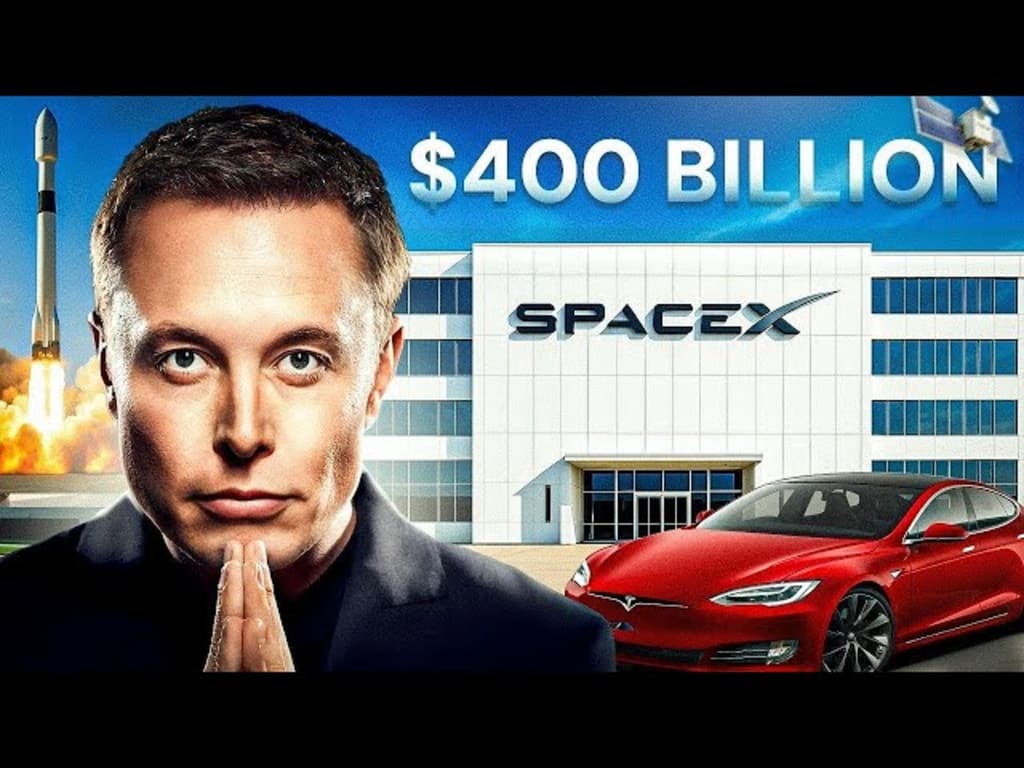
In 1984, while most kids were busy playing video games, a 12-year-old boy was busy making his own game. He was different from everyone else—smart, curious, and full of big ideas. But being different wasn’t easy. He had no friends and was bullied badly. Still, he didn’t give up. That boy was Elon Musk, who is now the richest man on Earth—building rockets, electric cars, and AI tools.
Early Life
Elon was born in 1971 in Pretoria, South Africa. His dad was a mechanical engineer, and his mom was a model and dietitian. As a child, Elon would often go into a “trance,” where he looked lost. Everyone thought he had hearing issues, but it turned out his brain worked like a supercomputer—he was just deeply focused on ideas.
He loved reading science fiction and encyclopedias. Once, when a cousin said she was scared of the dark, Elon said, “Darkness is just the absence of light.” He always spoke in facts, which made other kids avoid him. He was bullied often—once he was beaten so badly he had to be hospitalized.
Till the age of 8, Elon’s life was normal. Then his parents got divorced. Elon chose to live with his dad. At age 10, he saw a computer in a mall and asked his dad to buy it. The computer had only 5 KB of memory and came with a workbook to learn BASIC coding. While most people took six months to complete the book, Elon did it in three days without sleep.
At age 12, he made a space shooting game called Blaster and sold it for $500. That was his first business. As he grew older, Elon felt he was meant for bigger things—and for that, he needed to move to America.
Journey to America
To get to the U.S., he first went to Canada because he had relatives there. At 17, he moved, did odd jobs, and later studied at Queen’s University. After two years, he transferred to the University of Pennsylvania in the U.S.
In 1995, after college, Elon and his brother Kimbal had an idea. Back then, people still used paper maps and phone books to find local businesses. So, they created a website that listed local businesses with maps—something like Google Maps today. They called it Zip2.
Elon coded the site, while Kimbal went door-to-door getting businesses to join. It started small, but soon got big. The company raised millions in funding. In 1999, Compaq bought Zip2 for $307 million. Elon got $22 million.
He could have retired rich. But he was just getting started.
Building PayPal
Elon saw that banks were old-fashioned. He wanted to put all banking—payments, loans, and savings—online. So he started a company called X.com in 1999 and gave $20 to each new user to get sign-ups.
Around the same time, Peter Thiel started PayPal, a similar company. Instead of competing, the two companies merged. Elon became CEO. But many people didn’t like the name X.com, while customers preferred PayPal. Elon was also known for being too strict. While he was on his honeymoon, the board replaced him with Peter Thiel as CEO.
Still, Elon was the biggest shareholder. In 2002, eBay bought PayPal for $1.5 billion. Elon got $180 million from the deal.
Personal Loss and New Dreams
Right after PayPal's success, tragedy struck. Elon lost his baby son at just 10 weeks old. To deal with the pain, he buried himself in work.
As a child, Elon loved rockets. In 2001, he wondered why no one had gone to Mars yet. He learned that NASA had no clear plans. So he decided to start his own space company. He even tried to buy rockets from Russia but failed. That’s when he said, “Let’s build our own rockets.”
And just like that, SpaceX was born in 2002.
Starting SpaceX
Elon wanted to make rockets cheaper and faster. He hired top scientists and built a team. They worked differently—design and build teams worked side-by-side to save time and reduce mistakes. They also made rocket parts in-house to cut costs.
Their first rocket, Falcon 1, was ready in 2006. But it failed three times in a row. Elon had already spent $100 million. They had money left for just one last launch.
At the same time, Elon had joined another mission—Tesla.
Starting Tesla
Gas cars were harming the environment, and Elon believed electric cars were the future. He found a startup named Tesla Motors that was working on an electric sports car called Roadster. Elon joined in 2004 as a lead investor.
Making the car was tough. They used laptop batteries (lithium-ion) instead of old lead-acid ones. But costs kept rising. By 2007, the car cost $100,000 to build, way more than expected.
In 2008, the global financial crisis hit. Investors backed out. Elon sold his luxury cars and homes to keep Tesla alive.
Back at SpaceX, the fourth Falcon 1 rocket launched in September 2008—and finally, it worked. It reached orbit. A few weeks later, NASA gave SpaceX a $1.6 billion contract. SpaceX was saved.
Saving Tesla
Tesla still needed money. Elon personally reached out to investors. On Christmas Eve, they received $40 million in emergency funding. Tesla was saved at the last minute. The Roadster proved that electric cars could be fast, stylish, and long-range.
In 2012, Tesla launched Model S, a luxury electric sedan with a 500 km range and top tech features. It wasn’t just a car—it was like a computer on wheels.
Model S won many awards. Tesla went public, and by 2013, it became profitable.
Now and the Future
Tesla later launched Model X, Model 3, and Model Y. By 2017, it became the world’s most valuable car company. Tesla is now working on self-driving cars. SpaceX is working on missions to Mars.
From being bullied as a child to becoming a tech icon, Elon Musk’s story shows how powerful big dreams and hard work can be. He faced failure, loss, and rejection—but kept going. And that made all the difference.
About the Creator
SophiaSoso
I love you
Keep reading
More stories from SophiaSoso and writers in Motivation and other communities.
7 Psychological Tricks Toppers Use to Learn Smarter (Not Harder)"
We’ve all seen them—those students who seem to effortlessly grasp concepts, always have their notes ready, and somehow manage top grades without pulling all-nighters. No, they aren’t superheroes or born geniuses. Many toppers use psychological techniques—consciously or unconsciously—to enhance their learning. These tricks are backed by cognitive science and can be adopted by anyone to learn more efficiently.
By SophiaSoso11 months ago in Education
Jeffrey Spina A Heart Dedicated to Service and Humanity
In a world where success is often measured by personal achievements and material gains, there are still individuals who quietly dedicate their lives to helping others. These are the people who remind us that compassion, service, and community spirit still hold tremendous value. One such individual is Jeffrey Spina of Middletown in Orange County, United States, a man whose actions demonstrate what true commitment to community service looks like.
By Jeffrey Spina7 days ago in Motivation



Comments
There are no comments for this story
Be the first to respond and start the conversation.