
How Domino's Went from $14 to Billions!
How Domino's Went from $14 to Billions!

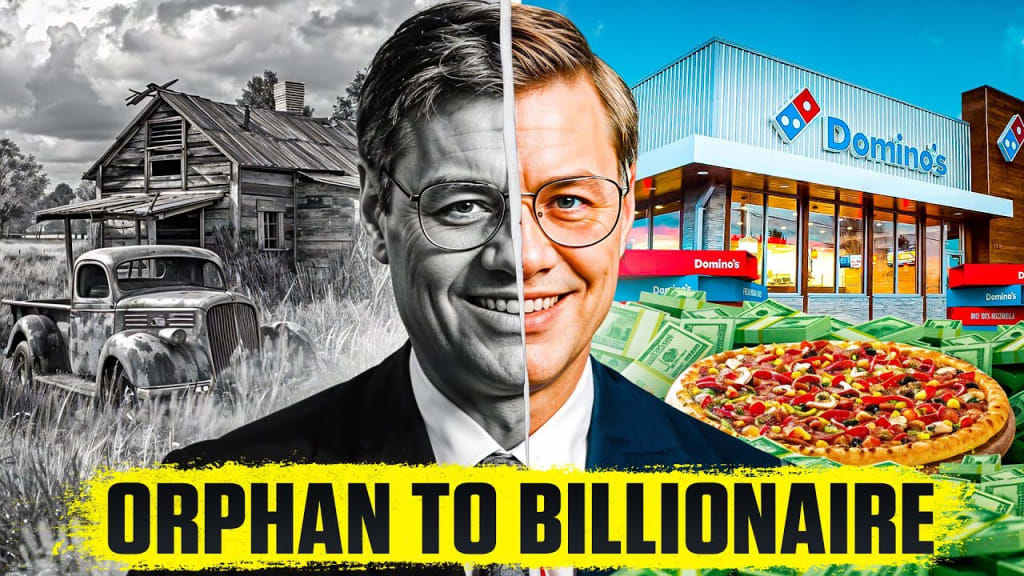
In 1960, when Domino's Pizza first opened, the total sales for the whole day were just $14. But who would have thought that a boy who used to sell newspapers, a child with no father’s support or mother’s love, would one day become the owner of more than 18,000 pizza outlets? However, this victory against all odds wasn’t a simple or straightforward journey.
The pizza store started with borrowed money and went through countless hurdles along its path to growth. Sometimes, all the saved money would be lost to fraud; sometimes, he faced betrayal from partners. And to make things worse, even the name under which the store was opened didn’t legally belong to him. He faced lawsuits worth millions of dollars and even a disgusting viral video that damaged the reputation he had built over years.
This is the story of Tom Monaghan, who started from zero and built a billion-dollar empire despite all these struggles.
Born on March 25, 1937, in a middle-class family in Michigan, Tom’s father was a truck driver and his mother worked at a nursing school. At the age of just 4, Tom’s father passed away. Unable to support her children, Tom’s mother handed Tom and his brother Jim over to the government for seven years. Tom grew up in foster care and boarding schools, never really experiencing parental support or love.
He struggled even to pass high school, but finally got admission to the University of Michigan. Unfortunately, he didn’t have enough money to pay the tuition. Life kept throwing obstacles at him. Eventually, he started delivering newspapers door-to-door, where he learned the basics of business and saved whatever little he could. But soon, even those savings were stolen in a fraud.
In 1959, his brother Jim came up with an idea that would change their lives. Jim worked at the post office and also part-time at a restaurant owned by a man named Dominic DeVarti. One of Dominic's restaurants was shut down, and he was ready to sell it cheaply. He demanded $500 for the restaurant, but the catch was a $2000 debt that the buyer had to repay. Tom and Jim borrowed $900 from the post office and bought the restaurant from Dominic, keeping its name and getting recipes and sauce-making instructions from him.
They planned to open the restaurant from 5 PM to midnight, allowing Jim to continue his post office job and Tom to attend university. The store officially opened on December 9, 1960, and made $14 in sales on the first day. Initially, they had no phone, so customers had to walk in themselves. Later, they hired two factory workers on commission for deliveries.
After a few months, their daily sales went up to $70, mainly due to a nearby college. But when the semester ended, sales dropped to $28. Jim wasn’t much involved due to his postal job, which led to disputes between the brothers. Eventually, Jim left the restaurant just six months after it opened. In exchange for his 50% share, Tom gave him the Volkswagen car they had bought for deliveries. Jim left happily, not realizing he had just made a huge loss.
Now Tom was the sole owner but had to work full-time, which meant his dream of attending university was once again unfulfilled. He practically lived in the restaurant, surviving on burnt pizzas. Gradually, sales improved. He hired two helpers and started earning $7 profit daily. He visited other pizza stores in his free time and did market research. An Italian restaurant owner shared his secret sauce recipe, which, when used, significantly boosted sales.
Someone suggested Tom open another branch, but he needed a partner to run the first one. He found someone named Jim Gilmore, a well-known restaurant operator. They agreed that Gilmore would get 50% of the business for $500 and would manage the first store. But Gilmore didn’t pay the $500, and Tom agreed anyway due to urgency. Gilmore never paid, yet became 50% partner.
Tom opened a second branch, leaving the first one to Gilmore. Soon, Tom realized his mistake. The first branch's quality and sales declined, and he suspected Gilmore was stealing from the cash drawer. Gilmore had already gone bankrupt twice due to his drinking habits. Their partnership agreement cleverly ensured that Gilmore only shared in profits, while all losses had to be covered by Tom.
Tom tried to end the partnership, but legal barriers prevented him. Eventually, he went to court, where the partnership ended—but the damage was done, and Tom had to bear all the losses.
Then came another blow—from Dominic DeVarti himself. When he saw Tom operating multiple restaurants using his name, Dominic got jealous and called Tom, asking him to stop using the name. This was a massive shock for Tom, who had worked hard to promote the brand name. Someone advised him to choose a name similar to "Dominic" so it would still appear nearby in phone books.
After much brainstorming, a pizza delivery boy suggested the name "Domino’s." Tom liked it and adopted it. The logo was designed using a domino tile, symbolizing their three stores at the time.
Tom focused on improving the recipe and making the business profitable. A turning point came when most of the staff took leave one day. Tom removed extra items from the menu and served only pizza—which turned out to be a very profitable day. He realized a smaller menu meant less complexity and more profit. He kept only two pizza sizes: 8-inch and 12-inch.
He also noticed that offering dine-in required more staff and expenses. So, he introduced pizza boxes and heated delivery pouches, revolutionizing pizza delivery. Domino’s was the first to introduce these heated pouches.
While Pizza Hut spent money on dine-in, Domino’s kept pricing simple and focused on delivery, achieving higher profit margins. By 1967, Tom had been in business for 7 years and decided to start franchising. New stores were opened near colleges and military bases. Instead of expensive media ads, he advertised in college newspapers.
Within two years, Domino’s opened 32 franchises. Despite initial quality issues, they were resolved. By the end of 1969, there were 42 stores in Michigan, Vermont, and Ohio. By 1978, Domino’s had over 200 outlets across the U.S.
But then a new challenge emerged. In 1980, Domino’s had become a household name for fast delivery. To stay ahead, they launched a campaign: if the pizza wasn’t delivered in 30 minutes, it was free. This skyrocketed sales. But in 1989, a 17-year-old delivery boy died in a crash while rushing a delivery.
Media blamed Domino’s. It was revealed that in a single year, 20 fatal accidents had occurred due to their fast delivery policy. In another case, a driver ran over a couple—killing the wife—and Domino’s had to pay $32 million. In 1993, another crash caused spinal injuries to a girl, costing Domino’s $78 million. The campaign was eventually scrapped due to negative attention.
Despite that, controversies didn’t stop. In 2009, a video went viral showing two Domino’s employees making pizzas in an unhygienic way—sneezing on them and putting fingers in their noses. They later said it was a prank and no pizzas were sent to customers. But the damage was done.
Still, Domino’s survived. Today, it has 18,848 outlets worldwide—145 more than Pizza Hut. Domino’s generates nearly four times the revenue of Pizza Hut, despite having far fewer employees (13,500 vs. 350,000). Domino’s bakes 3 million pizzas every day, and one of its chefs, Zagros Jaff, has twice set the world record for fastest pizza-making—three large pizzas in just 70 seconds.
About the Creator
Keep reading
More stories from Jehanzeb Khan and writers in Motivation and other communities.
Steve Jobs and the Philosophy That Made Him a Legend
In 1972, Steve Jobs saw his girlfriend with another man. But instead of reacting with anger or jealousy, he did something unexpected — he befriended the man. That man shared a philosophy that not only changed Steve Jobs’ life, but gave both of them a mindset that would later teach them how to influence others. This thinking became a key factor in their journey to success.
By Jehanzeb Khan8 months ago in Motivation




Comments (2)
Incredible storytelling — I was hooked from $14 to billions. The resilience, strategy shifts, and sheer grit behind Domino’s rise are inspiring. A masterclass in turning setbacks into stepping stones.
nice bro