
From Track Failure to Global Icon: How Phil Knight Built Nike
How Phil Knight turned rejection into a $150 billion brand
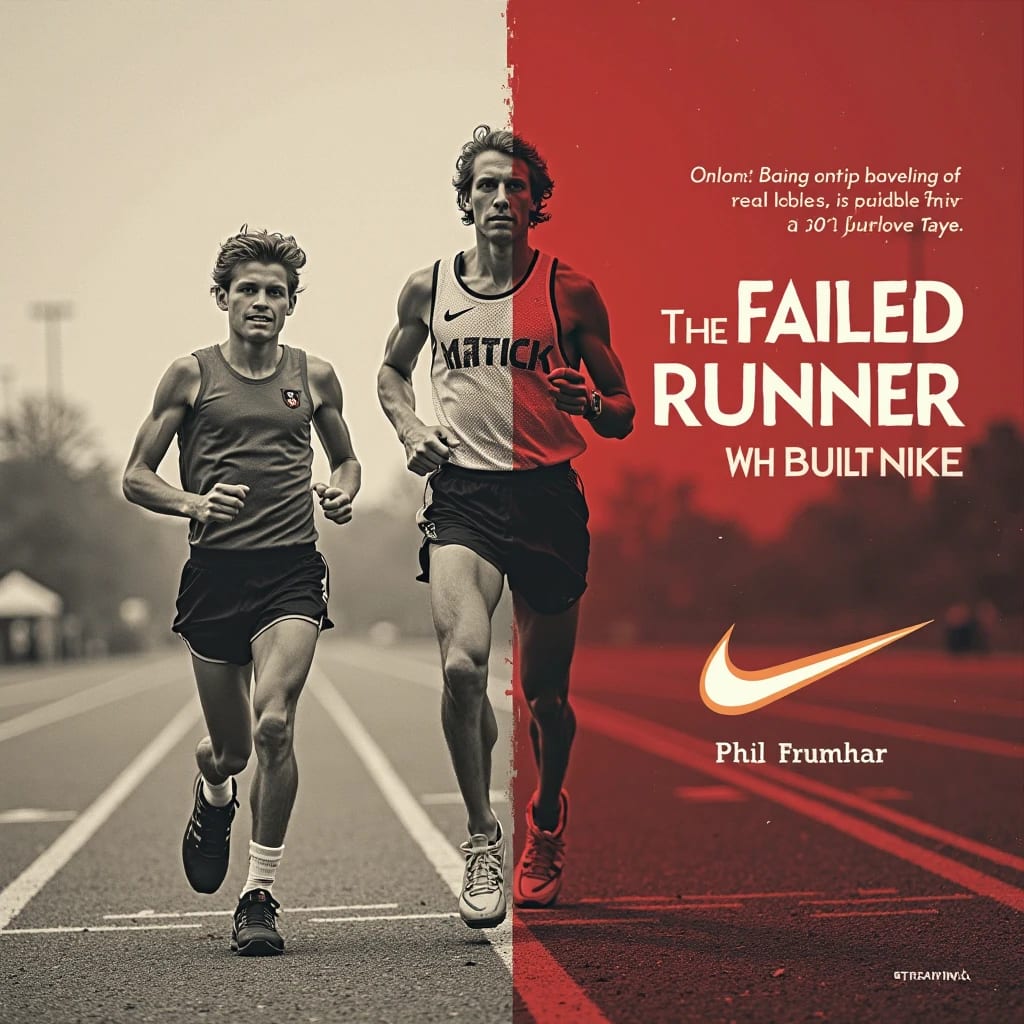
In college, Phil Knight wasn’t winning medals. He wasn’t setting records. He was just another runner on the University of Oregon track team—good, not great. Overshadowed by faster teammates and barely noticed at national meets, he quietly accepted the truth: he would never be a champion.
But failure on the track didn’t mean the race was over.
Knight’s destiny wasn’t to break world records—it was to break conventions. And in doing so, he would build Nike, the most iconic sports brand in the world.
From Track to the Edge of the World
Phil Knight grew up in Portland, Oregon, a shy and reserved kid who loved sports but lacked star-level talent. After college, he attended Stanford Business School, where he wrote a paper that would unknowingly map out his future. His thesis? That Japanese running shoes could challenge the dominance of German brands like Adidas and Puma in the U.S.
To everyone else, it was just a paper. To Phil, it was a blueprint.
After graduating, he traveled to Japan with no real plan and little money. There, in 1963, he talked his way into a meeting with executives at Onitsuka Tiger—a little-known Japanese shoe company. With no company, no warehouse, and no employees, he pitched himself as a distributor for the American market.
Miraculously, they said yes.
When Phil returned to Oregon, he partnered with his former track coach, Bill Bowerman, who had always been obsessed with making better, lighter shoes for runners. Bowerman saw promise in the Onitsuka models and even began suggesting design tweaks. The duo founded a small company called Blue Ribbon Sports and started selling shoes out of the trunk of Knight’s Plymouth Valiant.
It was as scrappy as it gets. No marketing team. No office. Just passion, long drives to track meets, and a dream.
The Waffle Iron Moment
Bowerman wasn’t just a coach; he was a tinkerer. Always looking for ways to give his athletes an edge, he once poured rubber into his wife’s waffle iron, trying to create a new kind of shoe sole—one that was lightweight yet grippy. The result? The famous waffle sole that would become one of Nike’s earliest breakthroughs.
Knight believed in Bowerman’s experiments, and together, they kept selling, growing, and refining. Still, it wasn’t easy. Their deal with Onitsuka soured, and by the early 1970s, they were on the verge of collapse.
That’s when they decided to go independent.
Enter: Nike
In 1971, needing a new name and a new identity, they turned to a small team of employees. One of them, Jeff Johnson, had a dream about the Greek goddess of victory: Nike. The name stuck.
As for the logo, they paid a local graphic design student, Carolyn Davidson, $35 to create a simple swoosh. Knight didn’t even like it at first. “Maybe it’ll grow on me,” he said.
It did.
Nike officially launched with the waffle-soled "Nike Cortez," just in time for the running boom of the 1970s. Americans were jogging, training, and looking for shoes—and Nike delivered. The company grew fast, riding a wave of cultural and athletic momentum.
But growth came with pressure. Nike faced lawsuits, financial strain, and the stress of scaling globally. In his memoir Shoe Dog, Knight describes nights filled with anxiety, doubt, and near-bankruptcy. It wasn’t a smooth ride—it was a constant hustle.
Yet he never quit.
The Brand of Champions—Made by an Underdog
Nike’s turning point came in 1984 with a bold bet: a rookie NBA player named Michael Jordan.
At the time, Jordan preferred Adidas. But Nike offered him his own line—Air Jordan—and backed it with a rebellious, stylish marketing campaign. The gamble paid off. Sales exploded. Jordan became a global icon, and Nike transformed from a scrappy shoe company into a cultural force.
From there, the brand aligned itself with greatness—Tiger Woods, Serena Williams, Kobe Bryant—but it never forgot its roots: the misfits, the underdogs, the ones who weren’t supposed to win.
Phil Knight had once been that underdog. He never stood on a podium. But in building Nike, he helped millions chase greatness—even if, like him, they started out behind.
Lessons from a Failed Runner
Phil Knight didn’t win his race on the track. But he won something bigger: the respect of dreamers, the loyalty of athletes, and the admiration of entrepreneurs worldwide.
His story is proof that failure isn’t fatal. Sometimes, the people who fall short in one arena are meant to build a whole new one.
Nike's slogan says it best: Just Do It.
Because Phil Knight did.
About the Creator
Keep reading
More stories from Nauman Khan and writers in Motivation and other communities.
The Magic Pot
—A Village Farmer’s Life Changes Forever, But Not the Way You Might Expect— In a quiet village nestled between green fields and sleepy hills, there lived a farmer named Ramu. He wasn’t rich, but he wasn’t bitter either. With calloused hands and a soft heart, Ramu worked his land from sunrise to sunset, growing just enough food to keep his belly full and his spirit hopeful.
By Nauman Khan9 months ago in Motivation
Why Motivation Is the Secret Weapon Behind Every Long-Term Success Story
Success is often portrayed as the result of extraordinary talent, perfect timing, or fortunate circumstances. In reality, the foundation of long-term achievement usually lies in something far less glamorous but far more powerful. Motivation is the quiet force that pushes people to continue working when enthusiasm fades and obstacles appear. Without motivation, even the most talented individuals eventually lose direction. With it, ordinary people can accomplish extraordinary things.
By Lukáš Hrdličkaabout 5 hours ago in Motivation




Comments
There are no comments for this story
Be the first to respond and start the conversation.