
Emotional Intelligence: The Skill That Sets You Apart
A Simple Story with a Powerful Message One regular day at the office, Sami was focused on completing a crucial report when his colleague, Khalid, stormed in—frustrated and loud. He accused Sami of delaying their shared project. The tension was thick, and others in the office began to notice.
A Simple Story That Says a Lot
On a busy Monday morning, Sami was focused on finalizing an important report due later that day. Suddenly, his colleague Khalid burst into the room, visibly upset and raising his voice:
"You're the reason this project is delayed! You ignored my messages and responsibilities!"
Many people would respond defensively or even lash out in return. But Sami paused, looked Khalid in the eye, and said calmly:
"I can see you're upset, Khalid. Let's sit down and go through this together. Maybe there's something I missed."
That moment wasn't about staying quiet or avoiding conflict—it was a sign of high emotional intelligence.
What Is Emotional Intelligence?
Emotional Intelligence (EI) is the ability to recognize, understand, and manage your own emotions while also recognizing and positively influencing the emotions of others.
Unlike IQ, which measures your analytical and cognitive abilities, EI deals with how well you manage relationships, navigate social situations, and respond to emotional challenges.
Whether in the workplace, at home, or in social settings, emotional intelligence is often the real reason behind success, resilience, and meaningful human connection.
The Five Core Elements of Emotional Intelligence
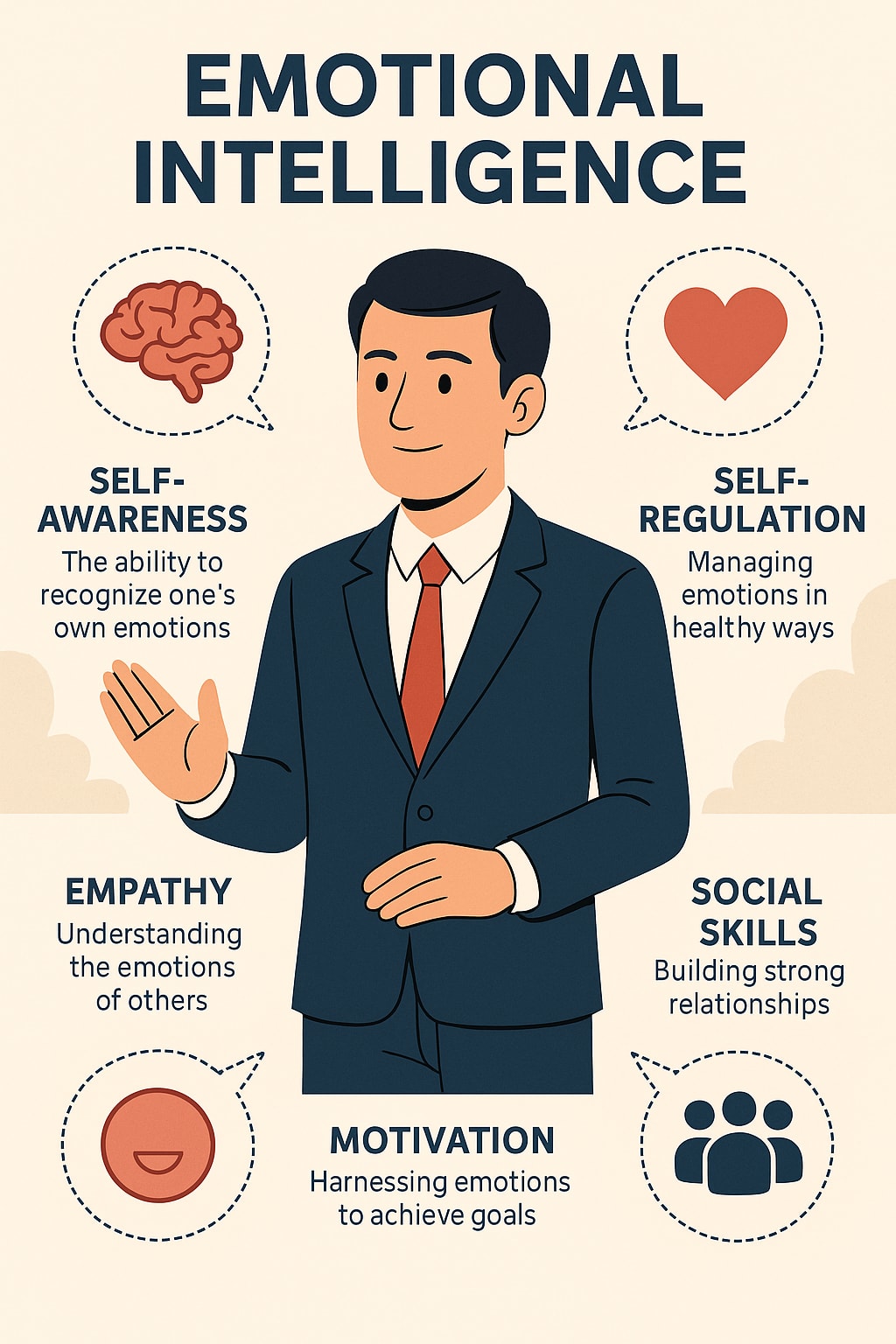
According to psychologist Daniel Goleman, emotional intelligence consists of five key components:
1. Self-Awareness
This means understanding your own emotions—why you feel the way you do and how those feelings influence your actions and decisions.
2. Self-Regulation
The ability to manage your emotional reactions, especially in stressful or heated situations. It's not about suppressing feelings, but responding thoughtfully rather than impulsively.
3. Motivation
People with high emotional intelligence are often driven by inner purpose, not just external rewards. They stay focused and optimistic, even when faced with obstacles.
4. Empathy
Understanding and sharing the feelings of others. Empathy allows you to see things from someone else’s perspective, and it’s critical for healthy communication and collaboration.
5. Social Skills
The ability to build relationships, communicate effectively, manage conflict, and influence others in a positive way.
Why Emotional Intelligence Matters
In today’s world, technical skills alone are no longer enough. Emotional intelligence plays a vital role in how we manage stress, resolve conflict, inspire others, and work as part of a team. Here's why it's essential:
It improves your interpersonal relationships.
It helps you communicate clearly and confidently.
It makes it easier to navigate workplace challenges.
It boosts mental and emotional well-being.
It makes leaders more effective and compassionate.
Studies show that people with higher emotional intelligence often perform better professionally and enjoy more satisfying personal lives.
How to Improve Your Emotional Intelligence
The good news is that emotional intelligence is not fixed—it's a skill that can be developed through practice and awareness. Here are some practical ways to strengthen it:
1. Practice Daily Self-Reflection
At the end of the day, ask yourself: What did I feel today? Why did I react the way I did? Could I have responded better?
2. Become an Active Listener
Focus fully when someone is speaking to you. Avoid interrupting, and try to understand their feelings—not just their words.
3. Watch Nonverbal Cues
Body language, tone of voice, and facial expressions often reveal more than spoken words. Learn to observe these signals—in others and in yourself.
4. Pause Before You React
If you feel angry or stressed, take a moment before responding. A deep breath or short break can help you regain control.
5. Seek Honest Feedback
Ask close friends or colleagues how you handle stress, conflict, or communication. Their insights can help you grow.
Real Impact: A Better You, A Better Life
After the initial conflict, Sami and Khalid were able to sit down, talk through their misunderstanding, and improve their working relationship. That wouldn't have happened if Sami had reacted emotionally or defensively.
This story reflects a simple truth: Emotional intelligence creates space for clarity, compassion, and connection.
In a world that often emphasizes speed and competition, EI reminds us that real strength lies in understanding ourselves and others. It’s the quiet skill that transforms ordinary interactions into opportunities for growth and deeper human connection.
Final Thoughts
Whether you're a leader, a student, a parent, or a professional, emotional intelligence is the tool that helps you face challenges with grace, inspire others with empathy, and live with greater awareness and resilience.
And the best part? It’s a skill you can start developing today.
What is emotional intelligence
Benefits of emotional intelligence
Improve emotional intelligence
Emotional intelligence at work
Self-awareness and empathy
Emotional intelligence examples
About the Creator
Keep reading
More stories from Osama and writers in Motivation and other communities.
The Dying Embers of Success: Redefining the Journey
As Ethan made his way onto the stage, there was a palpable sense of anticipation in the air. His tired face was illuminated by the spotlight, and he had deep forehead lines that were the result of years of hard work and sacrifice. This was his moment, the culmination of a lifetime's worth of hopes, dreams, and an unwavering determination to succeed.
By Osama3 years ago in Motivation
Growing Strong Founders Through Mentorship Networks
Starting a business takes courage, focus, and steady support. Many new founders have bold ideas but lack guidance. That is why mentorship networks matter so much. These networks connect new entrepreneurs with people who have real business experience. As a result, founders learn faster and avoid common mistakes. They also gain confidence because they do not face challenges alone.
By Greg Warnock7 days ago in Motivation




Comments
There are no comments for this story
Be the first to respond and start the conversation.