
Burn the Map
The strange, lonely path to a fortune no one thought possible

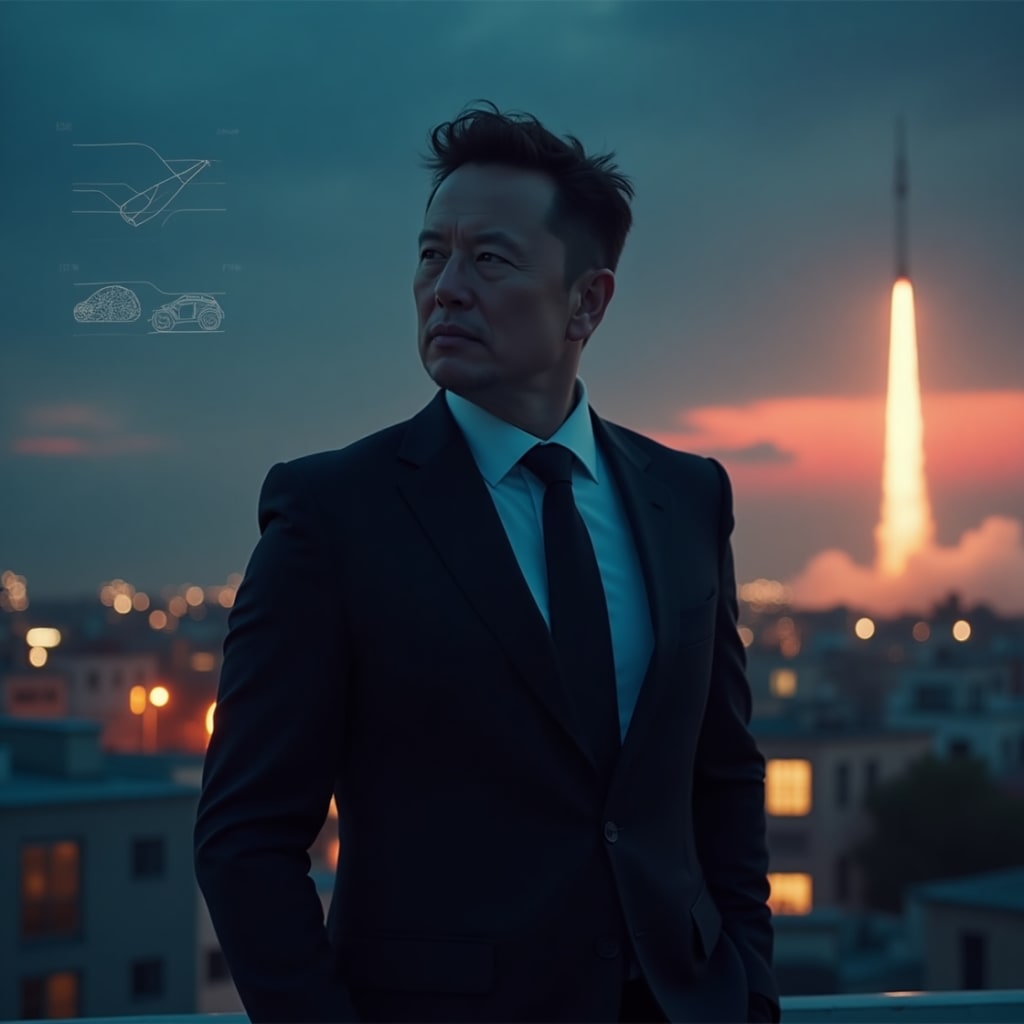
He made his first million by refusing to follow a map.
Not a literal one, but the kind everyone else clings to—the plan that says: get a job, climb the ladder, retire quietly. Elon Musk didn’t want the ladder. He wanted to build the rocket that flew over it.
People often ask, “How did Elon Musk become a millionaire?” But that’s the wrong question.
The better one is: What kind of person becomes a millionaire by selling a dream nobody believed in—then risks it all to chase another one?
---
Elon was 17 when he left South Africa with nothing but a secondhand suitcase and a sky full of questions. Canada came first. Then the U.S. California. Silicon Valley.
While most were partying, he was studying physics and economics—two languages he believed could decode the universe. He lived in a tiny apartment, slept on a futon, and coded at night. He didn’t want comfort. He wanted answers.
His first company wasn’t flashy. It was Zip2—basically a digital map and business directory, long before Google Maps or Yelp. It was 1996. The internet was still a curiosity, not a world. He convinced newspapers they needed it.
At 27, Compaq bought Zip2 for $307 million. Elon walked away with $22 million.
---
He could have stopped there.
He didn’t.
Instead of buying mansions or yachts, he poured his money into X.com—a strange, risky idea to put banking on the internet. Everyone laughed. Banks don’t live in browsers, they said. It’s not safe. It’s not smart.
But Elon didn’t build for safety. He built for what comes next.
X.com would merge with another startup, Confinity, and eventually become what we now know as PayPal.
In 2002, eBay bought PayPal for $1.5 billion.
Elon’s cut? $180 million.
Millionaire? He was far beyond that now.
---
But here’s where the story changes.
He could have retired. Lived in luxury. Bought an island and named it after himself.
Instead, he invested almost all of his money into three things:
A rocket company (SpaceX)
An electric car company (Tesla)
A solar energy company (SolarCity)
He wasn’t trying to get richer. He was trying to save the future.
And in doing so, he nearly lost everything.
---
In 2008, both SpaceX and Tesla were weeks away from bankruptcy. Rockets had exploded. Tesla’s early cars weren’t profitable. Investors called him reckless. The media mocked him. Some labeled him a fraud.
He borrowed money to pay rent.
He cried during interviews.
But he never stopped.
That year, SpaceX finally succeeded. The Falcon 1 reached orbit. NASA took notice. Funding came. Tesla survived, barely.
From there, everything changed.
SpaceX became the first private company to dock with the International Space Station. Tesla redefined the auto industry. SolarCity merged with Tesla Energy. Then came Neuralink, Starlink, The Boring Company, and more.
But none of it happened because he was chasing millions.
---
It happened because he kept burning the map.
---
What no one tells you about becoming a millionaire is this: it’s not always about money.
It’s about vision.
The kind that feels more like a burden than a gift.
The kind that makes you question your sanity at 3 a.m.
The kind that refuses to shut up, even when the world does.
Elon Musk became a millionaire not just because he built businesses, but because he didn’t stop building, even when the first million arrived.
That’s the twist.
For him, the money was never the reward.
The risk was.
---
Reflection:
We admire people like Musk because they represent what most of us are too afraid to do—bet everything on a dream no one else can see.
He didn’t follow the path.
He paved over it with rocket fuel and asked: “What if we go farther?”
---
About the Creator
Muhammad Riaz
Passionate storyteller sharing real-life insights, ideas, and inspiration. Follow me for engaging content that connects, informs, and sparks thought.
Keep reading
More stories from Muhammad Riaz and writers in Motivation and other communities.
💰 From Bedroom to Billions: The Story of MrBeast
"I was 13, broke, and obsessed—with numbers." That’s how Jimmy Donaldson, the world now knows as MrBeast, described the beginning of a journey that would not only transform his own life but also deeply impact the lives of millions across the globe. No TV show, no famous parents, no big budget. Just a boy with a cracked phone screen, a slow laptop, and a wild dream in a small room in Greenville, North Carolina.
By Muhammad Riaz8 months ago in Motivation

Comments
There are no comments for this story
Be the first to respond and start the conversation.