

Tucked away in a neglected corner of rural Alabama, behind an aging Dollar Store with a sputtering neon sign, lived a quiet teenager named Emily. She was invisible to most—no school accolades, no social media following, no shining moments. Just a girl clinging to more than survival, daring to dream in silence.
At just sixteen, Emily had already endured more than many twice her age. Her mother had vanished into addiction. Her father? Gone since she was five. She called a rusted-out trailer behind the store home, scraping by on a part-time job stocking shelves and sweeping floors. Her meager earnings barely paid for cheap food and fuel for a failing generator.
But Emily held onto a secret.
Each night, after the store closed, she would sit behind the building with an old, battered laptop salvaged from a dumpster two years earlier. Its screen was scratched, keys were missing, and duct tape held it together—but to her, it was gold. She connected to the store’s faint Wi-Fi signal and taught herself everything she could—web development, graphic design, business concepts—whatever free knowledge she could find.
No one had ever told Emily she could dream. But she believed anyway.
On lonely nights, she'd bury her face in a worn hoodie, listening to her classmates laughing from a nearby diner. She had none of what they did—no trendy clothes, no car, no cheering parents—but she had something else. Determination.
Then came a moment disguised in routine.
While organizing shelves one summer evening, she overheard a customer mention a local web design competition sponsored by a nearby tech firm. The prize? $2,000 and a mentorship with experienced designers.
Her heart raced. She had no fancy software—only open-source tools on her broken laptop. But deep down, she knew this could be the opportunity she'd been waiting for.
During the next three weeks, Emily worked harder than she ever had before. After every shift, she worked late into the night—sacrificing sleep and meals to build a website from scratch. Her concept? A resource hub for underserved youth offering access to scholarships, shelters, food banks, and free online education. She named it HopeLink.
With trembling hands, she submitted her entry just before the deadline. “Even if I don’t win,” she whispered, “at least I showed up.”
Two weeks passed.
Then one Monday morning, as she restocked soup cans, her manager called her name. “Emily, someone’s here to see you.”
A man in a gray suit and sneakers stood near the entrance, holding a laptop and smiling. “Emily Carson?” he asked.
She nodded, unsure whether to smile or step back.
“I’m from Skylight Innovations,” he said. “You didn’t just win the contest—you impressed the entire panel.”
The soup can dropped from her hands.
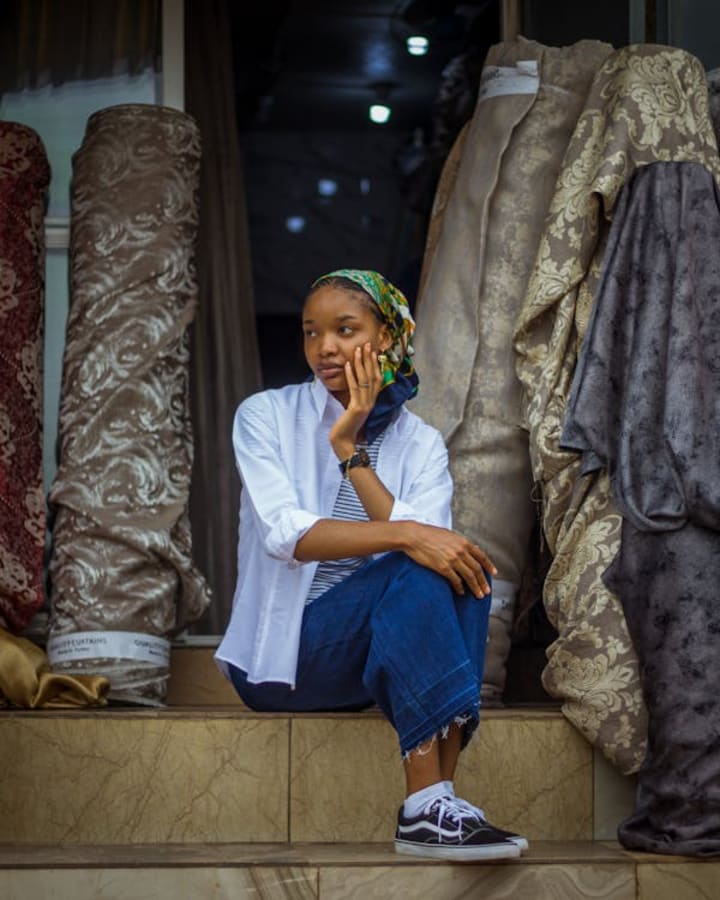
He grinned. “You built something with real impact. We want to feature your work. And we’d like to offer you a full mentorship—and a scholarship into our sponsored tech program.”
Tears welled in her eyes. For so long, she had lived in the shadows behind that Dollar Store—unnoticed, unheard. But today, the world finally saw her.
Five Years Later
On the grand stage of a national tech conference in San Francisco, Emily Carson stood proudly. Her platform, HopeLink, had grown across 32 states, empowering over a million youth and families. She wore a smart blazer—but still kept the faded bracelet her mother once gave her.
“I’m not a genius,” she told the crowd. “I’m just someone who refused to let her past decide her future.”
Behind the standing ovation and the spotlight, Emily still carried the spirit of the girl who once sat behind a Dollar Store—cold, hungry, determined, and full of hope.
Because sometimes, the brightest lights are born from the deepest darkness.y
About the Creator
Keep reading
More stories from Shaheen Khan and writers in Motivation and other communities.
Title: Marian Ilitch
In the heart of Detroit during the mid-1900s, a young woman named Marian Bayoff dreamed of a life far beyond the familiar streets and humble walls that surrounded her. Born in 1933 to Macedonian immigrant parents, Marian was raised in a home where values like hard work, humility, and staying true to one’s roots were more important than wealth.
By Shaheen Khan7 months ago in Motivation
Laziness
There is a voice in my head that does not have multiple sclerosis. It remembers who I was before. It remembers the pace I used to keep, the hours I used to work, the way I could move through a day without calculating the cost. It compares that version of me to who I am now and draws the wrong conclusion.
By Millie Hardy-Sims6 days ago in Motivation
Full Moon
There are days when it feels like my body is arguing with itself. Multiple sclerosis already demands negotiation. Fatigue shapes my energy. My legs can feel unreliable. Sensations appear without warning. Some days they feel heavy. Other days they feel like they are vibrating from the inside, a constant electrical hum that no one else can see.
By Millie Hardy-Simsabout 4 hours ago in Motivation


Comments
There are no comments for this story
Be the first to respond and start the conversation.