
Be the Change You Wish to See in the World
The Power of Personal Responsibility in Creating Lasting Impact

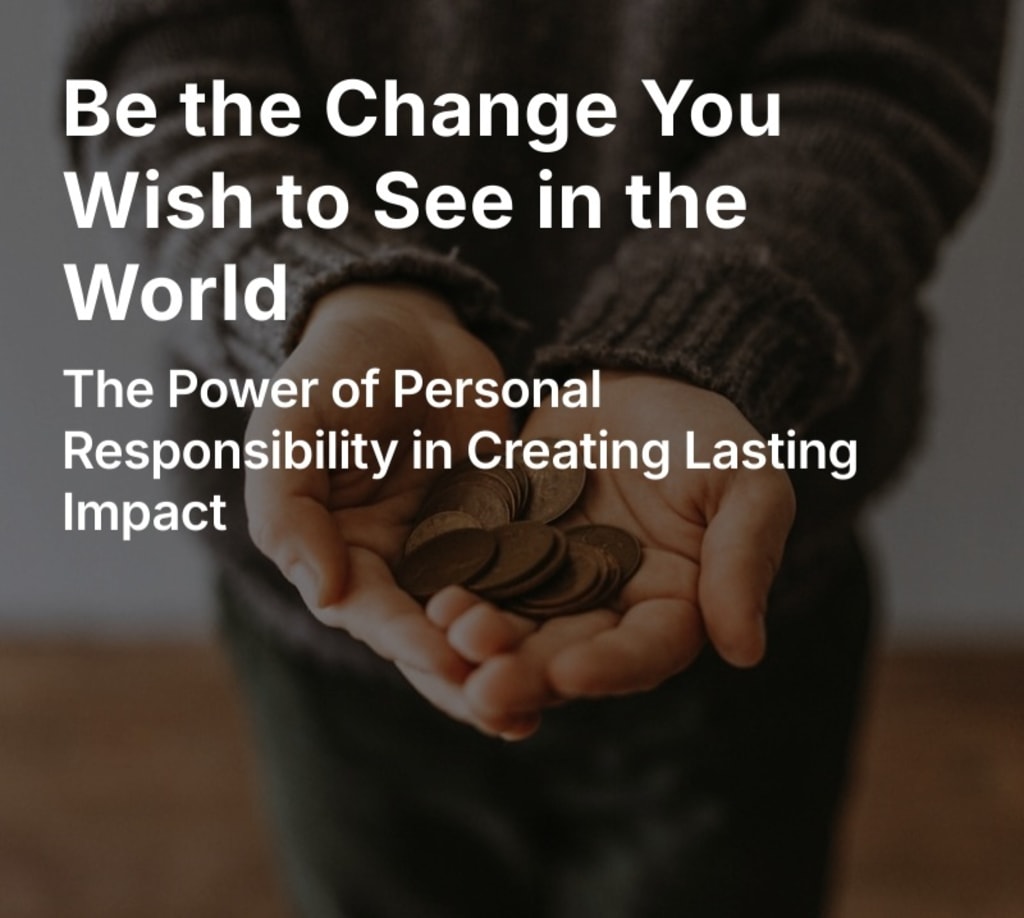
Mahatma Gandhi’s words, “You must be the change you wish to see in the world,” have resonated through generations, inspiring countless individuals to take responsibility for the transformations they desire in society. This simple yet profound statement carries an enduring truth: if we want the world to improve, we must begin with ourselves. Too often, people look outward, expecting governments, organizations, or leaders to create change. However, true progress starts within, as our actions, attitudes, and behaviors influence those around us.
Change is a natural part of life, but it does not happen by accident. It requires intentional effort, courage, and self-reflection. Many people hope for a better society, where kindness, honesty, and justice prevail. Yet, how many take the first step by embodying those qualities themselves? When Gandhi spoke these words, he was emphasizing personal responsibility. He understood that large-scale transformation is built on individual contributions. A world filled with integrity begins with individuals acting with honesty. A world of compassion starts with individuals choosing to be kind.
One of the greatest barriers to change is the belief that one person’s actions do not matter. It is easy to feel insignificant in a world of billions. However, history has repeatedly shown that individuals can make a difference. Every social movement, every revolution, every major cultural shift has been sparked by individuals who refused to wait for someone else to lead the way. Rosa Parks took a seat on a bus, igniting the Civil Rights Movement. Malala Yousafzai spoke out for girls’ education, influencing global policies. Gandhi himself led India’s independence movement through nonviolent resistance, demonstrating that one person’s commitment to a cause can inspire millions.
Small actions, when multiplied, have the power to create lasting change. A single act of kindness can set off a chain reaction, just as a single voice of truth can inspire others to speak up. Imagine a workplace where one employee consistently chooses to treat colleagues with respect. Over time, others may adopt the same behavior, fostering a more positive environment. In a community, one person who regularly volunteers can encourage others to do the same, creating a culture of service. Change is not always dramatic or immediate, but persistent efforts accumulate, shaping the world over time.
To be the change, self-awareness is crucial. It requires examining personal beliefs, biases, and habits to identify areas for growth. Many people desire a more patient and understanding world, yet they struggle with their own impatience. Others wish for less dishonesty but may engage in small deceptions themselves. True change begins with acknowledging these inconsistencies and making a conscious decision to align personal actions with desired outcomes. Self-improvement is not about perfection but progress.
Fear often holds people back from embracing change. The fear of failure, criticism, or stepping outside comfort zones can be paralyzing. However, real change demands courage. Those who make a difference do not wait until they feel completely ready; they take action despite uncertainty. Growth happens in discomfort. It is through challenging situations that resilience is built, perspectives are broadened, and transformation occurs.
Gandhi’s message also highlights the importance of leading by example. Influence is most powerful when demonstrated through actions rather than words. Children learn more from observing parents than from listening to lectures. Employees respect leaders who embody the values they promote. Society benefits most when individuals practice what they preach. Change is not about imposing beliefs on others but inspiring them through consistent, authentic behavior.
A practical way to start embodying change is to focus on daily choices. Small decisions, repeated over time, shape character and impact others. Choosing to listen more than speak fosters understanding. Responding with kindness instead of anger diffuses conflict. Supporting ethical businesses encourages responsible practices. Living with integrity, even in private moments, strengthens personal values. Change does not always require grand gestures—sometimes, it is found in the simple commitment to be better every day.
In an increasingly complex world, it is easy to feel powerless against global challenges. However, Gandhi’s words remind us that transformation is not an external force but an internal choice. The world reflects the collective actions of individuals. When people choose peace over conflict, honesty over deception, and kindness over indifference, they contribute to a better society. Waiting for others to initiate change leads to stagnation, but embracing personal responsibility creates momentum.
The impact of one person’s commitment to change extends beyond the present. Future generations inherit the world shaped by today’s choices. The values upheld now set the foundation for what is considered acceptable tomorrow. By choosing to be the change, individuals become part of a ripple effect that influences families, communities, and ultimately, the world.
Mahatma Gandhi lived by the principle he preached. His life was a testament to the power of individual action. He did not simply wish for a free and just India; he embodied the values of peace, resilience, and self-discipline that led to that reality. His legacy serves as a reminder that anyone, regardless of status or background, has the ability to shape the future. The key lies in aligning personal actions with the changes one hopes to see in the world.
About the Creator
Nora Ariana
Empowering through stories and sound igniting purpose, sparking growth, and awakening the power within.
Keep reading
More stories from Nora Ariana and writers in Motivation and other communities.
A goal is a dream with a deadline
A goal is a dream with a deadline. This powerful quote reminds us that without action, dreams remain just that wishes floating in our imagination. But when we set a timeline and commit to achieving them, they evolve into goals, bringing clarity, direction, and purpose. Many people go through life holding on to dreams, hoping they will come true someday. But someday is not a day on the calendar. Dreams without structure often fade with time or get buried under the weight of daily responsibilities. Turning a dream into a goal is what separates those who achieve from those who continue to wish.
By Nora ArianaExclusive • 11 months ago
Talent That Stays: How Executives Build and Keep High-Performing Teams
In today’s competitive business landscape, talent has become the most valuable asset of any organization. Executives understand that hiring the right people can determine long-term success. They approach recruitment not as a transactional process, but as a strategic initiative that shapes the organization’s future.
By Yeasha Sobhan3 days ago in Motivation



Comments (1)
Fab story. It’s so true, even the smallest change can work wonders