
Atomic Habits in Action: Tiny Changes That Make a Big Difference
How Small Daily Decisions Create Massive Long-Term Impact in Your Personal and Professional Life
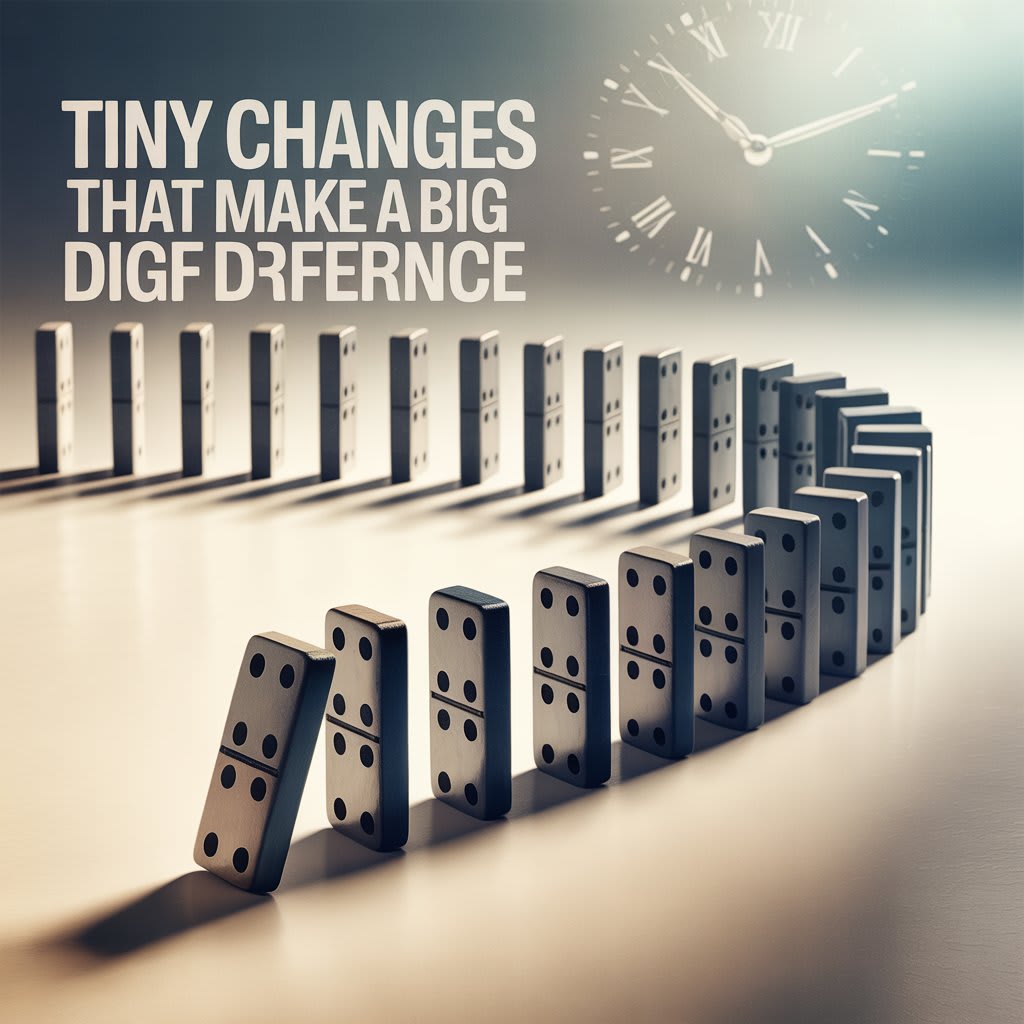
Massive Long-Term Impact in Your Personal and Professional Life
In a world obsessed with quick results and big transformations, the idea that tiny changes can lead to massive success might sound underwhelming. But as James Clear's bestselling book Atomic Habits so powerfully illustrates, true transformation often begins not with grand gestures, but with the smallest possible action—done consistently.
The concept of “atomic habits” is based on the principle that just as atoms are the fundamental units of matter, small, foundational habits are the building blocks of remarkable success. These habits may seem trivial in the moment, but when compounded over time, they yield extraordinary outcomes. Let’s explore how these tiny adjustments, when practiced consistently, can create long-term growth and meaningful life changes.
The Power of 1% Improvement
Clear’s philosophy hinges on the idea of getting just 1% better every day. At first glance, this might not seem impressive. After all, how much impact can 1% really have? But the math tells a different story: improving by just 1% daily will result in being 37 times better over the course of a year. That’s the power of compounding—small gains add up over time.
The beauty of this concept is its accessibility. You don’t need to overhaul your life overnight. You just need to be consistent. Whether it's drinking more water, walking an extra 500 steps, reading a page a day, or waking up 15 minutes earlier, those little habits build momentum that propels you forward.
Identity-Based Habits: Who Are You Becoming?
One of the most revolutionary aspects of the atomic habits framework is the focus on identity. Instead of setting goals like “I want to lose weight” or “I want to write a book,” Clear suggests focusing on who you want to become. When you shift your mindset to identity-based goals—“I am someone who works out regularly” or “I am a writer”—your daily choices start to align with that identity.
Each small habit becomes a vote for the type of person you want to be. Writing 100 words a day might not produce a novel in a week, but it affirms your identity as a writer. Preparing a healthy meal supports your identity as someone who values their body. These habits reinforce your self-image, making the habit easier to maintain.
The Habit Loop: Cue, Craving, Response, Reward
Understanding the science behind how habits form can also help you build better ones. According to Clear, every habit follows a four-step loop:
1. Cue – A trigger that initiates the behavior.
2. Craving – The motivation behind the habit.
3. Response – The actual behavior or habit.
4. Reward – The benefit gained from doing the habit.
Let’s say your cue is feeling stressed after work. Your craving is to unwind. Your response might be scrolling on your phone, and the reward is a short escape. The key to changing a habit is to keep the same cue and reward but insert a healthier response—like a walk, journaling, or meditation.
The more you understand this loop, the easier it is to design environments and systems that support better habits.
Environment Design: Make Good Habits Easy
Another cornerstone of habit change is environment design. People often think they lack motivation when what they really lack is clarity and accessibility. Want to read more? Keep a book next to your bed. Want to eat healthier? Keep fresh fruits visible on the counter. Want to work out in the morning? Lay out your clothes the night before.
Clear says it best: “You don’t rise to the level of your goals. You fall to the level of your systems.” Designing your environment for success removes friction and makes good habits the path of least resistance.
Breaking Bad Habits with Inversion
Just as you can build good habits by stacking small wins, you can dismantle bad habits by making them less attractive and harder to access. Clear outlines this inversion method:
Make it invisible (remove cues).
Make it unattractive (reframe the benefits).
Make it difficult (add friction).
Make it unsatisfying (add accountability).
For example, if you want to cut back on social media, log out after each session or delete the app from your phone altogether. Add barriers that force you to pause and reconsider the behavior.
Real-Life Application: From Theory to Transformation
Putting atomic habits into action doesn't require a life overhaul. It starts with picking one area of your life—health, finances, relationships, work—and identifying one small change that aligns with the person you want to become.
If your goal is better health, begin with five minutes of stretching daily. Want financial freedom? Start by tracking one expense each day. These tiny actions build not only discipline but also belief—belief in your ability to change.
Consistency trumps intensity. Doing something small every day is more powerful than doing something huge once in a while. Habits are the compound interest of self-improvement, and once you harness that power, there’s no limit to what you can achieve.
Final Thoughts: A Life Built One Brick at a Time
Big results are rarely the product of big actions. More often, they’re the culmination of small steps, repeated endlessly. Atomic habits remind us that we don’t need to wait for the perfect moment or perfect motivation. We just need to start—and keep going.
Whether you're seeking personal growth, professional achievement, or a healthier lifestyle, remember: small things done consistently become big things done effortlessly.
About the Creator
Keep reading
More stories from Usman Ali and writers in Motivation and other communities.
I Will Win Until I Die
I Will Win Until I Die Every human being is born into a world of uncertainty, adversity, and change. Some people succumb to the weight of their struggles, while others rise above them, fuelled by an indomitable willpower and unshakable belief in themselves. The phrase "I will win until I die" is not just a mantra—it is a declaration of war against defeat, a promise made to oneself to never surrender, no matter how brutal the odds. It is the essence of grit, persistence, and courage in the face of a world that often tries to beat us down.
By Usman Ali 10 months ago in Motivation
The Power of Denial
Sometimes, it’s hard to accept the truth. It can be right in our face, but we are in denial. Peter once denied Jesus. We know when something isn’t good for us. Sometimes that “something” that isn’t good for us can turn into a habit. We know that smoking is not good for breathing; we smoke anyway. Drinking affects the liver and other organs; we drink anyway. Those are the 2 worse habits in the world, and they both are two leading causes of death in the world. But we are in denial about that because it’s a good feeling.
By Nerissha Hunt7 days ago in Motivation
United in Spirit: How Fellowship Moments Strengthen Faith and Community Bonds
Faith grows stronger when people gather with open hearts and shared purpose. In churches, small groups, and community centers, simple moments often become lasting memories. A shared meal, a group prayer, or a kind word can remind people that they are not alone. These experiences reveal the beauty of Christian community connection, where belief is not just personal but shared in real and meaningful ways.
By World Olivet Assembly6 days ago in Motivation
I wanted to title this something different, but worried that my chosen title might cause problems entering the United States in the future so this is the new title. It's the greatest title. No one has ever written a title better than this. (All titles unrelated to content).
Let me be honest. I am finding this difficult. Now, I like a challenge, a stretch, a bit of an obstacle course. “Write about the decline of the British Empire in the form of a narrative poem in which your protagonist is an artichoke” I read, and flex my fingers. “Write a haiku to evoke the sensation of sibilance using only the first half of the alphabet.” “Well”, I think to myself, “this should be fun.” But “write about a system that isn’t working”? A system that isn’t working? Now? In 2026? ONE system? My favourite system that isn’t working? The sexiest system that isn’t working? The one giving me the most angst day to day? The one giving me the most existential dread? I am, as I say, finding this difficult. I will own that I have contemplated writing a thousand words on why the steady “all on” setting on my fairy lights is the EIGHTH of seven options which must be sequentially activated to get there, because that is a system that some fool came up with and it definitely doesn’t work, and now who is paying the price, eh? But how can I write about my fairy lights when…. When…. When….
By Hannah Moore5 days ago in Humans



Comments
There are no comments for this story
Be the first to respond and start the conversation.