
Against the Current
A Journey of Courage, Conviction, and Going Your Own Way

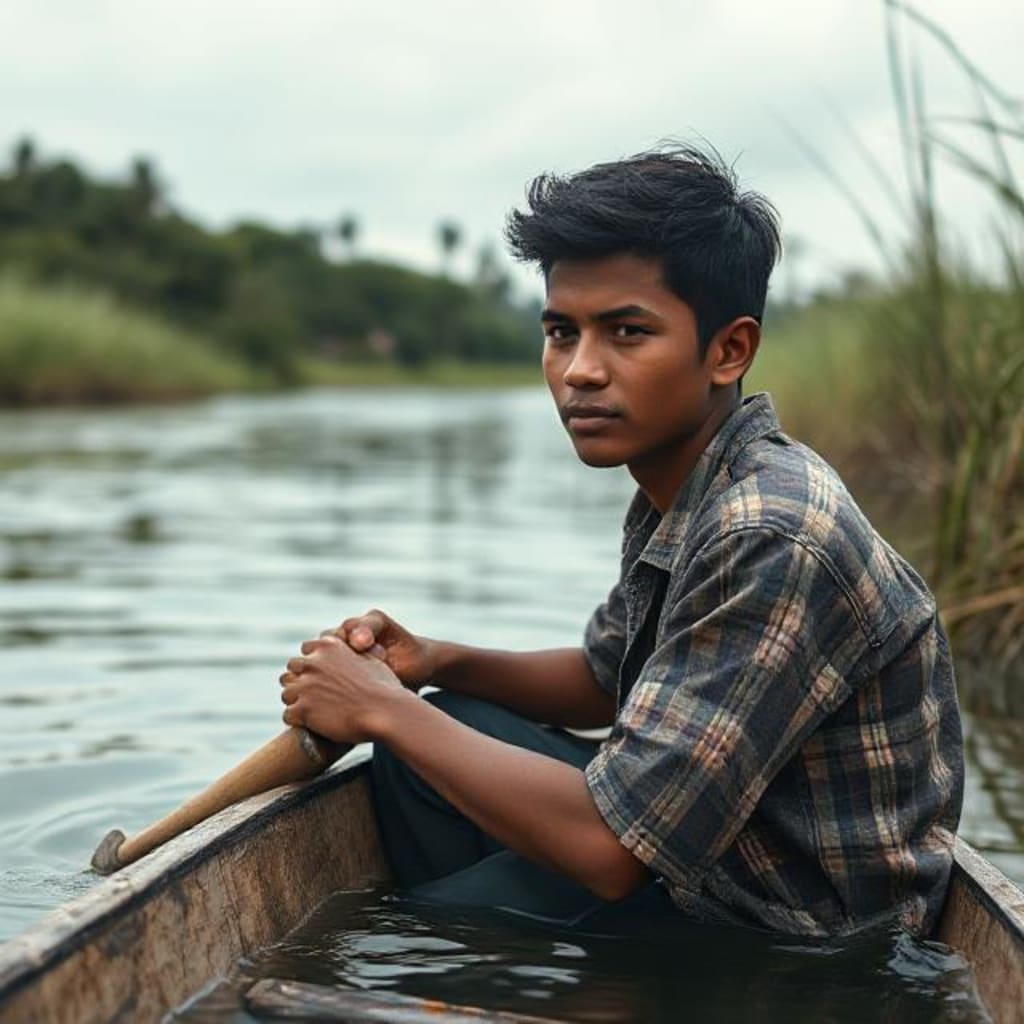
In the heart of a quiet, forgotten valley nestled among the barren ridges of northern hills, there lived a boy named Ayaan. The river that ran beside his village was both a source of life and a silent metaphor for his struggle—steady, stubborn, and always flowing in the opposite direction of where he wished to go.Ayaan wasn’t born into privilege. His father, a man of calloused hands and sunburnt skin, tilled the same patch of earth his forefathers had for generations. The family’s survival rested in the rhythm of the seasons, and in the wisdom passed down through muddy boots and sleepless harvests. In their world, dreams were luxuries, and ambitions beyond the fields were often met with skepticism—or worse, silence.But Ayaan was different. From an early age, he was captivated not by crops or cattle, but by life beneath the water. He would spend hours by the riverbank, sketching the fish he saw darting beneath the surface, mimicking the cries of kingfishers, and collecting pebbles like treasure. Where others saw a stream, Ayaan saw a kingdom—a realm waiting to be explored, studied, and protected.
His dream was not small. Ayaan wanted to be a marine biologist. He wanted to study the behavior of aquatic life, understand ecosystems, and someday—somehow—make a real difference in preserving the natural world. But in a village where even the word “marine” was foreign, his dream was met with ridicule and dismissal.
“Fish won’t feed your family,” his uncle would say, spitting tobacco and laughing. “This is nonsense. You were born a farmer. You’ll die a farmer.”But Ayaan’s resolve was unshakeable.
He began his pursuit with what little he had. There was no internet in his village, so he would walk seven kilometers each day to reach the district library. There, he would devour textbooks that were outdated but filled with wonder. He copied diagrams by hand, memorized scientific names, and taught himself English by reading nature magazines discarded by tourists.He worked nights at a roadside tea stall, saving every rupee to afford a second-hand laptop with a cracked screen. When power outages came—often without warning—he studied by candlelight. He was tired, hungry, misunderstood—but never lost.
His turning point came when he entered a national essay contest hosted by an environmental NGO. The theme was “Saving Our Rivers”, and Ayaan poured his soul into his submission. He didn’t write from theory—he wrote from the heart. He wrote about watching the river get polluted by plastic, the fish disappearing, the farmers unknowingly poisoning their own land. He wrote about how even a boy from the hills could make a difference, if only given a chance.
He won.
The judges were stunned. How could someone with no formal training, no academic background, and no access to advanced resources write with such depth and clarity?Ayaan was awarded a full scholarship to a university in the city. It was the first time he left his village, the first time he saw skyscrapers, the first time he stepped into a lab.The road wasn't smooth. He struggled with city life, mocked for his accent, pitied for his background. But adversity had been his constant companion, and he had learned not just to endure it—but to turn it into fuel.
Years passed. With each semester, Ayaan grew—not just in knowledge, but in confidence. He conducted research, published papers, and even presented at international conferences. He became not just a student of the sea, but a voice for rural youth who dared to dream differently.And then—he returned home.Not with prideful arrogance, but with quiet purpose.He founded the Himalayan Freshwater Conservation Institute, right by the river that first sparked his curiosity. He employed local youth, trained them, and launched clean-water initiatives that dramatically improved both environment and health in surrounding areas. He gave talks in schools, inspiring children who once thought the sky was unreachable.The same uncle who once laughed at him now beamed with pride whenever Ayaan's name appeared in the news. The same villagers who doubted him began to believe in their own untapped potential.Ayaan had gone against the current—and in doing so, he changed its direction.
Message of the Story:
"The world often pushes us toward what is safe, familiar, and expected. But greatness lies in the resistance—in choosing the harder road because it aligns with your passion, your values, your soul. You don't have to roar to make waves. Sometimes, a single paddle stroke against the current is enough to change everything."
About the Creator
Qaisar Jan
Storyteller and article writer, crafting words that inspire, challenge, and connect. Dive into meaningful content that leaves an impact.
Keep reading
More stories from Qaisar Jan and writers in Motivation and other communities.
The Last Push"
--- The Last Push When Giving Up Was Easy, He Chose to Keep Going It was the final lap of the race—one that Rayan had been preparing for his entire teenage life. The national championship was more than just a competition to him. It was a lifeline. A way out. A door to a future that he and his mother had dreamed of since his father left them in a crumbling house in a forgotten part of the city.
By Qaisar Jan10 months ago in Motivation
The Inmate Who Conquered Hollywood: The Brutal Redemption of Danny Trejo
You already know the face. It is one of the most unmistakable visages in the history of modern cinema. Deeply lined, scarred, and weathered like worn leather, framed by a sweeping mustache and a gaze that looks right through you. When Danny Trejo walks onto a screen, he does not have to act tough. The toughness is etched directly into his bone structure. He is the ultimate Hollywood enforcer, the cartel boss, the rugged anti-hero swinging a blade in Machete.
By Frank Massey 7 days ago in Motivation
The One Decision That Changed My Life Forever
I still remember the night my life split into two parts: before the decision... and after it. It was 2:17 a.m. The house was silent, but my mind was loud. My phone screen glowed in the dark room, reflecting a tired face I barely recognized. I had spent hours scrolling, comparing my life to strangers who seemed happier, richer, more successful. Every swipe felt like a reminder of what I wasn’t.
By imtiazalam2 days ago in Motivation
Review of 'Man on the Run'
My wife and I saw Man on the Run, a nearly 2-hour documentary on Amazon Prime, about Wings, Paul McCartney's group that flew around the world from shortly after The Beatles broke up in early 1970 to shortly after John Lennon was murdered at the end of 1980, making a Beatles reunion forever impossible.
By Paul Levinson4 days ago in Beat



Comments
There are no comments for this story
Be the first to respond and start the conversation.