
A Ray of Hope in the Darkness
The story of a boy who finds light after every struggle

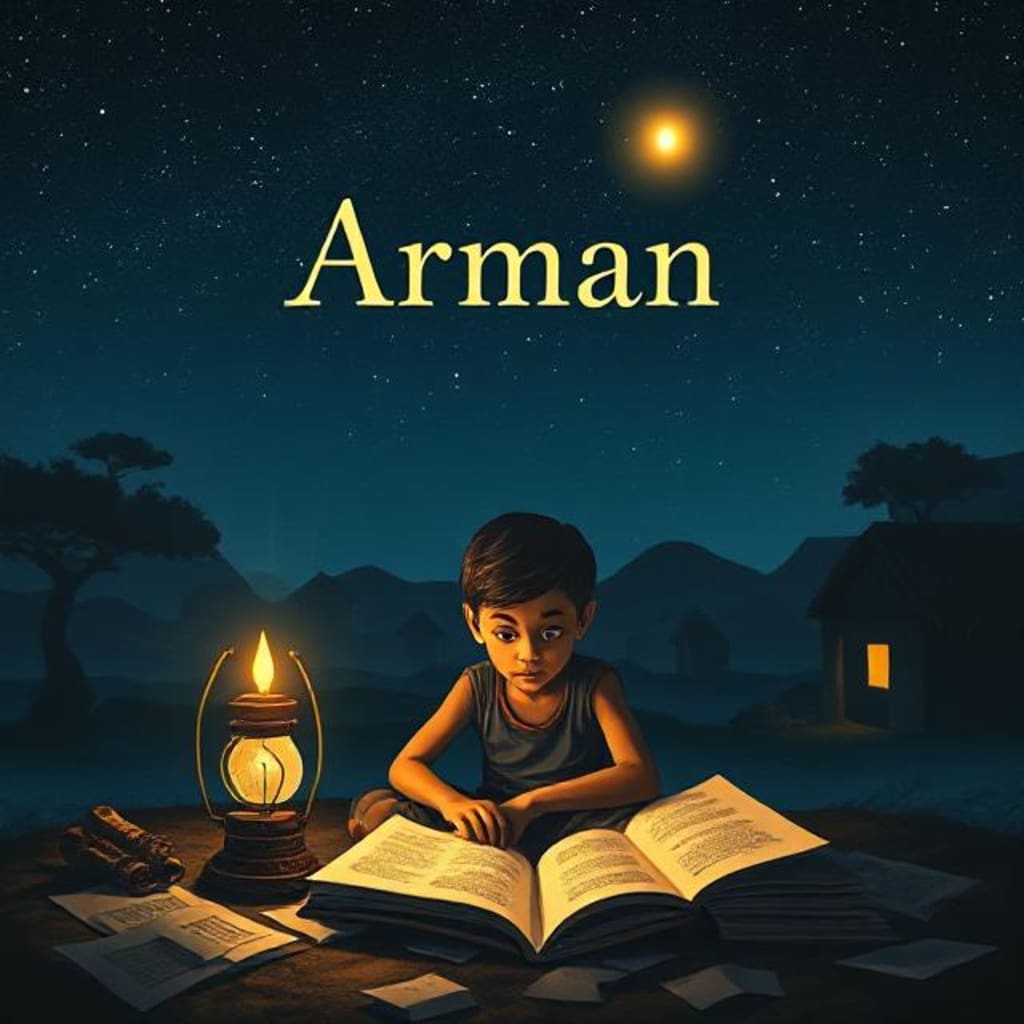
In a small village nestled between hills and forests, lived a boy named Arman. His father had passed away when he was just six, and his mother worked tirelessly as a maid to make ends meet. They had barely enough to eat, and electricity was a luxury they could only dream of. Yet, Arman had one thing that kept him going—hope.
While other children laughed and played, Arman would sit near the village library, a small tin-roofed room with torn books and broken chairs. He wasn’t allowed inside because he wasn’t a registered student. Still, he would sit by the window, listening to the teacher read aloud. Every evening, he’d copy whatever he remembered onto pieces of scrap paper he found near the market.
One day, the librarian, Mr. Qasim, noticed him.
“You’ve been sitting here for months,” he said. “Why?”
“I want to learn,” Arman replied. “Someday, I want to be a teacher and help kids like me.”
Mr. Qasim saw the spark in his eyes. He began allowing Arman inside the library after hours. With no electricity, Arman studied by a kerosene lamp, often falling asleep on the wooden floor with a book in his arms.
But as time passed, the challenges grew harder. His mother fell ill and could no longer work. Arman had to clean cars in the town to earn money. Each morning, he’d rise before the sun, work for a few hours, attend a government school with worn-out textbooks, then return home to take care of his mother.
Some nights he would cry silently. “Why is life so unfair?” he’d whisper to the darkness. But even then, he never stopped dreaming.
Years passed. Arman scored top marks in his matric exams. His story spread around the village, then the town. A local NGO offered him a scholarship to attend college. It was the first time he stepped outside his village, and the world felt both terrifying and exciting.
College was not easy. He faced mockery for his accent, his worn-out clothes, and his shy nature. But Arman remembered what his mother once told him, “Beta, when the night is darkest, the stars shine the brightest.”
He studied harder than anyone. When others partied, he stayed in the library. When they gave up on difficult subjects, he dug deeper. Eventually, he graduated with distinction. A professor noticed his potential and offered him a job as a teaching assistant.
One morning, Arman returned to his village—not as the poor boy who listened from the window, but as a young man in a neat shirt, holding a bag full of books. He went straight to the library and hugged Mr. Qasim.
“I did it, sir. And now I’m back to do what I promised—to teach.”
He started free evening classes for underprivileged kids. Word spread quickly. Students who had never held a pencil now had someone who believed in them. The library, once dusty and forgotten, became alive with energy and laughter.
Arman didn’t stop there. With help from the NGO, he launched a digital literacy program, installed solar panels on the library roof, and connected the village to the world through the internet.
Years later, when a journalist asked him what kept him going through the darkest times, Arman smiled and said:
“I didn’t have much—no money, no proper school, no guidance. But I had hope. A tiny flicker, like a candle in a storm. That’s all you need. One ray of hope, and the darkness begins to fade.”
About the Creator
Keep reading
More stories from IRSHAD MUHAMMAD and writers in Motivation and other communities.
Who Are the Top 10 Influential Women in Leadership and Politics in the USA?
Women have played a powerful role in shaping American politics, policymaking, and social change. Over the decades, many Influential Women have broken barriers, led major political reforms, and inspired future generations of leaders.
By influentialwomenmagazine7 days ago in Motivation




Comments
There are no comments for this story
Be the first to respond and start the conversation.