

I never imagined that one night—just a few hours—could unravel the life I had spent years building. But pain has a way of breaking you open, forcing you to see things you were too comfortable to notice. Life doesn’t always whisper its lessons. Sometimes, it crashes in like a storm, uninvited and unforgiving.
It was a chilly Friday evening in late October. The sky wore the colors of sorrow—smoky gray merging with deep violet as the sun dipped behind Chicago’s silhouette. I had just wrapped up a tedious but routine week at the financial firm where I worked as a junior analyst. My life, in many ways, was ordinary: a steady job, a decent apartment, a small circle of friends, and a well-rehearsed routine that brought me a false sense of control.
That night, I had plans to meet my best friend, Aaron, for dinner. He’d been nursing the wounds of a recent breakup and needed someone to talk to. We’d chosen our go-to diner on West Belmont, a cozy spot that smelled of coffee and nostalgia.I checked myself in the mirror before I left my apartment. My tie was slightly askew. My shoes, a bit worn. But none of it mattered. It was just another Friday. Just another night.
At least, that’s what I thought.
As I walked toward the subway station, a light drizzle began to fall, the kind that makes you wrap your coat tighter without even noticing. I was halfway down the station steps when my phone rang—an unknown number. Normally, I wouldn’t have answered. But something made me stop.
“Is this Daniel Harper?” the voice on the other end asked.
“Yes,” I replied, my chest tightening.
“This is St. Luke’s Hospital. Your parents were in a car accident. We need you to come right away.”
The words hit me like ice water. I stood frozen, my hand trembling around the phone. The world around me dissolved into a blur of rushing commuters and echoing footsteps. It felt like everything—the city, time, sound—paused in that moment.
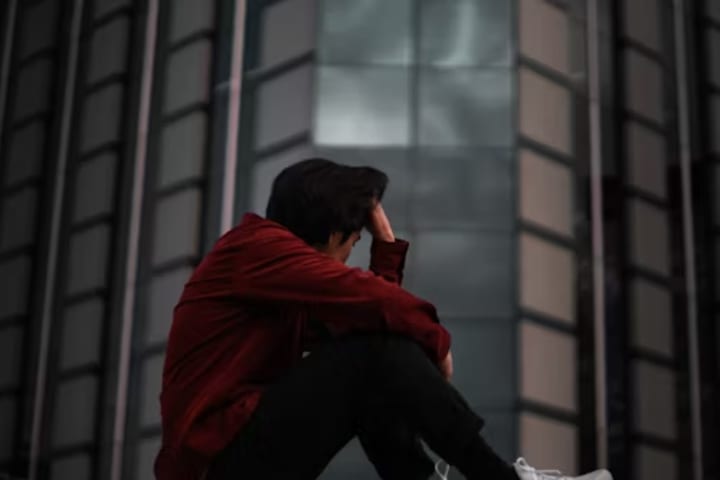
The next hour was a whirlwind of yellow cab lights, blurry intersections, and the unbearable weight of uncertainty. When I finally arrived at the hospital, the sterile smell of antiseptic clung to the air like bad news waiting to unfold. A nurse led me to a private room, where a doctor met me with tired eyes and a voice too calm for the words he carried.
My father had died on impact. My mother was alive, but barely—unconscious, with a severe brain injury.
In that instant, the world beneath my feet cracked open. I wasn’t standing in a hospital. I was free-falling into a reality I didn’t ask for.
The days that followed moved in fragments. Phone calls to family. Papers to sign. Empty stares at vending machines. Most of my time was spent beside my mother’s hospital bed, watching her breathe, whispering promises into the quiet—promises that I’d be better, do better, just please, please come back.
I didn’t go home that night. Or the next. I didn’t eat much, didn’t sleep more than an hour at a time. My apartment felt too distant. My job, irrelevant. My mind, a constant loop of what ifs.
Aaron showed up the next morning. He didn’t say much. Just handed me a cup of coffee and sat silently beside me. His presence was the only thing that felt real in those days of unreality.
A week passed. My mother remained in a coma. I had memorized the beeping pattern of her machines, the rhythm of hospital life, the subtle shifts in the nurses’ expressions. I cleaved to hope like it was oxygen.
Then, one afternoon, everything changed.
I was reading a book—an old one I’d pulled from my shelf at home, something comforting in its familiarity. The stillness in the room was interrupted only by the hum of machines. I happened to glance at her hand.
Her fingers moved.
I blinked. Maybe I imagined it. But then it happened again.
I slammed the call button. Nurses rushed in. A doctor followed. And after what felt like an eternity, her eyes opened—glassy, confused, weak. But alive.
That moment—those eyes meeting mine—was like being pulled back up to the surface after drowning.

That night didn’t just take my father. It stripped me of the illusions I had wrapped myself in for years. I had been living on autopilot, measuring life in paychecks and productivity, forgetting how precious every heartbeat truly is.
I didn't go back to work during the following months. I took an unpaid leave, then officially quit. I began volunteering at a local rehab center, connecting with people whose pain mirrored my own. I traveled—backpacking, journaling, healing. I rediscovered writing, a passion I’d buried beneath spreadsheets and schedules.
Over time, I began to rebuild—but this time from the inside out.
My mother recovered gradually. She wasn’t the same—how could she be? But we grew close in a way we never had before. We talked more. We cried more. We appreciated the simple, quiet mornings. Her laughter, though softer now, became the music of my healing.
As for my father, his absence left a silence in our lives that words could never fill. But in that silence, I found meaning. His memory became a guiding light, a reminder to live fully, love deeply, and never take a single moment for granted.
Looking back, that October night shattered me—but it also set me free. Sometimes, it takes losing everything you thought mattered to discover what truly does.
That night didn’t just change my life.
It gave me a new one.
About the Creator
Keep reading
More stories from Shaheen Khan and writers in Motivation and other communities.
From Homeless to Harvard
The cold January wind cut through the alleyways of Boston like a knife. Wrapped in a worn-out hoodie and clutching a tattered backpack, 17-year-old Lisa Monroe sat beneath a flickering streetlamp outside a 24-hour diner. Her stomach growled. Her fingers were numb. Her future? Uncertain.
By Shaheen Khan7 months ago in Motivation
We Rescue Dogs-But that Day, He Rescued Me
The morning began like any other. The kettle hummed. The sky outside my apartment window was undecided-half gray, half hopeful. I moved through the kitchen with the numb efficiency of someone who had not slept but did not want to admit why. My dog, Milo, usually greeted mornings like a celebration. He would streth dramatically, thump his tail against the couch, and trot toward the door as if the world were waiting specifically for him. That day, he didn't. He watched me. Not the casual glance of a pet waiting for breakfast. Not the impatient stare that meant hurry up. This was defferent. His ears were slightly back. His eyes followed me from the sink to the table, from the table to the couch. I poured coffee and tried to ignore the heaviness in my chest. I told myself it was just exhaustion. Just stress. Just another rough night. Milo walked over and pressed his body against my leg. "Not now," I murmured gently, nudging him aside. I had emails to answer. Responsibilities to perform. A version of myself to maintain. He didn't move far. He lay down beside my chair instead. The truth was simple, though I hadn't said it out loud yst: I was unraveling. The week before, I had received news that rearranged something inside me. A job I thought was secure suddenly wasn't A relationship I believed in quietly collapsed. Conversations that once felt solid became thin and formal. The future, once sketched in confident liens, blurred. I had handled it well. Or so I thought. I smiled in phone calls. I said, "lt's okay, I understand. " I told friends, "l'll figure it out," I convenced myself that staying composed was the same as being strong. But the body keeps score in ways pride doesn't understand. That morning, as I opened my laptop, the weight in my chest expanded. My breath shortened. My vision felt slightly distant, as if I were observing myself through glass. Milo stood up again. He placed his front paws on my lap and looked directly into my face. I laughed nervously. "You're being dramatic today." He wasn't. When I stood up to walk to the bathroom, he followed so closely that I nearly tripped over him. When I closed the door, he scratched at it softly. Not frantically. Not panicked. Just persistent. I opened it again. "Fine," whispered, "You win." Around noon, the dam finally cracked. It wasn't cinematic. There was no dramatic music or single tear. It was quiet and inconvenient. I was sitting on the edge of my bed, staring at nothing, when my breath caught in a way that wouldn'yt release. The thoughts came in layers: You're failing. You should've tried harder. You're alone now. You always lose what matters. Tears followed, but they felt secondary-like an afterthought. What hurt more was the exhaustion of holding everything together for so long. And milo? He climbed onto the bed without invitation. He wasn't usually allowed up there. I had rules. Boundaries. Clean sheets mattered to me. That day, none of it mattered. He walked across the mattress and settled directly against my chest. Not near me. On me. His weight was warm and grounding. His heartbeat steady. His breathing slow. Every time my breath stuttered, he shifted slightly, pressing closer. I buried my face in his fur. "I'm so tired," I whispered, though I wasn't sure who I was speaking to. He didn't lick my face. He didn't move much at all. He simply stayed. Hours passed. I didn't check my phone. I didn't respond to emails. The world did not collapse because I paused. Deadlines did not explode. Notifications did not scream. The only thing happening in that room was this: a human being finally allowing herself to feel, and a dog refusing to let her feel it alone. At one point, I tried to stand up. I thought maybe I should shower. Maybe I should regain control of the day. Milo immediately stood too. When I walked to the kitchen, he followed. When I sat not the couch, he jumped up beside me. When I shifted positions, he adjusted accordingly, as if we were connected by something invisible and undreakable. Dogs cannot understand job cotracts or complicated heartbreak. They do not analyze text messages or calculate financial uncertainty. They understand silence. They understand when the pack feels unstable. And that day, Milo had decided I was the unstable one. Late in the evening, when the light outside softened into gold, I sat on the floor with him. "I thought I was okay," I admitted aloud. His tail thumped once. "I thought if I just stayed productive, I wouldn't have to feel it," He rested his chin on my knee. There is something disarming about being witnessed without judgment. Milo didn't need explanations. He didn't ask what I would do next. He just stayed. And slowly-almost imperceptibly-my breathing evened out. The tightness in my chest loosened. The catastrophic thoughts quieted into manageable concerns. Nothing in my external life had changed. But something inside had shifted. I had stopped pretending. That night, Milo slept pressed against my back. Every time I turned, He adjusted, ensuring some part of him touched me. In thr dark, I realized something humbling: All day, I had been trying to prove that I could handle everything alone. My dog had disagreed. He didn't allow isolation to masquerade as strength. He didn't respect the walls I tried to bouild. He refused to leave my side because, instinctively, he knew that sometimes survival looks like closeness. The next morning, he returned to his usual routine. Tail wagging. Energy restored. Personal space respected. As if the previous day had been a temporary assignment. Mission accomplished. I still had problems. I still had uncertainty. But I no longer felt swallowed by them. Because for one full day, when I couldn't hold myself together, something loyal and wordless held me instead. People often say we rescue dogs.
By qudrata day ago in Motivation
The Carpenter Who Accidentally Built a Hollywood Empire: The Brutal Reality of Harrison Ford's Success
Picture the ultimate cinematic hero. He is standing in the middle of a dusty tomb, adjusting a battered fedora, and cracking a leather whip. Or, he is sitting in the cockpit of a battered spaceship, flashing a crooked, arrogant smirk before making the jump to lightspeed.
By Frank Massey 4 days ago in Motivation



Comments
There are no comments for this story
Be the first to respond and start the conversation.